Showing posts with label Week 059. Show all posts

Friday, May 23, 2025

Proverbs Slideshow/Crossword: May 24

For today, it's a new review slideshow for Groups 158, 159 and 160. Here's the post with the details about how the slideshows work, and there's a random cat at the bottom of the post! Plus more cats.

The slideshow is embedded in the blog post, and you can also access today's slideshow directly, full-sized view. And remember: each time you see the English translation on a slide, you can click to access the original blog post with the notes for each proverb.


There's also a crossword puzzle PDF that you can print; here's a screenshot of the puzzle and key. :-)


These are the proverbs, linked back to their blog post:
  1. Ἀετὸν ἵπτασθαι διδάσκεις.
  2. Ἄκουε πάντα.
  3. Ἀκούσας νόει.
  4. Βασίλεια δ' εἰκών ἐστιν ἔμψυχος θεοῦ.
  5. Βοῦς ἐφ' ἑαυτῷ κονιεῖται.
  6. Γέρων δὲ καὶ μῦς οὐχ ἁλισκεται πάγῃ.
  7. Εἰς τὸ πῦρ ἐκ τοῦ κάπνου.
  8. Ἐκτὸς πηλοῦ πόδας ἔχεις.
  9. Ἐν φρέατι κυσὶ μάχεσθαι.
  10. Ἡ γλωσσ' ὀμωμοχ' ἡ δὲ φρὴν ανώμοτος.
  11. Ἡ σοφία υἱοὺς αὐτῆς ἀνύψωσεν.
  12. Οὐδεὶς μετ' ὀργῆς ἀσφαλῶς βουλεύεται.
  13. Τίς ἐστιν ἡ μήτηρ μου καὶ οἱ ἀδελφοί;
  14. Ὑπὲρ εὐσεβείας καὶ λάλει καὶ μάνθανε.
  15. Ὥρα τὰ πάντα τοῦ βίου κρίνει καλῶς.


And here's a random proverb and a random LOLCat too :


Click here to subscribe/unsubscribe to the email list.


Thursday, May 22, 2025

Greek Reading: Fables 62

This fable is on the long side, so there's just the one story today; it comes from Abbott's Easy Greek Reader, which is available at the Internet Archive. The story is segmented, and then interwoven with English. The title is linked to the Internet Archive page:


βάτραχοι λυπούμενοι ἐπὶ τῇ αὑτῶν ἀναρχίᾳ, πρέσβεις ἔπεμψαν, ἱκετεύοντες τὸν Δία, ὅπως αὐτοῖς βασιλέα παρασχῃ. Ὁ δὲ συνιδὼν αὐτῶν τὴν εὐήθειαν, ξύλον ἔπηξε μέσον τῆς λίμνης. Συστελλόμενοι δὲ τῷ φόβῳ οἱ βάτραχοι, εἰς τὰ βάθη ἑαυτοὺς κατέδυον. Χρόνου δὲ πολλοῦ παρῳχηκότος, ὡς ἑώρων τὸ ξύλον ἀκίνητον, ἀπεβάλοντο τὸν φόβον, καὶ τοσοῦτον κατεφρόνησον αὐτοῦ, ὥστε ἐπιβαίνειν καὶ ἐπικαθέζεσθαι τούτῳ. Μὴ ἀξιοῦντες δὲ αὐτὸν ἔχειν βασιλέα, ἐκ δευτέρου ἦλθον πρὸς τὸν Δία, καὶ παρεκάλουν ἀλλάξαι αὐτόν. Τότε δ᾿ ἔδωκεν αὐτοῖς βασιλέα ἔγχελυν. Ἰδόντες δὲ αὐτοῦ τὴν εὐήθειαν, οὐκ ἀπεδέξαντο αὐτόν. Ἦλθον οὖν ἐκ τρίτου πρὸς τὸν Δία, ὅπως καὶ τοῦτον ἀλλάξῃ. Καὶ ὁ Ζεὺς ἀγανακτήσας κατ᾿ αὐτῶν, ὕδραν ἔπεμψεν, ἥτις ἕνα καθ᾿ ἕνα τῶν βατράχων ἤσθιεν.

βάτραχοι 
λυπούμενοι ἐπὶ τῇ αὑτῶν ἀναρχίᾳ, 
πρέσβεις ἔπεμψαν, 
ἱκετεύοντες τὸν Δία, 
ὅπως αὐτοῖς βασιλέα παρασχῃ. 
Ὁ δὲ συνιδὼν 
αὐτῶν τὴν εὐήθειαν, 
ξύλον ἔπηξε 
μέσον τῆς λίμνης. 
Συστελλόμενοι δὲ τῷ φόβῳ 
οἱ βάτραχοι, 
εἰς τὰ βάθη ἑαυτοὺς κατέδυον. 
Χρόνου δὲ πολλοῦ 
παρῳχηκότος, 
ὡς ἑώρων 
τὸ ξύλον ἀκίνητον, 
ἀπεβάλοντο τὸν φόβον, 
καὶ τοσοῦτον 
κατεφρόνησον αὐτοῦ, 
ὥστε ἐπιβαίνειν 
καὶ ἐπικαθέζεσθαι τούτῳ. 
Μὴ ἀξιοῦντες δὲ 
αὐτὸν ἔχειν βασιλέα, 
ἐκ δευτέρου 
ἦλθον πρὸς τὸν Δία, 
καὶ παρεκάλουν 
ἀλλάξαι αὐτόν. 
Τότε δ᾿ ἔδωκεν αὐτοῖς 
βασιλέα ἔγχελυν. 
Ἰδόντες δὲ αὐτοῦ τὴν εὐήθειαν, 
οὐκ ἀπεδέξαντο αὐτόν. 
Ἦλθον οὖν 
ἐκ τρίτου πρὸς τὸν Δία, 
ὅπως καὶ τοῦτον ἀλλάξῃ. 
Καὶ ὁ Ζεὺς 
ἀγανακτήσας κατ᾿ αὐτῶν, 
ὕδραν ἔπεμψεν, 
ἥτις 
ἕνα καθ᾿ ἕνα 
τῶν βατράχων ἤσθιεν.

βάτραχοι  ...  The frogs
λυπούμενοι ἐπὶ τῇ αὑτῶν ἀναρχίᾳ  ...  lamenting their disorder, 
πρέσβεις ἔπεμψαν  ...  sent their elders, 
ἱκετεύοντες τὸν Δία  ...  petitioning Zeus, 
ὅπως αὐτοῖς βασιλέα παρασχῃ  ...  to supply them with a king. 
Ὁ δὲ συνιδὼν  ...  And he, recognizing
αὐτῶν τὴν εὐήθειαν  ...  their foolishness, 
ξύλον ἔπηξε  ...  he stuck a log 
μέσον τῆς λίμνης  ...  in the middle of the swamp. 
Συστελλόμενοι δὲ τῷ φόβῳ  ...  Cowering together in fear,  
οἱ βάτραχοι  ...  the frogs, 
εἰς τὰ βάθη ἑαυτοὺς κατέδυον  ...  plunged down deep. 
Χρόνου δὲ πολλοῦ παρῳχηκότος  ...  A long time passed, 
ὡς ἑώρων  ...  and when they saw 
τὸ ξύλον ἀκίνητον  ...  that the log was motionless, 
ἀπεβάλοντο τὸν φόβον  ...  they put aside their fear
καὶ τοσοῦτον  ...  so much so
κατεφρόνησον αὐτοῦ  ...  that they scorned him, 
ὥστε ἐπιβαίνειν  ...  and walked up on him 
καὶ ἐπικαθέζεσθαι τούτῳ  ...  and sat down. 
Μὴ ἀξιοῦντες δὲ  ...  They did not think it was right 
αὐτὸν ἔχειν βασιλέα  ...  to have such a king, 
ἐκ δευτέρου  ...  and a second time 
ἦλθον πρὸς τὸν Δία  ...  they went to Zeus, 
καὶ παρεκάλουν  ...  and urged him 
ἀλλάξαι αὐτόν  ...  to exchange him for another. 
Τότε δ᾿ ἔδωκεν αὐτοῖς  ...  Then he gave them 
βασιλέα ἔγχελυν  ...  an eel for their king. 
Ἰδόντες δὲ  ... But they saw
αὐτοῦ τὴν εὐήθειαν  ...  the eel's foolishness,
οὐκ ἀπεδέξαντο αὐτόν  ...  they wouldn't accept him either. 
Ἦλθον οὖν  ...  So they went 
ἐκ τρίτου πρὸς τὸν Δία  ...  a third time to Zeus, 
ὅπως καὶ τοῦτον ἀλλάξῃ  ...  to exchange this one also. 
Καὶ ὁ Ζεὺς  ...  And Zeus 
ἀγανακτήσας κατ᾿ αὐτῶν  ...  getting irritated at them, 
ὕδραν ἔπεμψεν  ...  sent them a water-snake, 
ἥτις ἕνα καθ᾿ ἕνα  ...  who, one by one, 
τῶν βατράχων ἤσθιεν  ...  ate up the frogs.


And here's a random proverb and a random LOLCat too:


Click here to subscribe/unsubscribe to the email list.


Wednesday, May 21, 2025

Greek Vocabulary Challenge: May 22

Here are today's vocabulary words; it's Group 168. Click on the word to learn more at Logeion:

ἥδομαι ~ ἡσθήσομαι ~ ἡσάμην: enjoy, delight in 
φεύγω ~ φεύξομαι ~ ἔφυγον: flee, escape 
ποιέω ~ ποιήσω ~ ἐποίησα: make, do 
ζήω ~ ζήσω ~ ἔζησα: be alive, live 

These are the proverbs (and there are always more proverbs at the blog):


Κτώμενος ἥδου.

Λύκος ἀετὸν φεύγει.

Ἡ φύσις οὐδὲν ποιεῖ ἅλματα.

Ἀπὸ λεπτοῦ μίτου τὸ ζῆν ἠρτῆσθαι.

Ὁ χοῖρος ἥδεται κόπροις καὶ βορβόρῳ.


And now, some commentary:

Κτώμενος ἥδου.
Enjoy what you have acquired.
This is another one of those Delphic maxims recorded by Stobaeus, and it also fits very nicely with the Buddhist idea of "want what you have" instead of wanting what you don't have. The form here, ἥδου, is a middle imperative; you'll see another form of this verb below.

Λύκος ἀετὸν φεύγει.
The wolf flees the eagle.
The idea is that because an eagle has wings, even the wolf, fierce though he is, struggles to escape the eagle's pursuit. Metaphorically, then, the situation replies to someone formidable having to run away from someone even more formidable. When Erasmus comments on this saying, he observes: "This Greek saying is found in Diogenianus, and also Zenodotus, but they do not indicate the origin of the proverb, and I've never heard about eagles actually harassing wolves."

Ἡ φύσις οὐδὲν ποιεῖ ἅλματα.
Nature makes no leaps.
This ancient Greek philosophical notion is best known in its Latin form, Natura non facit saltus (saltus is accusative plural here: Nature doesn't make leaps), and as such it was an important notion in the early development of both modern mathematics (infinitesimal calculus) and the biological sciences (biological gradualism and, later, evolution); you can find out more at Wikipedia: Natura non facit saltus.

Ἀπὸ λεπτοῦ μίτου τὸ ζῆν ἠρτῆσθαι.
Life hangs by a slender thread.
Here the articular infinitive, τὸ ζῆν, is the subject of the verb: "to live" = "living, life." The saying may allude to the famous sword that Damocles suspended by a thread. You can read that story at Wikipedia: Sword of Damocles.

Ὁ χοῖρος ἥδεται κόπροις καὶ βορβόρῳ.
The pig delights in filth and mud.
Of course, this does not speak well of the pig. The saying comes from Clement of Alexandria, echoing a similar characterization of the pig in the New Testament letter of 2 Peter: κύων ἐπιστρέψας ἐπὶ τὸ ἴδιον ἐξέραμα, καί, ὖς λουσαμένη εἰς κυλισμὸν βορβόρου — in King James: The dog is turned to his own vomit again; and the sow that was washed to her wallowing in the mire.


And here's a random proverb and a random LOLCat too:


Click here to subscribe/unsubscribe to the email list.


Tuesday, May 20, 2025

Greek Reading: Fables 61

Both the fable and the joke below come from Abbott's Easy Greek Reader which is available at the Internet Archive. 

So, here are the stories in Greek, then segmented, and then interwoven with English. The titles are linked to the Internet Archive page.


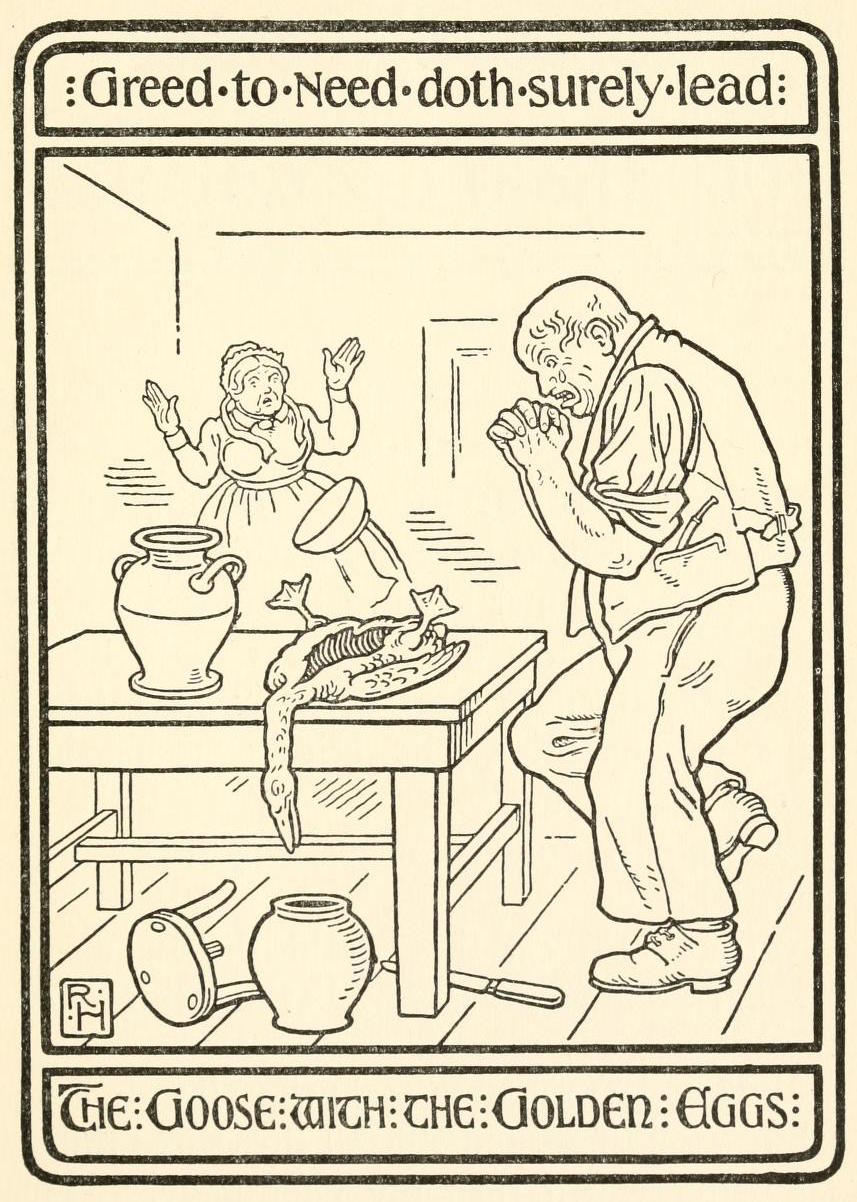
Ἑρμῆς θρησκευόμενος ὑπό τινος περιττῶς χῆνα αὐτῷ ἐχαρίσατο ὠὰ χρύσεα τίκτουσαν· ὁ δὲ οὐκ ἀναμείνας τὴν κατὰ μικρὸν ὠφέλειαν, ὑπολαβὼν δὲ, ὅτι πάντα τὰ ἐντὸς χρύσεα ἔχει ὁ χὴν, οὐδὲν μελλήσας ἔθυσεν αὐτήν. Συνέβη δ᾿ αὐτὸν μὴ μόνον ὃ προσεδόκησε σφαλῆναι, ἀλλὰ καὶ τὰ ὠὰ ἀποβαλεῖν· τὰ γὰρ ἐντὸς πάντα σαρκώδη εὗρεν.

Ἑρμῆς 
θρησκευόμενος ὑπό τινος περιττῶς 
χῆνα αὐτῷ ἐχαρίσατο 
ὠὰ χρύσεα τίκτουσαν· 
ὁ δὲ οὐκ ἀναμείνας 
τὴν κατὰ μικρὸν ὠφέλειαν, 
ὑπολαβὼν δὲ
ὅτι πάντα τὰ ἐντὸς χρύσεα 
ἔχει ὁ χὴν, 
οὐδὲν μελλήσας 
ἔθυσεν αὐτήν. 
Συνέβη δ᾿ αὐτὸν 
μὴ μόνον 
ὃ προσεδόκησε σφαλῆναι, 
ἀλλὰ καὶ 
τὰ ὠὰ ἀποβαλεῖν· 
τὰ γὰρ ἐντὸς 
πάντα σαρκώδη εὗρεν.

Ἑρμῆς  ...  Hermes
θρησκευόμενος περιττῶς  ...  was worshipped devoutly 
ὑπό τινος  ...  by a certain man 
χῆνα αὐτῷ ἐχαρίσατο  ...  so he thanked him with a goose 
ὠὰ χρύσεα τίκτουσαν  ...  that laid golden eggs. 
ὁ δὲ οὐκ ἀναμείνας  ...  But the man wouldn't wait 
τὴν κατὰ μικρὸν ὠφέλειαν  ...  for the profit bit bit bit, 
ὑπολαβὼν δὲ  ...  and, supposing
ὅτι ἔχει ὁ χὴν  ...  that the goose
πάντα τὰ ἐντὸς χρύσεα  ...  was all golden inside,
οὐδὲν μελλήσας  ...  he didn't hesitate 
ἔθυσεν αὐτήν  ...  to butcher her. 
Συνέβη δ᾿  ...  As a result  
αὐτὸν μὴ μόνον σφαλῆναι  ...  not only did he fail to get
ὃ προσεδόκησε  ...  what he expected 
ἀλλὰ καὶ  ...  but he also 
τὰ ὠὰ ἀποβαλεῖν  ...  lost the eggs, 
τὰ γὰρ ἐντὸς  ...  for inside the goose
πάντα σαρκώδη εὗρεν  ...  he found only flesh.


(you've also seen another version of this story)

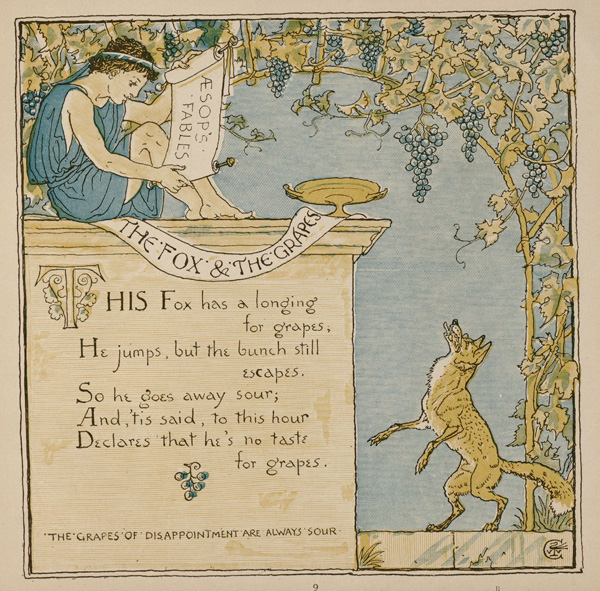
Κερδὼ βότρυν βλέπουσα μακρᾶς ἀμπέλου,
πρὸς ὕψος ἦρτο, καὶ καμοῦσα πολλάκις
ἑλεῖν ἀπεῖτε· πρὸς ἑαυτὴν ταῦτ' ἔφη·
μὴ κάμνε· ῥᾶγες ὀμφακίζουσιν μάλα.

The meter is iambic; here is the meter marked:

Κερδὼ | βότρυν || βλέπου|σα μα||κρᾶς ἀμ|πέλου,
πρὸς ὕ|ψος ἦρ||το, καὶ | καμοῦ||σα πολ|λάκις
ἑλεῖν | ἀπεῖ||τε· πρὸς | ἑαυ||τὴν ταῦτ' | ἔφη·
μὴ κάμ|νε· ῥᾶ||γες ὀμ|φακί||ζουσιν | μάλα.

Κερδὼ 
βότρυν βλέπουσα 
μακρᾶς ἀμπέλου,
πρὸς ὕψος ἦρτο, 
καὶ καμοῦσα πολλάκις
ἑλεῖν ἀπεῖτε· 
πρὸς ἑαυτὴν ταῦτ' 
ἔφη·
μὴ κάμνε· 
ῥᾶγες ὀμφακίζουσιν μάλα.

Κερδὼ  ...  The sly (fox)
βότρυν βλέπουσα  ...  saw a bunch of grapes 
μακρᾶς ἀμπέλου  ...  on a high vine,
πρὸς ὕψος ἦρτο  ...  so she jumped up, 
καὶ καμοῦσα  ...  and wore herself out
πολλάκις ἑλεῖν  ...  grabbing again and again.
ἀπεῖτε  ...  Then she walked away
πρὸς ἑαυτὴν ταῦτ' ἔφη  ...  saying to herself,
μὴ κάμνε  ...  Stop making such an effort!
ῥᾶγες ὀμφακίζουσιν μάλα  ...  The grapes are all sour.


Σχολαστικὸς γράφων πρὸς τὸν πατέρα ἀπὸ τῶν ᾿Αθηνῶν, καὶ ἐναβρυνόμενος, ὅτι πεπαίδευται, προσέθηκεν· Εὔχομαι δέ σε εὑρεῖν κεφαλικὴν φεύγοντα δίκην, ἵνα σοι δείξω τὸν ῥήτορα.

Σχολαστικὸς 
γράφων πρὸς τὸν πατέρα 
ἀπὸ τῶν ᾿Αθηνῶν, 
καὶ ἐναβρυνόμενος
ὅτι πεπαίδευται
προσέθηκεν· 
Εὔχομαι δέ 
σε εὑρεῖν 
κεφαλικὴν φεύγοντα δίκην, 
ἵνα σοι δείξω 
τὸν ῥήτορα.

Σχολαστικὸς  ...  A dunce
γράφων πρὸς τὸν πατέρα  ...  wrote to his father 
ἀπὸ τῶν ᾿Αθηνῶν  ...  from Athens, 
καὶ ἐναβρυνόμενος  ...  bragging
ὅτι πεπαίδευται  ...  how he had gotten educated.
προσέθηκεν  ...  Then he added,
Εὔχομαι δέ σε εὑρεῖν  ...  And I hope to find you 
φεύγοντα  ...  trying to escape
κεφαλικὴν δίκην  ...  a death sentence
ἵνα σοι δείξω  ...  so that I can show you
τὸν ῥήτορα  ...  what an orator I've become!


And here's a random proverb and a random LOLCat too:


Click here to subscribe/unsubscribe to the email list.


Monday, May 19, 2025

Crossword Puzzle 28-29-30

The proverbs for today come from back in Groups 28, 29 and 30; you can visit those blog posts for the translations and more information. 
Here are the sayings without spaces: see if you can find the word breaks!

γ α λ ῃ χ ι τ ω ν.

τ υ φ λ ο ν ο ν ε ι ρ ο ν.

ς α ρ δ ω ν ι ο ς γ ε λ ω ς.

α ι χ α ρ ι τ ε ς γ υ μ ν α ι.

τ ο φ ω ς η λ ι ῳ δ α ν ε ι ζ ε ι ς.

μ ε γ α ς τ ο μ α τ ο υ ε ν ι α υ τ ο υ.

π υ ρ ς ι δ η ρ ῳ μ η ς κ α λ ε υ ε ι ν.

τ η ν ο ρ θ η ν β α δ ι ζ ε ι ν ο δ ο ν.

μ ι κ ρ ο ν κ α κ ο ν μ ε γ α α γ α θ ο ν.

α γ α θ η κ α ι μ α ζ α μ ε τ α ρ τ ο ν.

ο φ θ α λ μ ο ι ω τ ι ω ν π ι ς τ ο τ ε ρ ο ι.

α ρ ε τ η ν ε ι μ ε ν ε χ ο ι ς π α ν θ ε ξ ε ι ς.


And here's the crossword puzzle based on a missing word from each proverb: printable Crossword PDF. I've pasted in screenshots below so you can see what the crossword looks like:


And here's a random proverb and a random LOLCat too :


Click here to subscribe/unsubscribe to the email list.

Sunday, May 18, 2025

Greek Reading: Fables 60

Both the fable and the joke below come from Abbott's Easy Greek Reader which is available at the Internet Archive. 

So, here are the stories in Greek, then segmented, and then interwoven with English. The titles are linked to the Internet Archive page.


Ἄνθρωπόν ποτε λέγεται πρὸς Σάτυρον φιλίαν σπείσασθαι. Καὶ δὴ χειμῶνος καταλαβόντος καὶ ψύχους γενομένου ὁ ἄνθρωπος τὰς χεῖρας τῷ στόματι ἐπέπνει. Τοῦ δὲ Σατύρου τὴν αἰτίαν ἐρομένου, δι' ἣν τοῦτο πράττει, ἔλεγεν, ὅτι θερμαίνει τὰς χεῖρας διὰ τὸ κρύος. Ὕστερον δὲ παρατεθείσης αὐτοῖς τραπέζης καὶ προσφαγήματος θερμοῦ σφόδρα ὄντος, ὁ ἄνθρωπος ἀναιρούμενος κατὰ μικρὸν τῷ στόματι προσέφερε καὶ ἐφύσα· πυνθανομένου δὲ πάλιν τοῦ Σατύρου, τί τοῦτο ποιεῖ; ἔφασκε καταψύχειν τὸ ἔδεσμα, ἐπεὶ λίαν θερμόν ἐστι. Κἀκεῖνος ἔφη πρὸς αὐτόν· ἀλλ' ἀποτάσσομαί σου τῇ φιλίᾳ, ὦ οὗτος, ὅτι ἐκ τοῦ αὐτοῦ στόματος τὸ θερμὸν καὶ τὸ ψυχρὸν ἐξιεῖς.

Ἄνθρωπόν ποτε λέγεται 
πρὸς Σάτυρον φιλίαν σπείσασθαι. 
Καὶ δὴ χειμῶνος καταλαβόντος 
καὶ ψύχους γενομένου 
ὁ ἄνθρωπος 
τὰς χεῖρας τῷ στόματι ἐπέπνει. 
Τοῦ δὲ Σατύρου 
τὴν αἰτίαν ἐρομένου, 
δι' ἣν τοῦτο πράττει, 
ἔλεγεν, ὅτι 
θερμαίνει τὰς χεῖρας 
διὰ τὸ κρύος. 
Ὕστερον δὲ 
παρατεθείσης αὐτοῖς τραπέζης 
καὶ προσφαγήματος 
θερμοῦ σφόδρα ὄντος, 
ὁ ἄνθρωπος 
ἀναιρούμενος κατὰ μικρὸν τῷ στόματι 
προσέφερε καὶ ἐφύσα· 
πυνθανομένου δὲ πάλιν 
τοῦ Σατύρου, 
τί τοῦτο ποιεῖ; 
ἔφασκε 
καταψύχειν τὸ ἔδεσμα, 
ἐπεὶ λίαν θερμόν ἐστι. 
Κἀκεῖνος ἔφη πρὸς αὐτόν· 
ἀλλ' ἀποτάσσομαί 
σου τῇ φιλίᾳ, 
ὦ οὗτος, 
ὅτι ἐκ τοῦ αὐτοῦ στόματος 
τὸ θερμὸν καὶ τὸ ψυχρὸν 
ἐξιεῖς.

Ἄνθρωπόν ποτε λέγεται  ...  A man is once said
φιλίαν σπείσασθαι  ...  to have pledged friendship 
πρὸς Σάτυρον  ...  with a Satyr.
Καὶ δὴ χειμῶνος καταλαβόντος  ...  And when winter came on
καὶ ψύχους γενομένου  ...  and it became cold
ὁ ἄνθρωπος  ...  the man 
τῷ στόματι ἐπέπνει  ...  blew with his mouth
τὰς χεῖρας  ...  on his hands.
Τοῦ δὲ Σατύρου  ...  When the Satyr 
τὴν αἰτίαν ἐρομένου  ...  asked the reason, 
δι' ἣν τοῦτο πράττει  ...  that he did that, 
ἔλεγεν, ὅτι  ...  the man said that 
θερμαίνει τὰς χεῖρας  ...  he was warming his hands 
διὰ τὸ κρύος  ...  through the frost. 
Ὕστερον δὲ  ...  Later 
παρατεθείσης αὐτοῖς τραπέζης  ...  when their table was set 
καὶ προσφαγήματος  ...  and the food 
θερμοῦ σφόδρα ὄντος  ...  was very hot, 
ὁ ἄνθρωπος  ...  the man 
ἀναιρούμενος κατὰ μικρὸν  ...  taking up a little 
τῷ στόματι προσέφερε  ...  put it to his mouth 
καὶ ἐφύσα  ...  blew blew on it.
πυνθανομένου δὲ πάλιν  ...  Asked again 
τοῦ Σατύρου  ...  by the Satyr, 
τί τοῦτο ποιεῖ  ...  why he did that,
ἔφασκε  ...  the man said that 
καταψύχειν τὸ ἔδεσμα  ...  it warmed the meat 
ἐπεὶ λίαν θερμόν ἐστι  ...  since it was very hot. 
Κἀκεῖνος ἔφη  ...  Then the Satyr said 
πρὸς αὐτόν  ...  to him,
ἀλλ' ἀποτάσσομαί  ...  Well then, I renounce
σου τῇ φιλίᾳ  ...  your friendship,
ὦ οὗτος  ...  you so-and-so,
ὅτι ἐξιεῖς  ...  because you're blowing out
τὸ θερμὸν καὶ τὸ ψυχρὸν  ...  both hot and cold
ἐκ τοῦ αὐτοῦ στόματος  ...  from the same mouth.


Αβδηρίτης λεκάνην ἐπώλει μὴ ἔχουσαν ὠτία. ἐρωτήσαντος δὲ τινὸς διὰ τί αὐτῆς ἦρε τὰ ὠτία, ἀπεκρίνατο· ῞Ινα μὴ ἀκούσασα, ὅτι πωλεῖται, φύγῃ.

Αβδηρίτης 
λεκάνην ἐπώλει 
μὴ ἔχουσαν ὠτία. 
ἐρωτήσαντος δὲ τινὸς 
διὰ τί 
αὐτῆς ἦρε τὰ ὠτία, 
ἀπεκρίνατο· 
Ἵνα μὴ ἀκούσασα, 
ὅτι πωλεῖται, 
φύγῃ.

As you read this one, think about the very elegant English saying, "Little pitchers have big ears." This is about the ears/handles of a Greek basin:

Αβδηρίτης  ...  A dunce
λεκάνην ἐπώλει  ...  sold a basin 
μὴ ἔχουσαν ὠτία  ...  without ears (handles). 
ἐρωτήσαντος δὲ τινὸς διὰ τί  ...  Asked by someone why
αὐτῆς ἦρε τὰ ὠτία  ...  he took off the basin's ears
ἀπεκρίνατο  ...  he replied, 
Ἵνα μὴ φύγῃ  ...  So that the basin wouldn't run away 
ἀκούσασα ...  when it heard
ὅτι πωλεῖται  ...  that it was going to be sold.


And here's a random proverb and a random LOLCat too:


Click here to subscribe/unsubscribe to the email list.