Sunday, June 22, 2025

Greek Reading: 75

Today's stories come from Colson's Stories and Legends: A First Greek Reader which is available at the Internet Archive. You'll find the stories below, first in Greek, then segmented, and then interwoven with English; the title is linked to the Internet Archive page.

They are both stories about eagles: one is from Aesop, and the other is an ancient anecdote about Aeschylus.


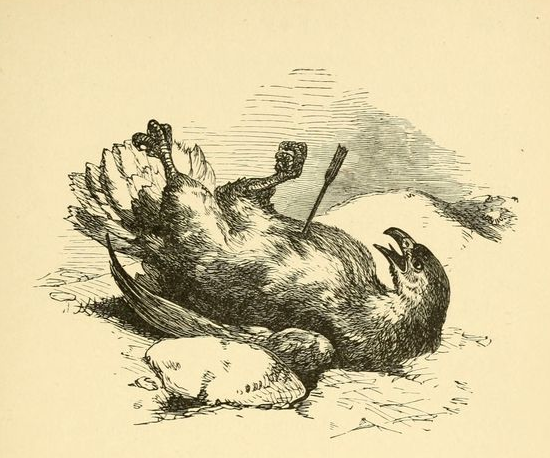
τοξότης ποτὲ ἀετὸν ἐτόξευσεν. ὁ δὲ ἀετός, κείμενος ἐπὶ τῇ γῇ, πολὺ ἤλγει· θεασάμενος δὲ τὸν οἰστόν, ὁρᾷ τὰ ἑαυτοῦ πτερὰ ἔποντα αὐτῷ· τοῦτο δὲ ἰδὼν μᾶλλον ἤλγησεν. λυπηρὸν γάρ, ἔφη, ἀποθανεῖν, λυπηρότερον δὲ ὑπὸ ἐμαυτοῦ ἀπολέσθαι.

τοξότης ποτὲ 
ἀετὸν ἐτόξευσεν. 
ὁ δὲ ἀετός, 
κείμενος ἐπὶ τῇ γῇ, 
πολὺ ἤλγει· 
θεασάμενος δὲ 
τὸν οἰστόν, 
ὁρᾷ τὰ ἑαυτοῦ πτερὰ 
ἔποντα αὐτῷ· 
τοῦτο δὲ ἰδὼν 
μᾶλλον ἤλγησεν. 
λυπηρὸν γάρ, ἔφη, 
ἀποθανεῖν, 
λυπηρότερον δὲ 
ὑπὸ ἐμαυτοῦ ἀπολέσθαι.

τοξότης ποτὲ  ...  An archer once
ἀετὸν ἐτόξευσεν  ...  shot an eagle. 
ὁ δὲ ἀετός  ...  The eagle, 
κείμενος ἐπὶ τῇ γῇ  ...  lying on the ground, 
πολὺ ἤλγει  ...  was in great pain, 
θεασάμενος δὲ  ...  and when he looked at  
τὸν οἰστόν  ...  the arrow, 
ὁρᾷ τὰ ἑαυτοῦ πτερὰ  ...  he saw his own feathers 
ἔποντα αὐτῷ  ...  upon the arrow. 
τοῦτο δὲ ἰδὼν  ...  Seeing this 
μᾶλλον ἤλγησεν  ...  he felt even worse 
ἔφη  ...  and said
λυπηρὸν γάρ  ...  It is painful, 
ἀποθανεῖν  ...  to die, 
λυπηρότερον δὲ  ...  and more painful
ἀπολέσθαι  ...  to be killed
ὑπὸ ἐμαυτοῦ  ... by my own.


Αἰσχύλος ὁ ποιητὴς γέρων γενόμενος, φαλακρὸς ἦν τὴν κεφαλήν. ἐπεὶ δέ ποτε ἐν ἀγρῷ περιεπάτει, ἐπέτετετο ὑπὲρ αὐτοῦ ἀετός, χελώνην ἔχων ἐν ταῖς χερσίν. καὶ ὁ ἀετός, θέλων ἐσθίειν τὴν χελώνην, οὐκ ἐδύνατο διὰ τὸ δέρμα. ἰδὼν δὲ τὴν κεφαλὴν τοῦ Αἰσχύλου λευκὴν οὖσαν, ἐνόμιζε λίθον εἶναι. κατέβαλεν οὖν τὴν χελώμην, βουλόμενος ἐπὶ τῷ λίθῳ ῥηγνύσαι τὸ δέρμα. ἡ δὲ χελώμη ἐπιπεσοῦσα τῇ κεφαλῇ τοῦ ἀνδρὸς ἀπέκτεινεν αὐτόν.

Αἰσχύλος ὁ ποιητὴς 
γέρων γενόμενος, 
φαλακρὸς ἦν τὴν κεφαλήν. 
ἐπεὶ δέ ποτε 
ἐν ἀγρῷ περιεπάτει, 
ἐπέτετετο ὑπὲρ αὐτοῦ ἀετός, 
χελώνην ἔχων 
ἐν ταῖς χερσίν. 
καὶ ὁ ἀετός, 
θέλων ἐσθίειν τὴν χελώνην, 
οὐκ ἐδύνατο 
διὰ τὸ δέρμα. 
ἰδὼν δὲ 
τὴν κεφαλὴν τοῦ Αἰσχύλου 
λευκὴν οὖσαν, 
ἐνόμιζε λίθον εἶναι. 
κατέβαλεν οὖν τὴν χελώμην, 
βουλόμενος 
ἐπὶ τῷ λίθῳ 
ῥηγνύσαι τὸ δέρμα. 
ἡ δὲ χελώμη 
ἐπιπεσοῦσα τῇ κεφαλῇ 
τοῦ ἀνδρὸς 
ἀπέκτεινεν αὐτόν.

Αἰσχύλος ὁ ποιητὴς  ...  Aeschylus the poet 
γέρων γενόμενος  ...  having grown old, 
φαλακρὸς ἦν τὴν κεφαλήν  ...  was bald-headed. 
ἐπεὶ δέ ποτε περιεπάτει  ...  Once he went walking
ἐν ἀγρῷ  ...  in a field, 
ἀετός  ...  an eagle
ἐπέτετετο ὑπὲρ αὐτοῦ  ...  flew over him, 
χελώνην ἔχων  ...  holding a turtle 
ἐν ταῖς χερσίν  ...  in his talons. 
καὶ ὁ ἀετός, θέλων   ...  And the eagle, wanting
ἐσθίειν τὴν χελώνην  ...  to eat the turtle, 
οὐκ ἐδύνατο  ...  was not able to do so 
διὰ τὸ δέρμα  ...  on account of the shell. 
ἰδὼν δὲ  ...  And seeing 
τὴν κεφαλὴν τοῦ Αἰσχύλου  ...  Aeschylus's head 
λευκὴν οὖσαν  ...  which was white, 
ἐνόμιζε λίθον εἶναι  ...  he thought it was a rock. 
κατέβαλεν οὖν  ...  So he dropped
τὴν χελώμην  ...  the turtle, 
βουλόμενος  ...  planning 
ῥηγνύσαι τὸ δέρμα  ...  to shatter the shell
ἐπὶ τῷ λίθῳ  ...  on the rock. 
ἡ δὲ χελώμη  ...  The turtle 
ἐπιπεσοῦσα τῇ κεφαλῇ  ...  fell on the head 
τοῦ ἀνδρὸς  ...  of the man
ἀπέκτεινεν αὐτόν  ...  and killed him.


Click here to subscribe/unsubscribe to the email list.


Saturday, June 21, 2025

Greek Vocabulary Challenge: June 22

Here are today's vocabulary words; it's Group 175. Click on the word to learn more at Logeion:

~ τοῦ (article m.): the 
ὁμοίως (adverb): likewise, the same 
ἔνθεν (adverb): whence, from where 
καί (conj.): and, also, even 
παρά (prep.+gen.): from 

These are the proverbs (and there are always more proverbs at the blog):

Βελισαρίῳ ὀβολὸν δότε τῷ στρατηλάτῃ.

Θεσμοὺς δ᾽ ὁμοίως τῷ κακῷ τε κἀγαθῷ.

Ἁλῶν δὲ φόρτος ἔνθεν ἦλθεν, ἔνθ' ἔβη.

Χρόνῳ τὰ πάντα γίγνεται καὶ κρίνεται.

Λόγον παρ' ἐχθροῦ μήποθ' ἡγήσῃ φίλον.


And now, some commentary:

Βελισαρίῳ ὀβολὸν δότε τῷ στρατηλάτῃ.
Give an obolus to General Belisarius.
This is a line from the Chiliades of the Byzantine historian Tzetzes, and Belisarius was one of the great generals during the rule of the Byzantine emperor Justinian. There is a legend, probably not historical, that when Belisarius was charged with participating in a conspiracy against the emperor, Justinian had Belisarius's eyes put out, condemning him to be a beggar; hence this saying. You can see a discussion at Wikipedia: Legend as a blind beggar.

Θεσμοὺς δ᾽ ὁμοίως τῷ κακῷ τε κἀγαθῷ.
[I wrote] laws equally for the bad and for the good.
A law, θεσμός, is that which is "laid down," from the verb τίθημι. This is a saying attributed to the Athenian lawmaker Solon; you can find out more at Wikipedia: Solon. Specifically, this is part of the Σεισάχθεια, the "debt relief laws," which also has its own Wikipedia article: Seisachtheia. The Seisachtheia is quoted in Aristotle's Athenian Constitution. (I just have to add: those of you who know me know that I am a devoted reader of David Graeber, and the best book to start with is his genius book on the history of debt and debt relief: Debt: The First 5000 Years.)

Ἁλῶν δὲ φόρτος ἔνθεν ἦλθεν, ἔνθ' ἔβη.
Whence the load of salt came, so it went.
The story goes that there was a merchant who was sailing with a load of salt. The ship filled with water, which dissolved the salt, and then the ship itself sank! So the salt came from sea water, and back into the sea it dissolved. By analogy, the saying applies to anyone who loses something that they have acquired. Compare the English saying, "Easy come, easy go." 

Χρόνῳ τὰ πάντα γίγνεται καὶ κρίνεται.
In time all things occur and are judged.
Note the characteristic use of singular verbs, γίγνεται and κρίνεται, with the neuter plural subject: τὰ πάντα. Another version of this saying reads: Νόμῳ τὰ πάντα γίγνεται καὶ κρίνεται, with νόμῳ, "according to custom, practice, law" instead of χρόνῳ. This is one of the monostichs (one-liners) of Menander in iambic meter:
Χρόνῳ | τὰ πάν||τα γίγ|νεται || καὶ κρί|νεται ||

Λόγον παρ' ἐχθροῦ μήποθ' ἡγήσῃ φίλον.
Don't ever consider the word of an enemy to be friendly.
Note the 2nd-person middle form: ἡγήσῃ, with μήποθ' alerting you to the presence of an imperative or a subjunctive, as here (jussive subjunctive, a form of command). This is another one of Menander's monostichs in iambic meter:
Λόγον | παρ' ἐχ||θροῦ μή|ποθ' ἡ||γήσῃ | φίλον ||


And here's a random proverb and a random LOLCat too:


Click here to subscribe/unsubscribe to the email list.


Thursday, June 19, 2025

Greek Reading: 74

One fable below comes from Bryce's First Greek Reader (that is the last one from Bryce), and the other comes from A Greek Reader by Peter Bullions, both of which are available at the Internet Archive.

You'll find the stories below, first in Greek, then segmented, and then interwoven with English; the title is linked to the Internet Archive page.


Λέων καὶ ὄνος κοινωνίαn θέμενοι, ἐξῆλθον ἐπὶ θήραν· γενομένων δὲ αὐτῶν κατά τι σπήλαιον, ἐν ᾧ αἶγες ἄγριαι, ὁ μὲν λέων πρὸ τοῦ στoμίου στάς, ἐξιούσας τὰς αἶγας συνελάμβανεν· ὁ δὲ ὄνος ἔνδον εἰσελθὼν ἐνήλατο αὐταῖς, καὶ ὠγκᾶτο ἐκφοβεῖν βουλόμενος· τοῦ δὲ λέοντος τὰς πλείστας συλλαβόντος, ἐξελθὼν ἐκεῖνος ἐπυνθάνετο αὐτοῦ εἰ γενναίως ἠγωνίσατο, καὶ τὰς αἶγας ἐξεδίωξεν· ὁ δὲ εἶπεν, Ἀλλ' εὖ ἴσθι ὅτι κἀγὼ ἄν σε ἐφοβήθην, εἰ μὴ ᾔδειν σε ὄνον ὄντα.

Λέων καὶ ὄνος
κοινωνίαn θέμενοι, 
ἐξῆλθον ἐπὶ θήραν· 
γενομένων δὲ αὐτῶν 
κατά τι σπήλαιον, 
ἐν ᾧ αἶγες ἄγριαι, 
ὁ μὲν λέων 
πρὸ τοῦ στoμίου στάς, 
ἐξιούσας τὰς αἶγας 
συνελάμβανεν· 
ὁ δὲ ὄνος 
ἔνδον εἰσελθὼν 
ἐνήλατο αὐταῖς, 
καὶ ὠγκᾶτο ἐκφοβεῖν βουλόμενος· 
τοῦ δὲ λέοντος 
τὰς πλείστας συλλαβόντος, 
ἐξελθὼν ἐκεῖνος 
ἐπυνθάνετο αὐτοῦ 
εἰ γενναίως ἠγωνίσατο, 
καὶ τὰς αἶγας ἐξεδίωξεν· 
ὁ δὲ εἶπεν, 
Ἀλλ' εὖ ἴσθι ὅτι 
κἀγὼ ἄν σε ἐφοβήθην, 
εἰ μὴ ᾔδειν 
σε ὄνον ὄντα.

Λέων καὶ ὄνος  ...  A lion and a donkey
κοινωνίαn θέμενοι  ...  formed a partnership, 
ἐξῆλθον ἐπὶ θήραν  ...  and went out hunting,
γενομένων δὲ αὐτῶν  ...  and they came
κατά τι σπήλαιον  ...  upon a cave
ἐν ᾧ αἶγες ἄγριαι  ...  in which there were wild goats.
ὁ μὲν λέων  ...  The lion
πρὸ τοῦ στoμίου στάς  ...  stood at the mouth of the cave, 
συνελάμβανεν τὰς αἶγας ...  and seized the goats
ἐξιούσας  ...  as they were coming out.
ὁ δὲ ὄνος  ...  The donkey
ἔνδον εἰσελθὼν  ...  went inside 
ἐνήλατο αὐταῖς  ... and rushed upon the goats
καὶ ὠγκᾶτο  ...  and he brayed
ἐκφοβεῖν βουλόμενος  ...  wanted to scare them. 
τοῦ δὲ λέοντος  ...  When the lion
τὰς πλείστας συλλαβόντος  ...  had seized most of them,
ἐξελθὼν ἐκεῖνος  ...  the donkey came out
ἐπυνθάνετο αὐτοῦ  ...  and asked the lion
εἰ γενναίως ἠγωνίσατο  ...  if he had fought nobly
καὶ τὰς αἶγας ἐξεδίωξεν  ...  persecuting the goats.
ὁ δὲ εἶπεν  ...  And the lion said,
Ἀλλ' εὖ ἴσθι ὅτι  ...  Know well that
κἀγὼ ἄν σε ἐφοβήθην  ...  I too would have been afraid, 
εἰ μὴ ᾔδειν  ...  if I didn't know
σε ὄνον ὄντα  ...  you are a donkey.


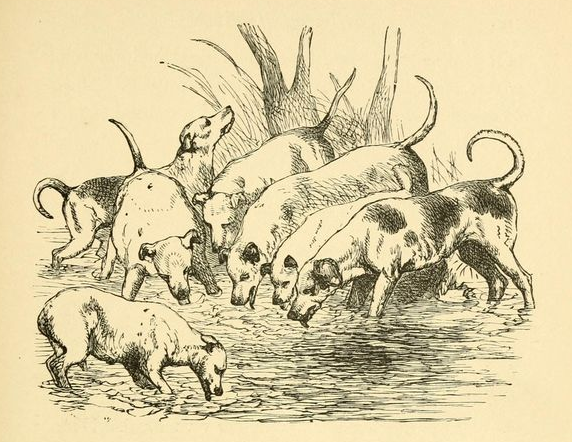
Κύνες λιμώττουσαι, ὡς ἐθεάσαντο ἔν τινι ποταμῷ βύρσας βρεχομένας, μὴ δυνάμεναι αὐτῶν ἐφικέσθαι, συνέθεντο ἀλλήλαις ὅπως πρῶτον τὸ ὕδωρ ἐκπίωσιν, καὶ εἶθ’ οὕτως ἐπὶ τὰς βύρσας παραγένωνται. Συνέϐη δὲ αὐταῖς πιούσαις πριν διαρραγῆναι ἤ τῶν βυρσῶν ἐφικέσθαι.

Κύνες λιμώττουσαι, 
ὡς ἐθεάσαντο ἔν τινι ποταμῷ 
βύρσας βρεχομένας, 
μὴ δυνάμεναι αὐτῶν ἐφικέσθαι, 
συνέθεντο ἀλλήλαις 
ὅπως πρῶτον τὸ ὕδωρ ἐκπίωσιν, 
καὶ εἶθ’ οὕτως ἐπὶ τὰς βύρσας παραγένωνται. 
Συνέβη δὲ αὐταῖς πιούσαις 
πριν διαρραγῆναι 
ἤ τῶν βυρσῶν ἐφικέσθαι.

Κύνες λιμώττουσαι  ...  Some dogs were famished, 
ὡς ἐθεάσαντο ἔν τινι ποταμῷ  ...  and they saw in a river 
βύρσας βρεχομένας  ...  some hides that were soaking, 
μὴ δυνάμεναι αὐτῶν ἐφικέσθαι  ... but not being able reach them, 
συνέθεντο ἀλλήλαις  ...  they agreed 
ὅπως πρῶτον τὸ ὕδωρ ἐκπίωσιν ...  to drink up the water first, 
καὶ εἶθ’ οὕτως παραγένωνται  ... and then they'd come
ἐπὶ τὰς βύρσας   ...  to the hides. 
Συνέβη δὲ αὐταῖς  ...  What happened to them
πιούσαις  ...  was that they drank
πριν διαρραγῆναι  ...  and burst before
ἤ τῶν βυρσῶν ἐφικέσθαι  ...  they got to the hides.


And here's a random proverb and a random LOLCat too:


Click here to subscribe/unsubscribe to the email list.


Wednesday, June 18, 2025

Proverbs Slideshow/Crossword

For today, it's a new review slideshow for Groups 164, 165, and 166. Here's the post with the details about how the slideshows work, and there's a random cat at the bottom of the post! Plus more cats.

The slideshow is embedded in the blog post, and you can also access today's slideshow directly, full-sized view. And remember: each time you see the English translation on a slide, you can click to access the original blog post with the notes for each proverb.


There's also a crossword puzzle PDF that you can print; here's a screenshot of the puzzle and key. :-)

These are the proverbs, linked back to their blog post:
  1. Ἀκρὸν λάβε, καὶ μέσον ἕξεις.
  2. Ἀνόητος νεοττὸς ἑκὼν δείκνυσι τὴν ἑαυτοῦ νοσσιάν.
  3. Βέβαιον οὐδέν ἐστιν ἐν θνητῷ βίῳ.
  4. Κρεῖττον σιωπᾶν ἐστιν ἢ λαλεῖν μάτην.
  5. Λέρνη κακῶν.
  6. Μηδὲ θεοῖσιν ἶσ' ἔθελε φρονέειν.
  7. Μηδέποτε πειρῶ δύο φίλων εἶναι κριτής.
  8. Ὁ μηδὲν ἀδικῶν οὐδενὸς δεῖται νόμου.
  9. Οἱ μεγάλοι κλέπται τὸν μικρὸν ἀπάγουσι.
  10. Ὄφιν τρέφειν καὶ πονηρὸν εὐεργετεῖν ταὐτόν ἐστιν.
  11. Πλούτῳ ἀπίστει.
  12. Πρὸς δύο λέγεται οὐδ᾽ ὁ Ἡρακλῆς οἷός τε εἶναι.
  13. Προτέρα πάντων ἔκτισται σοφία.
  14. Τὰ ἀφανῆ τοῖς φανεροῖς τεκμαίρου.
  15. Φίλοις βοήθει.


And here's a random proverb and a random LOLCat too :


Click here to subscribe/unsubscribe to the email list.