Friday, August 29, 2025

Greek Reading: 96

Today's stories come from Colson's Stories and Legends: A First Greek Reader which is available at the Internet Archive. These are the last two stories from Colson; I have included a lot of stories from Colson because his book, unlike many of the others, contains original texts, not just copies of Chambry, etc.

You'll find the stories below, first in Greek, then segmented, and then interwoven with English; the title is linked to the Internet Archive page.


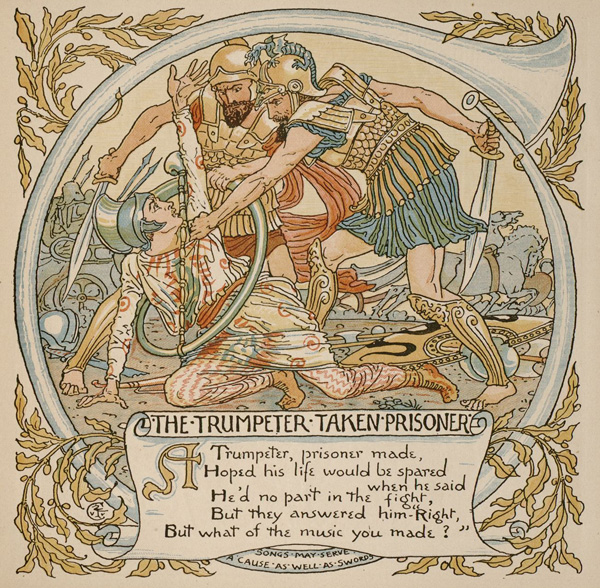
στρατιῶταί τινες νικήσαντες τοὺς πολεμίους σαλπιγκτὴν ἔλαβον. ἐπεὶ δὲ ἔμελλον ἀποκτείνειν, εἶπεν, ὦ ἄνδρες, μὴ τοῦτο ποιήσητε. ἐγὼ γὰρ οὐδένα ὑμῶν ἀπἔκτεινα. ὁρᾶτε δὲ ὅτι οὐδὲν ὅπλον ἔχω, πλὴν ταύτης τῆς σάλπιγγος. οἱ δὲ ἄνδρες εἶπον, διὰ δὲ τοῦτο ἔτι μᾶλλον δίκαιος εἶ ἀποθανεῖν, ὅτι σὺ μὲν αὐτὸς οὐ πολεμεῖς, τοὺς δὲ ἄλλους ἐς μαχὴν ἐγείρεις.

στρατιῶταί τινες 
νικήσαντες τοὺς πολεμίους 
σαλπιγκτὴν ἔλαβον. 
ἐπεὶ δὲ ἔμελλον ἀποκτείνειν, 
εἶπεν, 
ὦ ἄνδρες, μὴ τοῦτο ποιήσητε. 
ἐγὼ γὰρ 
οὐδένα ὑμῶν ἀπἔκτεινα. 
ὁρᾶτε δὲ 
ὅτι οὐδὲν ὅπλον ἔχω, 
πλὴν ταύτης τῆς σάλπιγγος.
οἱ δὲ ἄνδρες εἶπον, 
διὰ δὲ τοῦτο 
ἔτι μᾶλλον δίκαιος εἶ ἀποθανεῖν, 
ὅτι σὺ μὲν αὐτὸς 
οὐ πολεμεῖς, 
τοὺς δὲ ἄλλους 
ἐς μαχὴν ἐγείρεις.

στρατιῶταί τινες  ...  Some soldiers
νικήσαντες τοὺς πολεμίους  ...  conquered the enemy 
σαλπιγκτὴν ἔλαβον  ...  and seized their trumpeter. 
ἐπεὶ δὲ ἔμελλον ἀποκτείνειν  ...  When they were about to kill him
εἶπεν  ...  he said, 
ὦ ἄνδρες  ...  O men, 
μὴ τοῦτο ποιήσητε  ...  you should not do this. 
ἐγὼ γὰρ  ...  For I 
οὐδένα ὑμῶν ἀπἔκτεινα  ...  killed not one of you. 
ὁρᾶτε δὲ ὅτι ...  And you see that
οὐδὲν ὅπλον ἔχω  ...  I have no weapons, 
πλὴν ταύτης τῆς σάλπιγγος  ...  only this trumpet.
οἱ δὲ ἄνδρες εἶπον  ...  The men said, 
διὰ δὲ τοῦτο  ...  "That is why 
ἔτι μᾶλλον δίκαιος εἶ  ...  you are all the more deserving 
ἀποθανεῖν  ...  of death, 
ὅτι σὺ μὲν αὐτὸς  ...  because you yourself 
οὐ πολεμεῖς  ...  did not engage in battle, 
ἐγείρεις δὲ τοὺς ἄλλους  ...  but you roused the others 
ἐς μαχὴν  ...  to fight.


λόγος τίς ἐστιν, ὡς ἄνθρωπος φόνον ποιήσας ἐδιώκετο. γενόμενος δὲ κατὰ τὸν Νεῖλον, λέοντα ὁρᾷ. φοβηθεὶς δὲ ἀναβαίνει ἐς δένδρον. ἐν δὲ τῷ δένδρῳ εὑρίσκει δράκοντα. καὶ πάλιν αὖ τοῦτον φοβηθείς, ῥίπτει ἑαυτὸν ἐς τὸν ποταμόν. ἐν δὲ τῷ ποταμῷ ὄντα κροκόδειλος κατεσθίει. τοὺς γὰρ φονέας καὶ ἡ γῆ καὶ ὁ ἀὴρ καὶ τὸ ὕδωρ ἀποστυγοῦσι.

λόγος τίς ἐστιν, 
ὡς ἄνθρωπος 
φόνον ποιήσας 
ἐδιώκετο. 
γενόμενος δὲ 
κατὰ τὸν Νεῖλον, 
λέοντα ὁρᾷ. 
φοβηθεὶς δὲ 
ἀναβαίνει ἐς δένδρον. 
ἐν δὲ τῷ δένδρῳ 
εὑρίσκει δράκοντα. 
καὶ πάλιν αὖ 
τοῦτον φοβηθείς, 
ῥίπτει ἑαυτὸν 
ἐς τὸν ποταμόν. 
ἐν δὲ τῷ ποταμῷ ὄντα 
κροκόδειλος κατεσθίει. 
τοὺς γὰρ φονέας 
καὶ ἡ γῆ καὶ ὁ ἀὴρ καὶ τὸ ὕδωρ 
ἀποστυγοῦσι.

λόγος τίς ἐστιν  ...  There is a story 
ὡς ἄνθρωπος  ...  that a man
φόνον ποιήσας  ...  had committed murder
ἐδιώκετο  ...  and was being pursued.
γενόμενος δὲ  ...  When he reaches 
κατὰ τὸν Νεῖλον  ...  the Nile river, 
λέοντα ὁρᾷ  ...  he sees a lion. 
φοβηθεὶς δὲ  ...  Terrified, 
ἀναβαίνει ἐς δένδρον  ...  he climbs a tree. 
ἐν δὲ τῷ δένδρῳ  ...  In the tree 
εὑρίσκει δράκοντα  ...  he discovers a dragon. 
καὶ πάλιν αὖ  ...  And once again, 
τοῦτον φοβηθείς  ...  terrified at this, 
ῥίπτει ἑαυτὸν  ...  he throws himself 
ἐς τὸν ποταμόν  ...  into the river. 
ἐν δὲ τῷ ποταμῷ ὄντα  ...  When he is in the river, 
κροκόδειλος κατεσθίει  ...  a crocodile eats him. 
καὶ ἡ γῆ καὶ ὁ ἀὴρ καὶ τὸ ὕδωρ  ...  Earth, Air, and Water 
ἀποστυγοῦσι τοὺς φονέας  ...  abhor murderers.  


And here's a random proverb and a random LOLCat too:


Click here to subscribe/unsubscribe to the email list.


Wednesday, August 27, 2025

Greek Animal Vocabulary: August 28

Here are today's animal names; it's Group 190. Click on the word to learn more at Logeion ("egg" is not exactly an animal, but it is animal-related!):

λύκος ~ λύκου (noun m.): wolf 
ᾠόν ~ ᾠοῦ (noun n.): egg 
κόραξ ~ κόρακος (noun m.): crow 
ὄνος ~ ὄνου (noun m.): donkey 
γλαύξ ~ γλαυκός (noun f.): owl 

These are the proverbs (and there are always more proverbs at the blog):

Λύκων φιλία.

ᾨὸν τίλλεις.

Κόραξ ὑδρεύει.

Ὄνου παρακύψεως.

Τίς γλαῦκ' Ἀθήναζ' ἤγαγεν;

And now, some commentary:

Λύκων φιλία.
The friendship of wolves.
This is not much of a friendship, since wolves have no loyalty whatsoever. You can also find this idea expressed as a single word: λυκοφιλία.

ᾨὸν τίλλεις.
You're plucking an egg.
In other words: you are wasting your time! Unlike a bird, which can be plucked, a bird's egg is completely smooth; there is nothing to pluck. This is another proverbial adynaton (impossibility).

Κόραξ ὑδρεύει.
The crow is drawing water.
This saying alludes to an anecdote told about a crow drinking from a bucket or vase of water by using stones to raise the level of the water. It also appears as an Aesop's fable: The Crow and the Pitcher. Actual crows have done this in modern experiments! You can see a video here: Clever crow uses physics to get its food.

Ἐξ ὄνου παρακύψεως.
Because of a donkey's peeking.
This is a proverb about how a tiny action can lead to disastrous consequences, and it can also be used to refer to a frivolous lawsuit. The proverb is based on a story about a donkey who out of curiosity stuck his nose into the window of a shop; this scared some birds in the shop, and, in their frenzy, the birds then broke all the clay pots in the shop. The owner of the shop then took the donkey's owner to court on a charge of "the donkey's peeping."

Τίς γλαῦκ' Ἀθήναζ' ἤγαγεν;
Who brought an owl to Athens?
This line comes from Aristophanes's Birds. The motif of "owls to Athens" is like the British equivalent of "coals to Newcastle." There's no reason to bring an owl to Athens because Athens is full of owls, both because of owls being the bird of Athena, and also because of the owls that appear on Athenian coins.

And here's a random proverb and a random LOLCat too:


Click here to subscribe/unsubscribe to the email list.


Monday, August 25, 2025

Greek Reading: 95

Today's stories come from Colson's Stories and Legends: A First Greek Reader which is available at the Internet Archive. You'll find the stories below, first in Greek, then segmented, and then interwoven with English; the title is linked to the Internet Archive page.


οἱ λύκοι ἐμάχοντο τοῖς προβάτοις. καὶ πρῶτον μὲν οὐκ ἐδύναντο νικῶν διὰ τοὺς κύνας. ἔπειτα πρέσβεις ἀποστείλαντες κελεύουσι τὰ πρόβατα ἀποπέμπειν τοὺς κύνας, ὡς αἰτίους ὄντας τοῦ πολέμου. εἰ γὰρ οὗτοι μὴ παρεῖεν, ἔλεγον ὅτι εἴη ἂν εἰρήνη. τὰ δὲ πρόβατα πειθόμενα ἀπέπεμψε τοὺς κύνας. τὴν δὲ ποίμνην ἀφύλακτον οὖσαν οἱ λύκοι ῥᾳδίως διέφθειραν.

οἱ λύκοι 
ἐμάχοντο τοῖς προβάτοις. 
καὶ πρῶτον μὲν 
οὐκ ἐδύναντο νικῶν 
διὰ τοὺς κύνας. 
ἔπειτα 
πρέσβεις ἀποστείλαντες 
κελεύουσι τὰ πρόβατα 
ἀποπέμπειν τοὺς κύνας, 
ὡς αἰτίους ὄντας τοῦ πολέμου. 
εἰ γὰρ οὗτοι μὴ παρεῖεν, 
ἔλεγον ὅτι 
εἴη ἂν εἰρήνη. 
τὰ δὲ πρόβατα 
πειθόμενα 
ἀπέπεμψε τοὺς κύνας. 
τὴν δὲ ποίμνην 
ἀφύλακτον οὖσαν 
οἱ λύκοι ῥᾳδίως διέφθειραν.

οἱ λύκοι  ...  The wolves
ἐμάχοντο τοῖς προβάτοις  ...  waged war on the sheep. 
καὶ πρῶτον μὲν  ...  And at first 
οὐκ ἐδύναντο νικῶν  ...  the wolves could not win
διὰ τοὺς κύνας  ...  on account of the dogs.
ἔπειτα  ...  Then the wolves
πρέσβεις ἀποστείλαντες  ...  sent ambassadors 
κελεύουσι τὰ πρόβατα  ...  and ordered the sheep 
ἀποπέμπειν τοὺς κύνας  ...  to send the dogs away, 
ὡς αἰτίους ὄντας  ...  as they were the cause
τοῦ πολέμου  ...  of the war. 
εἰ γὰρ οὗτοι μὴ παρεῖεν  ...  If the dogs were gone, 
ἔλεγον ὅτι  ...  the wolves said that 
εἴη ἂν εἰρήνη  ...  there would be peace. 
τὰ δὲ πρόβατα πειθόμενα  ...  The sheep believed it
ἀπέπεμψε τοὺς κύνας  ...  and send the dogs away. 
οἱ δὲ λύκοι  ...  Then the wolves 
ῥᾳδίως διέφθειραν  ...  easily destroyed
τὴν ποίμνην  ...  the flock 
ἀφύλακτον οὖσαν  ...  now that it was defenseless. 


ΦΙΛΟΣ. τί κλαίεις, ὦ τᾶν;
ΦΙΛΑΡΓΥΡΟΣ. καὶ πῶς οὔ με δεῖ κλαίειν; πολὺν γὰρ ἔχων χρυσὸν κατώρυξα ἐν τῇ κήπῳ. καὶ τοῦτο ποιῶν ἔδοξα ἐμαυτῷ λεληθέναι ἅπαντας. νῦν δέ τις κλέπτης νύκτωρ ἔλθὼν ἀφῄρηκε. 
ΦΙΛΟΣ. Μὴ κλαῖε, ὦ φίλε: ἀλλὰ λίθον λαβὼν ἐν τῷ αὐτῷ τόπῳ κατάθες, καὶ τοῦτον νόμεζε εἶναί σοι τὸν χρυσόν· οὐδὲ γάρ, ὅτε εἶχες τὸν θησαυρόν, ἐχρῶ ποτε αὐτῷ.

ΦΙΛΟΣ. 
τί κλαίεις, ὦ τᾶν;
ΦΙΛΑΡΓΥΡΟΣ. 
καὶ πῶς οὔ με δεῖ κλαίειν; 
πολὺν γὰρ ἔχων χρυσὸν 
κατώρυξα ἐν τῇ κήπῳ. 
καὶ τοῦτο ποιῶν 
ἔδοξα ἐμαυτῷ 
λεληθέναι ἅπαντας. 
νῦν δέ τις κλέπτης 
νύκτωρ ἔλθὼν 
ἀφῄρηκε. 
ΦΙΛΟΣ. 
Μὴ κλαῖε, ὦ φίλε: 
ἀλλὰ λίθον λαβὼν 
ἐν τῷ αὐτῷ τόπῳ κατάθες, 
καὶ τοῦτον νόμεζε 
εἶναί σοι τὸν χρυσόν· 
οὐδὲ γάρ, 
ὅτε εἶχες τὸν θησαυρόν, 
ἐχρῶ ποτε αὐτῷ.

ΦΙΛΟΣ. 
ὦ τᾶν  ...  My good man,
τί κλαίεις  ...  why are you crying?
ΦΙΛΑΡΓΥΡΟΣ. 
καὶ πῶς  ...  And how 
οὔ με δεῖ κλαίειν  ...  could I fail to cry?
πολὺν γὰρ ἔχων χρυσὸν  ...  For I had a lot of gold
κατώρυξα ἐν τῇ κήπῳ  ...  and buried it in the garden.
καὶ τοῦτο ποιῶν  ...  And by doing that
ἔδοξα ἐμαυτῷ  ...  I thought
λεληθέναι ἅπαντας  ...  I had escaped all notice. 
νῦν δέ τις κλέπτης  ...  But now some thief 
νύκτωρ ἔλθὼν  ...  came by night
ἀφῄρηκε  ...  and took it away.
ΦΙΛΟΣ. 
Μὴ κλαῖε, ὦ φίλε  ...  Don't cry, my friend: 
ἀλλὰ λίθον λαβὼν  ...  just get a stone
κατάθες  ...  and put it
ἐν τῷ αὐτῷ τόπῳ  ...  in the same place, 
καὶ τοῦτον νόμεζε  ...  and consider it
εἶναί σοι τὸν χρυσόν  ...  to be your gold.
οὐδὲ γάρ  ...  For you did not, 
ὅτε εἶχες τὸν θησαυρόν  ...  while you had the treasure, 
ἐχρῶ ποτε αὐτῷ  ...  every make use of it.


And here's a random proverb and a random LOLCat too:


Click here to subscribe/unsubscribe to the email list.


Friday, August 22, 2025

Greek Crossword 49-50-51

Here is the review for proverbs in groups 49-50-51 with the crossword puzzle! You can click on those group links to review those posts and/or click on the linked sayings below for the post with that specific saying:
Here are the sayings without spaces: see if you can find the word breaks! (I'm just doing the shorter ones because the long ones just keep running over longer than the line.)

γ ο ν υ κ ν η μ η σ ε γ γ ι ο ν.

ψ υ χ η σ ε ι κ ω ν ο λ ο γ ο σ ε σ τ ι ν.

τ ι η γ ε ν ε α α υ τ η ζ η τ ε ι σ η μ ε ι ο ν;

ω δ ι ν ε ν ο ρ ο σ ε ι τ α μ υ ν α π ε τ ε κ ε ν.

τ α ε λ α χ ι σ τ α λ η π τ ε ο ν τ ω ν κ α κ ω ν.

τ ο π ε π ρ ω μ ε ν ο ν φ υ γ ε ι ν α δ υ ν α τ ο ν.

α γ α θ η σ ο φ ι α υ π ε ρ σ κ ε υ η π ο λ ε μ ο υ.

ο υ δ ε ν σ ι ω π η σ ε σ τ ι χ ρ η σ ι μ ω τ ε ρ ο ν.

τ ο ι σ π λ ο υ σ ι ο ι σ π ο λ λ α π α ρ α μ υ θ ι α.

ε γ ω γ α ρ ε ι μ ι τ w ν ε μ ω ν ε μ ο σ μ ο ν ο ς.

ο μ ι σ θ ο σ υ μ ω ν π ο λ υ σ ε ν τ ῳ ο υ ρ α ν ῳ.

And here's the crossword puzzle based on a missing word from each proverb: printable Crossword PDF. I've pasted in screenshots below so you can see what the crossword looks like:

And here's a random proverb and a random LOLCat too :


Click here to subscribe/unsubscribe to the email list.


Thursday, August 21, 2025

Greek Reading: 94

Today's stories come from Colson's Stories and Legends: A First Greek Reader which is available at the Internet Archive. You'll find the stories below, first in Greek, then segmented, and then interwoven with English; the title is linked to the Internet Archive page.


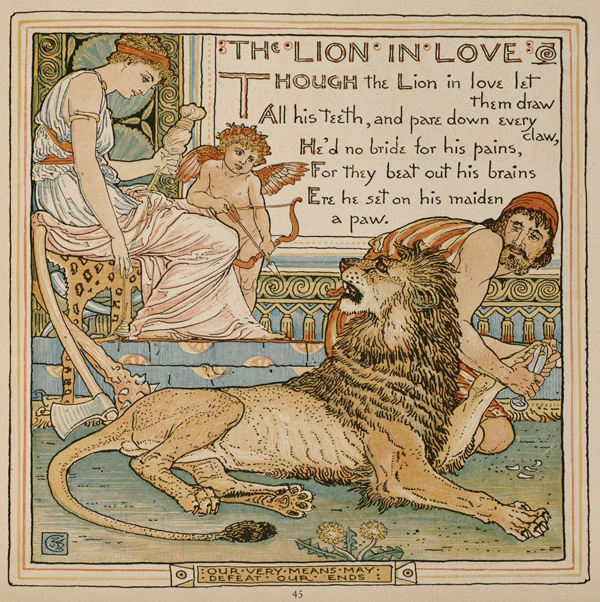
ὁ λέων ἐρῶν τινὸς παρθένον τὸν πατέρα δοῦναι ἐκείνην, ὡς γυναῖκα, ἤτησε. ὁ δὲ πατὴρ ἔ-φη, “ἔγωγε μὲν ἕτοιμός εἶμι, ἡ δὲ κόρη τοὺς σοὺς ὄνυχας καὶ ὀδόντας φοβεῖται." καὶ ὁ λέων, ἀκούσας ταῦτα, τούς τε ὄνυχας καὶ ὀδόντας ἐξεἶλε. ὁ δὲ πατήρ, ορῶν ἐκεῖνον ἤδη ἀβλαβῆ ὄντα, ῥᾳδίως τῷ ξύλῳ ἀπέκτεινε.

ὁ λέων 
ἐρῶν τινὸς παρθένον 
τὸν πατέρα 
δοῦναι ἐκείνην, 
ὡς γυναῖκα, 
ἤτησε. 
ὁ δὲ πατὴρ ἔφη, 
ἔγωγε μὲν ἕτοιμός εἶμι, 
ἡ δὲ κόρη 
τοὺς σοὺς ὄνυχας 
καὶ ὀδόντας 
φοβεῖται. 
καὶ ὁ λέων, 
ἀκούσας ταῦτα, 
τούς τε ὄνυχας 
καὶ ὀδόντας 
ἐξεἶλε. 
ὁ δὲ πατήρ, 
ορῶν ἐκεῖνον 
ἤδη ἀβλαβῆ ὄντα, 
ῥᾳδίως τῷ ξύλῳ ἀπέκτεινε.

ὁ λέων  ...  A lion
ἐρῶν  ...  fell in love 
τινὸς παρθένον  ...  with a man's young daughter
ἤτησε τὸν πατέρα  ...  and asked her father
δοῦναι ἐκείνην  ...  to give her to him
ὡς γυναῖκα  ...  as his wife.
ὁ δὲ πατὴρ ἔφη  ...  The father said, 
ἔγωγε μὲν ἕτοιμός εἶμι  ...  I am quite willing, 
ἡ δὲ κόρη φοβεῖται  ...  but the girl fears
τοὺς σοὺς ὄνυχας  ...  your claws 
καὶ ὀδόντας  ...  and your teeth.
καὶ ὁ λέων  ...  and the lion, 
ἀκούσας ταῦτα  ...  when he heard this, 
ἐξεἶλε  ...  extracted
τούς τε ὄνυχας  ... both his claws 
καὶ ὀδόντας  ...  and his teeth.
ὁ δὲ πατήρ  ...  Then the father, 
ορῶν ἐκεῖνον  ...  seeing that he
ἤδη ἀβλαβῆ ὄντα  ...  was now harmless, 
ῥᾳδίως ἀπέκτεινε  ...  easily killed him
τῷ ξύλῳ  ...  with a club.


ἀνὴρ γεωργὸς ἔμελλεν ἀποθνήσκειν. αἰσθόμενος δὲ τοὺς παῖδας ἀμελεῖς ὄντας τῆς γεωργίας, τοιαῦτα ἔφη, ὦ παῖδες, πολύς μοι χρυσὸς ἀπόκειται ἐν τῷ ἀμπελῶνι. τοῦτον εὑρόντες πλούσιοι ἔσεσθε. ἀποθανόντος δὲ ἐκείνου οἱ παῖδες πάντα τὸν ἀμπελῶνα ἔσκaψαν, νομίζοντες ὡς ὁ θησαυρὸς ἐκεῖ που κέκρυπται. καὶ τὸν μὲν θησαυρὸν οὐχ εὗρον· αἱ δὲ ἄμπελοι πολλῷ πλείω καρπὸν ἀνέδωκαν, ὥστε πλούσιοι οἱ ἄνδρες ἐγένοντο.

ἀνὴρ γεωργὸς 
ἔμελλεν ἀποθνήσκειν. 
αἰσθόμενος δὲ 
τοὺς παῖδας 
ἀμελεῖς ὄντας τῆς γεωργίας, 
τοιαῦτα ἔφη, 
ὦ παῖδες, 
πολύς μοι χρυσὸς 
ἀπόκειται ἐν τῷ ἀμπελῶνι. 
τοῦτον εὑρόντες 
πλούσιοι ἔσεσθε. 
ἀποθανόντος δὲ ἐκείνου 
οἱ παῖδες 
πάντα τὸν ἀμπελῶνα 
ἔσκaψαν, 
νομίζοντες 
ὡς ὁ θησαυρὸς 
ἐκεῖ που κέκρυπται. 
καὶ τὸν μὲν θησαυρὸν 
οὐχ εὗρον· 
αἱ δὲ ἄμπελοι 
πολλῷ πλείω καρπὸν 
ἀνέδωκαν, 
ὥστε πλούσιοι 
οἱ ἄνδρες ἐγένοντο.

ἀνὴρ γεωργὸς  ...  A farmer 
ἔμελλεν ἀποθνήσκειν  ...  was about to die. 
αἰσθόμενος δὲ  ...  He realized that
τοὺς παῖδας  ...  his sons
ἀμελεῖς ὄντας  ...  were neglectful 
τῆς γεωργίας  ...  of the farming,
τοιαῦτα ἔφη  ...  so he said this to them:
ὦ παῖδες  ...  O sons, 
πολύς μοι χρυσὸς  ...  My great wealth in gold 
ἀπόκειται ἐν τῷ ἀμπελῶνι  ...  is stashed in the vineyard.
τοῦτον εὑρόντες  ...  When you find it, 
πλούσιοι ἔσεσθε  ...  you will be wealthy.
ἀποθανόντος δὲ ἐκείνου  ...  After he died,
οἱ παῖδες ἔσκaψαν  ...  the sons dug up
πάντα τὸν ἀμπελῶνα  ...  the whole vineyard,
νομίζοντες ὡς ὁ θησαυρὸς  ...  thinking the treasure 
ἐκεῖ που κέκρυπται  ...  was hidden there somewhere.
καὶ τὸν μὲν θησαυρὸν  ...  The treasure 
οὐχ εὗρον  ...  they did not find,
αἱ δὲ ἄμπελοι ἀνέδωκαν  ...  but the vines yielded
πολλῷ πλείω καρπὸν  ...  much more fruit by far,
ὥστε οἱ ἄνδρες  ...  so the men
πλούσιοι ἐγένοντο  ...  became rich.


And here's a random proverb and a random LOLCat too:


Click here to subscribe/unsubscribe to the email list.


Monday, August 18, 2025

Greek Animal Vocabulary: Aug. 19

Here are today's animal names; it's Group 189. Click on the word to learn more at Logeion:

ὄρνις ~ ὄρνιθος (noun c.): bird 
δελφίς ~ δελφῖνος (noun m.): dolphin 
πίθηκος ~ πιθήκου (noun m.): ape 
χελιδών ~ χελιδόνος (noun f.): swallow 
κάμηλος ~ καμήλου (noun c.): camel 

These are the proverbs (and there are always more proverbs at the blog):

Φέρει καὶ ὄρνις γάλα.

Δελφῖνα πρὸς τὸ οὐραῖον δεῖς.

Πίθηκος ὁ πίθηκος κἂν χρύσεα ἔχῃ σύμβολα.

Μία χελιδὼν ἔαρ οὐ ποιεῖ οὐδὲ μία μέλισσα μέλι.

Ἡ κάμηλος ἐπιθυμήσασα κεράτων καὶ τὰ ὦτα προσαπώλεσε.


And now, some commentary:

Φέρει καὶ ὄρνις γάλα.
Even a chicken gives milk.
This refers to a land of supernatural abundance: in that magical land, even a chicken gives milk, not just eggs. Compare the English saying, "Rare as hens' teeth." You can also find this idea expressed simply as ὀρνίθων γάλα, "hens' milk," referring to something implausible or even absurd.

Δελφῖνα πρὸς τὸ οὐραῖον δεῖς.
You're tying a dolphin by the tail.
Because dolphin tails are slippery, and also because dolphin tails are strong (Erasmus reports that dolphins used their tails to overturn boats!), you are not going to keep hold of the dolphin; it's going to slip away. 

Πίθηκος ὁ πίθηκος κἂν χρύσεα ἔχῃ σύμβολα.
An ape's an ape even if he has gold insignia.
Compare the English rhyming proverb, "An ape's an ape, a varlet's a varlet, though they be clad in silk or scarlet." The Greek saying appears in Lucian who marks it as a παροιμία, a proverb: πίθηκος γὰρ ὁ πίθηκος, ἡ παροιμία φησί, κἂν χρύσεα ἔχῃ σύμβολα. 

Μία χελιδὼν ἔαρ οὐ ποιεῖ οὐδὲ μία μέλισσα μέλι.
One swallow does not make a spring, not does one bee make honey.
Compare the English saying, "One swallow doesn't make a summer." I don't know of an English saying that pairs up the single swallow and the single bee as this Greek saying does.

Ἡ κάμηλος ἐπιθυμήσασα κεράτων καὶ τὰ ὦτα προσαπώλεσε.
The camel, wanting horns, lost her ears as well.
This saying comes from an Aesop's fable where the camel, envious of the horned animals, asks Zeus to give her horns, but he gets angry and crops her ears instead. Here is Barlow's illustration of that fable:


And here's a random proverb and a random LOLCat too:


Click here to subscribe/unsubscribe to the email list.


Friday, August 15, 2025

Greek Reading: 93

Today's stories come from Colson's Stories and Legends: A First Greek Reader which is available at the Internet Archive. You'll find the stories below, first in Greek, then segmented, and then interwoven with English; the title is linked to the Internet Archive page.


ΤΕΤ. ὦ μύρμηκες, μεταδίδοτε ἡμῖν τῆς τροφῆς. χειμὼν γάρ ἐστι, καὶ λιμῷ ἡμεῖς μὲν πιεζόμεθα, ὑμεῖς δὲ πολὺν σῖτον ἐοίκατε ἔχειν.
ΜΥΡ. καὶ εἰκότως, ὦ τέττιγες, τοῦ γὰρ θέρους ἐπονοῦμεν καὶ πολὺ συνήγομεν· ὑμεῖς δὲ τί ἐποιεῖτε;
ΤΕΤ. ἀλλ' οὐδὲ ἡμεῖς ἐσχολάζομεν. ἤδομεν γὰρ πάνυ μουσικῶς.
ΜΥΡ. ἀλλ᾽ εἰ τοῦ θέρους ηὐλεῖτε, τοῦ χειμῶνος ὀρχεῖσθε.

ΤΕΤ. ὦ μύρμηκες, 
μεταδίδοτε ἡμῖν τῆς τροφῆς. 
χειμὼν γάρ ἐστι, 
καὶ λιμῷ ἡμεῖς μὲν πιεζόμεθα, 
ὑμεῖς δὲ 
πολὺν σῖτον ἐοίκατε ἔχειν.
ΜΥΡ. καὶ εἰκότως, ὦ τέττιγες, 
τοῦ γὰρ θέρους ἐπονοῦμεν 
καὶ πολὺ συνήγομεν· 
ὑμεῖς δὲ τί ἐποιεῖτε;
ΤΕΤ. ἀλλ' οὐδὲ ἡμεῖς ἐσχολάζομεν. 
ἤδομεν γὰρ πάνυ μουσικῶς.
ΜΥΡ. ἀλλ᾽ εἰ τοῦ θέρους ηὐλεῖτε, 
τοῦ χειμῶνος ὀρχεῖσθε.

ΤΕΤ. ὦ μύρμηκες  ...  O ants, 
μεταδίδοτε ἡμῖν  ...  please share with us
τῆς τροφῆς  ...  some of your food. 
χειμὼν γάρ ἐστι  ...  for it is now winter, 
καὶ ἡμεῖς μὲν πιεζόμεθα  ...  and we are beset
λιμῷ  ...  with hunger, 
ὑμεῖς δὲ  ...  while you 
ἐοίκατε ἔχειν  ...  seem to have
πολὺν σῖτον  ...  a lot of food.
ΜΥΡ. καὶ εἰκότως  ...  And rightly so, 
ὦ τέττιγες  ...  O grasshoppers, 
τοῦ γὰρ θέρους  ...  for during the summer
ἐπονοῦμεν  ...  we labored 
καὶ πολὺ συνήγομεν  ...  and gathered much.
ὑμεῖς δὲ τί ἐποιεῖτε  ...  What were you doing?
ΤΕΤ. ἀλλ' οὐδὲ ἡμεῖς  ...  But we were not 
ἐσχολάζομεν  ...  just relaxing! 
ἤδομεν γὰρ  ...  For we sang 
πάνυ μουσικῶς  ...  quite harmoniously.
ΜΥΡ. ἀλλ᾽ εἰ τοῦ θέρους  ...  Well, if during the summer 
ηὐλεῖτε  ...  you played music, 
τοῦ χειμῶνος  ...  then during the winter 
ὀρχεῖσθε  ...  you must dance.


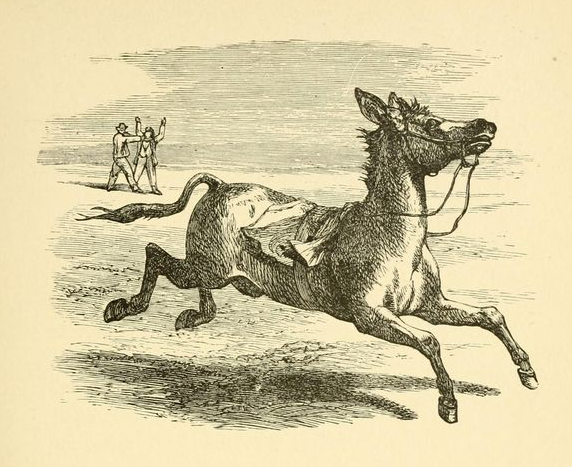
νεανίας τις ὄνον ἐμισθώσατο. ἐπεὶ δὲ θερμὸς ὁ ἥλιος ἐγένετο, καταβὰς ἀπὸ τοῦ ὄνου, ἐβούλετο ὑπὸ τῇ σκίᾳ αὐτοῦ καθίζειν. ὁ δὲ μισθώσας οὐκ εἴα. ἔλεξε γὰρ, ὅτι τὸν μὲν ὄνον ἐμίσθωσεν, τὴν δὲ σκίαν οὔ. ὁ δὲ νεανίας εἶπεν, ὅτι ὁ μισθούμενος τὸν ὄνον μισθοῦται καὶ τὴν σκίαν. οἱ μὲν οὖν περὶ τούτου ἤριζον. μαχομένων δὲ ἐκείνων ὁ ὄνος αὐτὸς ἀπἔφυγεν.

νεανίας τις 
ὄνον ἐμισθώσατο. 
ἐπεὶ δὲ θερμὸς ὁ ἥλιος ἐγένετο, 
καταβὰς ἀπὸ τοῦ ὄνου, 
ἐβούλετο ὑπὸ τῇ σκίᾳ αὐτοῦ καθίζειν. 
ὁ δὲ μισθώσας οὐκ εἴα. 
ἔλεξε γὰρ ὅτι 
τὸν μὲν ὄνον ἐμίσθωσεν, 
τὴν δὲ σκίαν οὔ. 
ὁ δὲ νεανίας εἶπεν ὅτι 
ὁ μισθούμενος τὸν ὄνον 
μισθοῦται καὶ τὴν σκίαν. 
οἱ μὲν οὖν περὶ τούτου ἤριζον. 
μαχομένων δὲ ἐκείνων 
ὁ ὄνος αὐτὸς ἀπἔφυγεν.

νεανίας τις  ...  A certain young man
ὄνον ἐμισθώσατο  ...  rented a donkey. 
ἐπεὶ δὲ ὁ ἥλιος  ...  And when the sun 
θερμὸς ἐγένετο  ...  grew hot, 
καταβὰς ἀπὸ τοῦ ὄνου  ...  he got down off the donkey, 
ἐβούλετο καθίζειν  ...  and wanted to rest
ὑπὸ τῇ σκίᾳ αὐτοῦ  ...  in the donkey's shadow. 
ὁ δὲ μισθώσας  ...  But the donkey-driver
οὐκ εἴα  ...  wouldn't allow him to do so. 
ἔλεξε γὰρ  ...  For he said 
ὅτι ἐμίσθωσεν  ...  that the man had rented
τὸν μὲν ὄνον  ...  the donkey,
τὴν δὲ σκίαν οὔ  ...  but not the shadow. 
ὁ δὲ νεανίας εἶπεν  ...  The young man said 
ὅτι ὁ μισθούμενος  ...  that someone who rented 
τὸν ὄνον  ...  the donkey 
μισθοῦται καὶ τὴν σκίαν  ...  rented the shadow too. 
οἱ μὲν οὖν ἤριζον  ...  And so they argued
περὶ τούτου  ...  about it,
μαχομένων δὲ ἐκείνων  ...  and while they argued 
ὁ ὄνος αὐτὸς ἀπἔφυγεν  ...  the donkey ran away.


And here's a random proverb and a random LOLCat too:


Click here to subscribe/unsubscribe to the email list.