Showing posts with label Animals. Show all posts

Wednesday, September 24, 2025

Greek Animal Vocabulary: Sept. 25

Here are today's animal names; it's Group 194. Click on the word to learn more at Logeion:

κύων ~ κυνός (noun c.): dog 
ὄϊς ~ ὄϊος (noun c.): sheep 
ὄνος ~ ὄνου (noun m.): donkey 
λύκος ~ λύκου (noun m.): wolf 
βοῦς ~ βοός (noun c.): ox, cow 

These are the proverbs (and there are always more proverbs at the blog):

Κύων εἰς τὸν ἴδιον ἔμετον.

Πρίν κεν ὄϊν λύκος ποιμαίνοι.

Ὄνῳ τις ἔλεγε μῦθον, ὁ δὲ τὰ ὦτα ἐκίνει.

Λύκος ἐν αἰτίᾳ γίγνεται κἂν φέρῃ κἂν μὴ φερῃ.

Οὐ δύναμαι τὴν αἶγα φέρειν, ἐπί μοι θέτε τὸν βοῦν.


And now, some commentary:

Κύων εἰς τὸν ἴδιον ἔμετον.
The dog (returns) to its own vomit.
This is a shorter version of a saying you've seen before: Κύων ἐπὶ τὸν ἴδιον ἔμετον ἐπιστρέψας. It comes from the Biblical Book of Proverbs.  Here is the verse in the King James version: As a dog returneth to his vomit, so a fool returneth to his folly. From Greek ἔμετος we get English "emetic."

Πρίν κεν ὄϊν λύκος ποιμαίνοι.
Sooner than the wolf shepherds the sheep.
This is an impossibility, ἀδύνατον: the wolf does not shepherd the sheep; the wolf eats the sheep. So, if something is supposed to happen sooner than this impossibility... that means it is never going to happen. Compare the English sayings, "When hell freezes over" or "When pigs fly." For more, see Wikipedia: Adynaton.

Ὄνῳ τις ἔλεγε μῦθον, ὁ δὲ τὰ ὦτα ἐκίνει.
Someone told a story to a donkey, and the donkey moved his ears.
It's foolish to try to talk to a donkey, but that foolish speaker might be encouraged by the donkey wiggling his ears... which donkeys do, of course. (Of course, now we have bots instead of donkeys, and the bots do more than wiggle their ears.) The Roman poet Horace imitates the saying in one of his Epistles: narrare asello fabellam surdo.

Λύκος ἐν αἰτίᾳ γίγνεται κἂν φέρῃ κἂν μὴ φερῃ.
The wolf is blamed whether he takes or doesn't take.
The wolf has been guilty of theft so many times that, even when he hasn't taken something, he's going to get blamed. 

Οὐ δύναμαι τὴν αἶγα φέρειν, ἐπί μοι θέτε τὸν βοῦν.
I can't carry a goat, and you've laid on ox on me.
You can find this one in Plutarch's treatise against borrowing money (English translation); he labels it a proverb, παροιμία.


And here's a random proverb and a random LOLCat too:


Click here to subscribe/unsubscribe to the email list.


Monday, September 15, 2025

Greek Animal Vocabulary: Sept. 16

Here are today's animal names; it's Group 193. Click on the word to learn more at Logeion:

ὄνος ~ ὄνου (noun m.): donkey 
χελώνη ~ χελώνης (noun f.): tortoise 
λαγώς ~ λαγώ (noun m.): hare 
κύων ~ κυνός (noun c.): dog 
σκορπίος ~ σκορπίου (noun m.): scorpion 

These are the proverbs (and there are always more proverbs at the blog):

Ὄνου γνάθος.

Χελώνη μυιῶν.

Λαγὼν καθεύδων.

Κύων ἐν προθύρῳ.

Σκορπίους βέβρωκε.


And now, some commentary:

Ὄνου γνάθος.
A donkey's jaw.
This refers to someone with a big appetite! Plus, given the contempt shown in general for donkeys, it also implies that the person with the big appetite is a fool too. (And no, the jawbone of the ass in Samson's story uses a different phrase in the Greek Septuagint: σιαγών τοῦ ὄνου.)

Χελώνη μυιῶν.
A tortoise (doesn't mind) flies.
Presumably it's thanks to its shell that the tortoise doesn't mind the flies! This is preserved in an interesting comparison in Arsenius and Apostolius: “Agamemnon had less concern for Thersites’ freedom of speech than a tortoise does for flies."

Λαγὼν καθεύδων.
A sleeping rabbit.
According to the ancients (see Dio Chrysostom, for example), rabbits slept with their eyes open. So the idea of this proverb is that appearances can be deceiving: the rabbit is sleeping, but you don't realize it because of those wide open eyes.

Κύων ἐν προθύρῳ.
A dog in his doorway.
This is about someone who is bold, perhaps too bold, the way that a dog in the doorway of his house will bark and bark, boldly accosting any stranger who dares to approach. 

Σκορπίους βέβρωκε.
He's eaten scorpions.
This refers to someone who gets angry easily. The idea is that they've eaten scorpions and those scorpions are still in there being disagreeable, as scorpions are wont to do.


And here's a random proverb and a random LOLCat too:


Click here to subscribe/unsubscribe to the email list.


Wednesday, September 10, 2025

Greek Animal Vocabulary: Sept. 11

Here are today's animal names; it's Group 192. Click on the word to learn more at Logeion:

ὄφις ~ ὄφεως (noun m.): snake 
κύων ~ κυνός (noun c.): dog 
λύκος ~ λύκου (noun m.): wolf 
λεβηρίς ~ λεβηρίδος (noun f.): snakeskin 
ἀλώπηξ ~ ἀλώπεκος (noun f.): fox 

These are the proverbs (and there are always more proverbs at the blog):

Ὄφιν θάλπεις.

Κύων ἐν ῥόδοις.

Λύκος κρέας νέμει.

Κενότερος λεβηρίδος.

Ἀλώπηξ οὐ δωροδοκεῖται.


And now, some commentary:

Ὄφιν θάλπεις.
You're warming a snake.
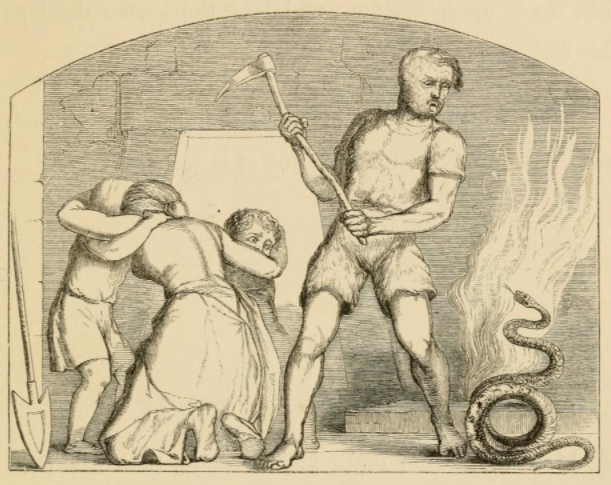
In English we warn people about the threat posed by a snake or viper in one's bosom, i.e. a dangerous person to whom you are close, but this Greek proverb alludes specifically to the Aesop's fable about the foolish man who found a snake half-frozen in the snow; feeling sorry for the snake, he warmed it in his cloak (or by his fireside), but when the snake revived, it bit him!

Κύων ἐν ῥόδοις.
A dog in the roses.
The idea here is incongruity, and also disparaging the dog: not only does a dog have nothing to do with roses, but a dog supposedly has no way to appreciate the roses either. (Dogs don't get a lot of respect in Greek proverbs.)

Λύκος κρέας νέμει.
A wolf is distributing the meat.
This is something like the proverbial "lion's share." You know that the wolf is going to be constantly taking for himself even while he is "sharing" the meat with others. 

Κενότερος λεβηρίδος.
Emptier than a snakeskin.
I really like this comparison! Because once the snake has shed its skin and crawled out, that snakeskin is about as empty as something can be. So, this hyperbolic comparison is about something that, somehow, is even more empty than the skin shed by a snake.

Ἀλώπηξ οὐ δωροδοκεῖται.
A fox cannot be bribed.
The idea here is that foxes are sneaky. They would no doubt gladly accept your gifts, but that does not mean they will change their behavior. If you offer the fox a chicken to stay away from the henhouse, the fox will take the chicken... and still raid the henhouse! So, be careful if you are going to bribe someone: you don't want to bribe someone who is like the fox.


And here's a random proverb and a random LOLCat too:


Click here to subscribe/unsubscribe to the email list.


Monday, September 1, 2025

Greek Animal Vocabulary: Sept. 2

Here are today's animal names; it's Group 191. Click on the word to learn more at Logeion:

κύκνειος ~ κυκνείου (adj. masc.): of a swan 
ὄϊς ~ ὄϊος (noun c.): sheep 
κύων ~ κυνὸς (noun c.): dog 
αἴξ ~ αἰγός (noun c.): goat 
κάμηλος ~ καμήλου (noun c.): camel 

These are the proverbs (and there are always more proverbs at the blog):

Κύκνειον ᾆσμα.

Τῷ λύκῳ τὴν ὄϊν.

Ἐν φρέατι κυνομαχεῖν.

Ἀτενὲς ὁρᾷς ὥσπερ ἡ αἲξ τὴν θάλασσαν.

Κάμηλος καὶ ψωριῶσα πολλῶν ὄνων ἀνατίθεται φορτία.


And now, some commentary:

Κύκνειον ᾆσμα.
A swan song.
You've seen another version of this saying in a previous post: Κύκνειον μέλος. The legend of the song that the swan (supposedly) sings just before it dies, having spent the rest of its life in silence, has its own article at Wikipedia: Swan song. The word ᾆσμα is from the verb ἀείδω, "sing," while μέλος has a more general meaning: it is a "part" or "limb" of a larger whole, and then comes to mean specifically a "tune" or "song."

Τῷ λύκῳ τὴν ὄϊν.
(Entrusting) the sheep to the wolf.
Of course this is not a good idea! Compare the English saying, "Setting the fox to guard the henhouse." For more Greek and Latin parallels, see Erasmus.

Ἐν φρέατι κυνομαχεῖν.
To fight with dogs in a well.
This is definitely something you want to avoid! A dog-fight is bad enough, but it is even more violent and dangerous if it is happening in a confined space like a well. You can also read more about this Greek saying in Erasmus.

Ἀτενὲς ὁρᾷς ὥσπερ ἡ αἲξ τὴν θάλασσαν.
You are gazing intently like the goat at the sea.
You've seen an abbreviated version of this saying in a previous post: Αἲξ θάλασσαν. The idea is that the goat is amazed by the sea, and looks at it with fascination because it is something entirely new. Goats live in mountains and valleys; they do not often get to see the sea, so the saying is used to refer to someone who is staring in amazement at something they have not seen before.

Κάμηλος καὶ ψωριῶσα πολλῶν ὄνων ἀνατίθεται φορτία.
A camel, even a mangy one, can bear the loads of many donkeys.
The idea is that someone who is superior can still continue to excel even when they are not in top condition. Of course a camel can carry more than multiple donkeys, and that is still true even when the camel is mangy: καὶ ψωριῶσα (the καὶ is adverbial).


And here's a random proverb and a random LOLCat too:


Click here to subscribe/unsubscribe to the email list.


Wednesday, August 27, 2025

Greek Animal Vocabulary: August 28

Here are today's animal names; it's Group 190. Click on the word to learn more at Logeion ("egg" is not exactly an animal, but it is animal-related!):

λύκος ~ λύκου (noun m.): wolf 
ᾠόν ~ ᾠοῦ (noun n.): egg 
κόραξ ~ κόρακος (noun m.): crow 
ὄνος ~ ὄνου (noun m.): donkey 
γλαύξ ~ γλαυκός (noun f.): owl 

These are the proverbs (and there are always more proverbs at the blog):

Λύκων φιλία.

ᾨὸν τίλλεις.

Κόραξ ὑδρεύει.

Ὄνου παρακύψεως.

Τίς γλαῦκ' Ἀθήναζ' ἤγαγεν;

And now, some commentary:

Λύκων φιλία.
The friendship of wolves.
This is not much of a friendship, since wolves have no loyalty whatsoever. You can also find this idea expressed as a single word: λυκοφιλία.

ᾨὸν τίλλεις.
You're plucking an egg.
In other words: you are wasting your time! Unlike a bird, which can be plucked, a bird's egg is completely smooth; there is nothing to pluck. This is another proverbial adynaton (impossibility).

Κόραξ ὑδρεύει.
The crow is drawing water.
This saying alludes to an anecdote told about a crow drinking from a bucket or vase of water by using stones to raise the level of the water. It also appears as an Aesop's fable: The Crow and the Pitcher. Actual crows have done this in modern experiments! You can see a video here: Clever crow uses physics to get its food.

Ἐξ ὄνου παρακύψεως.
Because of a donkey's peeking.
This is a proverb about how a tiny action can lead to disastrous consequences, and it can also be used to refer to a frivolous lawsuit. The proverb is based on a story about a donkey who out of curiosity stuck his nose into the window of a shop; this scared some birds in the shop, and, in their frenzy, the birds then broke all the clay pots in the shop. The owner of the shop then took the donkey's owner to court on a charge of "the donkey's peeping."

Τίς γλαῦκ' Ἀθήναζ' ἤγαγεν;
Who brought an owl to Athens?
This line comes from Aristophanes's Birds. The motif of "owls to Athens" is like the British equivalent of "coals to Newcastle." There's no reason to bring an owl to Athens because Athens is full of owls, both because of owls being the bird of Athena, and also because of the owls that appear on Athenian coins.

And here's a random proverb and a random LOLCat too:


Click here to subscribe/unsubscribe to the email list.


Monday, August 18, 2025

Greek Animal Vocabulary: Aug. 19

Here are today's animal names; it's Group 189. Click on the word to learn more at Logeion:

ὄρνις ~ ὄρνιθος (noun c.): bird 
δελφίς ~ δελφῖνος (noun m.): dolphin 
πίθηκος ~ πιθήκου (noun m.): ape 
χελιδών ~ χελιδόνος (noun f.): swallow 
κάμηλος ~ καμήλου (noun c.): camel 

These are the proverbs (and there are always more proverbs at the blog):

Φέρει καὶ ὄρνις γάλα.

Δελφῖνα πρὸς τὸ οὐραῖον δεῖς.

Πίθηκος ὁ πίθηκος κἂν χρύσεα ἔχῃ σύμβολα.

Μία χελιδὼν ἔαρ οὐ ποιεῖ οὐδὲ μία μέλισσα μέλι.

Ἡ κάμηλος ἐπιθυμήσασα κεράτων καὶ τὰ ὦτα προσαπώλεσε.


And now, some commentary:

Φέρει καὶ ὄρνις γάλα.
Even a chicken gives milk.
This refers to a land of supernatural abundance: in that magical land, even a chicken gives milk, not just eggs. Compare the English saying, "Rare as hens' teeth." You can also find this idea expressed simply as ὀρνίθων γάλα, "hens' milk," referring to something implausible or even absurd.

Δελφῖνα πρὸς τὸ οὐραῖον δεῖς.
You're tying a dolphin by the tail.
Because dolphin tails are slippery, and also because dolphin tails are strong (Erasmus reports that dolphins used their tails to overturn boats!), you are not going to keep hold of the dolphin; it's going to slip away. 

Πίθηκος ὁ πίθηκος κἂν χρύσεα ἔχῃ σύμβολα.
An ape's an ape even if he has gold insignia.
Compare the English rhyming proverb, "An ape's an ape, a varlet's a varlet, though they be clad in silk or scarlet." The Greek saying appears in Lucian who marks it as a παροιμία, a proverb: πίθηκος γὰρ ὁ πίθηκος, ἡ παροιμία φησί, κἂν χρύσεα ἔχῃ σύμβολα. 

Μία χελιδὼν ἔαρ οὐ ποιεῖ οὐδὲ μία μέλισσα μέλι.
One swallow does not make a spring, not does one bee make honey.
Compare the English saying, "One swallow doesn't make a summer." I don't know of an English saying that pairs up the single swallow and the single bee as this Greek saying does.

Ἡ κάμηλος ἐπιθυμήσασα κεράτων καὶ τὰ ὦτα προσαπώλεσε.
The camel, wanting horns, lost her ears as well.
This saying comes from an Aesop's fable where the camel, envious of the horned animals, asks Zeus to give her horns, but he gets angry and crops her ears instead. Here is Barlow's illustration of that fable:


And here's a random proverb and a random LOLCat too:


Click here to subscribe/unsubscribe to the email list.


Wednesday, August 13, 2025

Greek Animal Vocabulary: Aug. 14

Here are today's animal names; it's Group 188. Click on the word to learn more at Logeion:

βοῦς ~ βοός (noun c.): ox, cow 
ὄνος ~ ὄνου (noun m.): donkey 
κάμηλος ~ καμήλου (noun c.): camel 
μῦς ~ μυός (noun m.): mouse 
πίθηκος ~ πιθήκου (noun m.): ape 

These are the proverbs (and there are always more proverbs at the blog):

Βοῦς ἐν πόλει.

Ὄνος ἐν μύροις.

Κάμηλος ὀρχεῖται.

Ἐλέφας μῦν οὐ δάκνει.

Γέρων πίθηκος οὐχ ἁλίσκεται.


And now, some commentary:

Βοῦς ἐν πόλει.
An ox in the city.
Compare the English saying "a bull in a china shop," although the idea here is more that you just don't expect to find an ox in the city, so it is something strange and surprising. Cattle are great... but not in the city! 

Ὄνος ἐν μύροις.
A donkey in perfume.
This is another proverb of incongruity: perfume is a very fine thing, but a perfumed donkey is just not right. This can be applied in two different ways: the donkey could stand for someone pretentious who is putting on airs, or it could refer to someone who stumbles into something whose value that they do not recognize, as if a donkey stumbled into a perfume shop when he was just looking for something to eat. You can also find the saying in this form: Ὄνος ἐν μύρῳ.

Κάμηλος ὀρχεῖται.
The camel is dancing.
This is another example of something ridiculous: camels have many talents, but dancing is not one of them. There is an Aesop's fable in which a camel attempts to make a good impression on the other animals by dancing, and instead they just laugh.

Ἐλέφας μῦν οὐ δάκνει.
An elephant doesn't bite a mouse.
Another proverb of incongruity! A mouse is too small to be worthy of the elephant's attention, much less provoke an attack. So, if you're an elephant and you happen to notice a mouse, just let it go; don't sweat the small stuff. You've seen a variation on this saying before in a previous blog post: Ἐλέφας μῦν οὐχ ἁλίσκει. 

Γέρων πίθηκος οὐχ ἁλίσκεται.
An old ape is not caught.
The idea is that if an ape has survived to old age, it's learned to beware of traps and tricks. You might be able to catch a young, inexperienced monkey, but not an old one. You've seen a similar saying about old foxes in a past post: Γέρων ἀλώπηξ οὐχ ἁλίσχεται.


And here's a random proverb and a random LOLCat too:


Click here to subscribe/unsubscribe to the email list.


Monday, August 4, 2025

Greek Animal Vocabulary: Aug. 5

Here are today's animal names; it's Group 187. Click on the word to learn more at Logeion:

κάνθαρος ~ κανθάρου (noun m.): beetle 
τέττιξ ~ τέττιγος (noun m.): grasshopper, cicada
ὗς ~ ὑός (noun c.): pig 
κύων ~ κυνός (noun c.): dog 
μυρμηκιά ~ μυρμηκιᾶς (noun f.): anthill 

These are the proverbs (and there are always more proverbs at the blog):

Κανθάρου σκιά.

Τέττιξ μὲν τέττιγι φίλος.

Ὗς ὑπὸ ῥόπαλον δραμεῖται.

Κυνὶ δίδως ἄχυρα ὄνῳ ὀστέα.

Ὁ πτύσας εἰς μυρμηκιὰν οἰδεῖ τὰ χείλη.


And now, some commentary:

Κανθάρου σκιά.
A beetle's shadow.
The idea is that a beetle is nothing to be scared of, much less so a beetle's shadow... but this proverb is about somebody who is terrified by a mere beetle's shadow.

Τέττιξ μὲν τέττιγι φίλος.
One grasshopper is dear to another.
The words come from one of the idylls of Theocritus: τέττιξ μὲν τέττιγι φίλος, μύρμακι δὲ μύρμαξ, / ἴρηκες δ᾿ ἴρηξιν, with the τέττιξ, grasshopper or cicada, the μύρμαξ, ant, and the hawks, ἴρηκες.

Ὗς ὑπὸ ῥόπαλον δραμεῖται.
The pig will run to the cudgel.
The saying refers to someone who foolishly rushes headlong into their own doom instead of running away from it.

Κυνὶ δίδως ἄχυρα ὄνῳ ὀστέα.
Giving bran to the dog and bones to the donkey.
This refers to someone who does things backwards and ends up displeasing everyone: the bones do the donkey no good, and the dog cannot eat the donkey's bran.

Ὁ πτύσας εἰς μυρμηκιὰν οἰδεῖ τὰ χείλη.
Someone who spits at an anthill ends up with swollen lips.
So, in other words, don't spit at an anthill, literally or metaphorically! If you end up with swollen lips, it's your own fault — don't blame the ants.


And here's a random proverb and a random LOLCat too:


Click here to subscribe/unsubscribe to the email list.


Wednesday, July 30, 2025

Greek Animal Vocabulary: July 31

Here are today's animal names; it's Group 186. Click on the word to learn more at Logeion:

ὄνος ~ ὄνου (noun m.): donkey 
αἴξ ~ αἰγός (noun c.): goat 
βοῦς ~ βοός (noun c.): ox, cow 
βάτραχος ~ βατράχου (noun m.): frog 
κύων ~ κυνός (noun c.): dog 

These are the proverbs (and there are always more proverbs at the blog):

Ὄνος ὕεται.

Αἲξ θάλασσαν.

Ἐκ τοῦ βοῦς ἡ μάστιξ.

Βατράχῳ ὕδωρ καὶ στέαρ γαλῇ.

Κύων ἐπὶ τὸν ἴδιον ἔμετον ἐπιστρέψας.


And now, some commentary:

Ὄνος ὕεται.
The donkey is being rained on.
This saying refers to someone who can't be bothered to do anything, no matter what is happened, just as a donkey stands there in the rain and doesn't bother to look for shelter.

Αἲξ θάλασσαν.
The goat (sees) the sea.
The idea is that the goat is amazed by the sea, and looks at it with fascination because it is something entirely new. Goats live in mountains and valleys; they do not often get to see the sea, so the saying is used to refer to someone who is staring in amazement at something they have not seen before.

Ἐκ τοῦ βοῦς ἡ μάστιξ.
From the ox (is made) the whip.
In other words: the skin of the dead ox, made into leather, thus supplies the whip that will be used on living oxen. It's hard being an animal in the humans' world.

Βατράχῳ ὕδωρ καὶ στέαρ γαλῇ.
Water for the frog and fat for the weasel.
You've seen the first part of this saying before — Βατράχῳ ὕδωρ — which means giving someone what they want or like, as frogs like water. The second part, στέαρ γαλῇ, "fat for the weasel," expresses the same idea: weasels like to eat fat! So, the proverb refers to giving people what they want or like, while emphasizing "different strokes for different folks." Frogs and weasels don't want the same thing.

Κύων ἐπὶ τὸν ἴδιον ἔμετον ἐπιστρέψας.
The dog turned back to its own vomit.
This saying comes from the Biblical Book of Proverbs.  Here is the verse in the King James version: As a dog returneth to his vomit, so a fool returneth to his folly. From Greek ἔμετος we get English "emetic."


And here's a random proverb and a random LOLCat too:


Click here to subscribe/unsubscribe to the email list.


Wednesday, July 23, 2025

Greek Animal Vocabulary: July 24

Here are today's animal names; it's Group 185. Click on the word to learn more at Logeion:

λύκος ~ λύκου (noun m.): wolf 
κορώνη ~ κορώνης (noun f.): crow 
λέων ~ λέοντος (noun m.): lion 
αἴξ ~ αἰγός (noun c.): goat 
ἔλαφος ~ ἐλάφου (noun c.): deer 

These are the proverbs (and there are always more proverbs at the blog):

Λύκος μάτην χάνων.

Κορώνη τὸν σκορπίον ἥρπασεν.

Οὐ χρὴ λέοντος σκύμνον ἐν πόλει τρέφειν.

Αἲξ οὔπω τέτοκεν, ἔριφος δ᾿ ἐπὶ δώματι παίζει.

Φοβερώτερόν ἐστι στρατόπεδον ἐλάφων ἡγουμένου λέοντος ἢ λεόντων ἐλάφου.


And now, some commentary:

Λύκος μάτην χάνων.
The wolf, gaping like a fool.
This proverb refers to someone whose hopes are disappointed: he is gaping, empty-mouthed, not having gotten what he wanted. The proverb takes on narrative form in an Aesop's fable about a foolish wolf who heard a mother threatening her baby: "If you don't stop crying, I'll throw you to the wolf." Since the baby kept on crying, the wolf stood there outside the window, hoping that the woman would soon throw the baby to him, but he stood there gaping like a fool — the woman was never really going to throw the baby to the wolf.

Κορώνη τὸν σκορπίον ἥρπασεν.
The crow seized the scorpion.
As you can guess, things did not turn out well for the scorpion! There is a similar Aesop's fable with a snake instead of a scorpion: The Crow and the Snake.

Οὐ χρὴ λέοντος σκύμνον ἐν πόλει τρέφειν.
It is not right to raise a lion's cub in the city.
The saying appears in Aristophanes's Frogs, where it is attributed to Aeschylus in reference to Alcibiades, and as such it appears in Plutarch's Life of Alcibiades as well (but not in exactly this form).

Αἲξ οὔπω τέτοκεν, ἔριφος δ᾿ ἐπὶ δώματι παίζει.
The goat has not yet given birth, and the kid is playing on the rooftop.
This is like the English saying, "Don't count your chickens before they're hatched. " In other words: don't start imagining the playful kid before the goat has actually given birth.

Φοβερώτερόν ἐστι στρατόπεδον ἐλάφων ἡγουμένου λέοντος ἢ λεόντων ἐλάφου.
An army of deer with the lion as leader is more frightening than an army of lions led by a deer.
This saying plays with the stereotypical cowardice of the deer as opposed to the bellicose lion. The image of an army of lions led by a deer is a nice bit of satire!


And here's a random proverb and a random LOLCat too:


Click here to subscribe/unsubscribe to the email list.


Monday, July 21, 2025

Greek Animal Vocabulary: July 22

Here are today's animal names; it's Group 184. Click on the word to learn more at Logeion:

ὄνος ~ ὄνου (noun m.): donkey 
κύκνειος ~ κυκνείου (adj. masc.): swan, swan's
μυῖα ~ μυίας (noun f.): fly 
αἴξ ~ αἰγός (noun c.): goat 
πάρδαλις ~ παρδάλεως (noun f.): leopard, panther 

These are the proverbs (and there are always more proverbs at the blog):

Ὄνου πόκαι.

Κύκνειον μέλος.

Ἔχει καὶ ἡ μυῖα σπλῆνα.

Κἂν αἴξ δάκῃ ἄνδρα πονηρόν.

Θάνατον παρδάλεως ὑποκρίνεται.

And now, some commentary:

Ὄνου πόκαι.
Wool from a donkey.
This is another one of those proverbial fool's errands: you get wool from a sheep, not from a donkey. The word "wool" is usually masculine, πόκος, but the feminine appears persists in this saying. You've seen a variation on this saying in an earlier post with the masculine form: Ὄνου πόκους ζητεῖς.

Κύκνειον μέλος.
Swan song.
The legend of the song that the swan (supposedly) sings just before it dies, having spent the rest of its life in silence, has its own article at Wikipedia: Swan song. (I'll just mention here in passing a wonderful community organization here in Austin where I live: Swan Song: Musical Last Wishes brings musicians to the homes of hospice patients in order to perform for them; I learned about it because a jazz trio came and did a performance for my father.)

Ἔχει καὶ ἡ μυῖα σπλῆνα.
Even the fly has its spleen.
The idea is that even though it is little, the fly can have a big temper. The spleen was the home of angry emotions; compare English "splenetic," meaning irritable, peevish, spiteful, habitually angry. Compare a similar saying about the tiny ant that you saw in a previous post: Ἔχει καὶ χολὴν ὁ μύρμηξ.

Κἂν αἴξ δάκῃ ἄνδρα πονηρόν.
Even a goat will bite a wicked man.
Normally, you don't have to worry about goats, but if you are an evil person: watch out! Even a goat might decide to bite you, sensing your wickedness.

Θάνατον παρδάλεως ὑποκρίνεται.
He's feigning the leopard's death.
In other words, someone is "playing dead" like a leopard. I know a lot of folktales from Africa where the leopard pretends to be dead, and Apostolius, who reports this Greek proverb, also tells a story about leopards using this technique to catch monkeys... in Mauritania, northwest Africa! See Erasmus for details.


And here's a random proverb and a random LOLCat too:


Click here to subscribe/unsubscribe to the email list.


Wednesday, July 16, 2025

Greek Animal Vocabulary: July 17

Here are today's animal names; it's Group 183. Click on the word to learn more at Logeion:

ὗς ~ ὑός (noun c.): pig 
γαλέη ~ γαλέης (noun f.): weasel 
λύκος ~ λύκου (noun m.): wolf 
λαγώς ~ λαγώ (noun m.): hare 
μύρμηξ ~ μύρμηκος (noun m.): ant 

These are the proverbs (and there are always more proverbs at the blog):

Βοιωτία ὗς.

Γαλῆν ἔχεις.

Λύκος καλεῖ τὰς αἶγας.

Δειλότερος εἶ τῶν λαγωῶν.

Οὐαὶ μύρμηκι πτεροῖς ἀρθέντι.

And now, some commentary:

Βοιωτία ὗς.
A Boeotian pig.
This saying brings together two proverbially ignorant creatures: someone from Boeotia, and a pig. Combine the two, and you've got someone who is totally ignorant. You've already seen a proverb mocking the people of Boeotia in a previous post: Βοιώτιος νοῦς. You've also seen a saying mocking the ignorance of the foolish pig who dares to rival the goddess of wisdom in this post from last week: Ὗς πότ᾽ Ἀθηναίαν ἔριν ἤρισεν.

Γαλῆν ἔχεις.
You've got the weasel.
The weasel was a very bad omen, so telling someone that they have a weasel means that they are unlucky and going to get into trouble as a result. Compare the evil omen of a black cat crossing your path in English; there is a lot of folkloric overlap between weasels and cats (the ancient Greeks kept weasels in their houses to control mice; later, they adopted the Egyptian practice of keeping cats as pets).

Λύκος καλεῖ τὰς αἶγας.
The wolf is calling the goats.
The goats would be very foolish indeed if they came to the wolf when he called to them. Of course the wolf is going to try to trick the goats; it's up to the goats to know better and watch out. So, if you're a metaphorical goat, beware!

Δειλότερος εἶ τῶν λαγωῶν.
You are more cowardly than the rabbits.
There is an Aesop's fable about the proverbial cowardice of rabbits, but in the Aesop's fable, the rabbits are comforted by the fact that the frogs are even more scared than they are; here's that fable in Greek: Λαγωοὶ καὶ βάτραχοι.

Οὐαὶ μύρμηκι πτεροῖς ἀρθέντι.
Woe to the ant equipped with wings.
This proverb suggests a lost Aesop's fable; there are often connections between the plots of Aesop's fables and ancient Greek proverbs featuring animals, like this one. Inspired by this proverb, the neo-Latin poet Desbillons wrote a story about foolish ants who asked Zeus to give them wings, but then they became food for birds. Here's the story in Latin (I don't think Desbillons has been translated into English...?): Formica et Jupiter.


And here's a random proverb and a random LOLCat too:


Click here to subscribe/unsubscribe to the email list.


Monday, July 14, 2025

Greek Animal Vocabulary: July 15

Here are today's animal names; it's Group 182. Click on the word to learn more at Logeion:

κόραξ ~ κόρακος (noun m.): crow 
λέων ~ λέοντος (noun m.): lion 
πέρδιξ ~ πέρδικος (noun c.): partridge 
βοῦς ~ βοός (noun c.): ox, cow 
δασύπους ~ δασύποδος (noun m.): rabbit, hare

These are the proverbs (and there are always more proverbs at the blog):

Ἐς κόρακας.

Λέοντα νύσσεις.

Ἀφωνότερος πέρδικος.

Τὸν θέλοντα βοῦν ἔλαυνε.

Καρκίνον δασύποδι συγκρίνεις.


And now, some commentary:

Ἐς κόρακας.
To the crows.
This is an insult: the crows are the crows who feed on the corpses at public executions. So, the idea is to "go hang yourself" — and then the crows will come feast. You can see the phrase used in Aristophanes' Peace.

Λέοντα νύσσεις.
You're poking the lion.
More specifically, the verb means to poke something with a sharp stick. Obviously this is NOT something you want to do to a lion. Compare the English saying, "Poke the bear."

Ἀφωνότερος πέρδικος.
More speechless than a partridge.
You can see that the adjective is an alpha-privative: ἄ-φωνος, comparative ἀφωνότερος. The saying appears in an essay in Plutarch's Moralia.

Τὸν θέλοντα βοῦν ἔλαυνε.
Lead the ox that is willing.
In other words: don't lead the ox who is not willing! You can see that idea in a fuller form of the saying which is included in the proverb collection attributed to Aesop: Τὸν θέλοντα βοῦν ἔλαυνε, τὸν μὴ θέλοντα ἔα, "Lead the ox that is willing, leave the unwilling one alone."

Καρκίνον δασύποδι συγκρίνεις.
You're comparing a crab to a rabbit.
Crabs were notorious for their slow and ungainly walk, utterly unlike the fast-running hare or rabbit. So, this saying means you're making a ridiculous comparison, like "apples to oranges" in English. The word δασύπους, "shaggy-foot," was a popular nickname for the hare or rabbit.


And here's a random proverb and a random LOLCat too:


Click here to subscribe/unsubscribe to the email list.


Wednesday, July 9, 2025

Greek Animal Vocabulary: July 10

Here are today's animal names; it's Group 181. Click on the word to learn more at Logeion:

ὄφις ~ ὄφεως (noun m.): snake 
κόραξ ~ κόρακος (noun m.): crow 
γλαύξ ~ γλαυκός (noun f.): owl 
ὗς ~ ὑός (noun c.): pig 
κύων ~ κυνὸς (noun c.): dog 

These are the proverbs (and there are always more proverbs at the blog):

Ὄφεως ὄμμα.

Λευκὸς κόραξ.

Ἀετὸν γλαυκὶ συγκρίνεις.

Ὗς πότ᾽ Ἀθηναίαν ἔριν ἤρισεν.

Αὑτὸν οὐ τρέφων κύνας τρέφεις.


And now, some commentary:

Ὄφεως ὄμμα.
The eye of a snake.
This proverbial phrase refers to someone who has a particularly sharp and piercing gaze. 

Λευκὸς κόραξ.
A white crow.
This is a proverbial impossibility, much like we use the phrase "black swan" in English (based on Latin niger cycnus), which even has its own Wikipedia article: Black swan theory.

Ἀετὸν γλαυκὶ συγκρίνεις.
You're comparing an eagle to an owl.
Like the snake (see above), the eagle was supposed to have especially acute eyesight, while the owl was supposed to have especially poor eyesight (that is why, supposedly, owls avoid the light of day). So, this is like "mixing apples and oranges" — only a fool would compare an eagle to an owl!

Ὗς πότ᾽ Ἀθηναίαν ἔριν ἤρισεν.
The pig once challenged Athena to a contest.
Literally, "the pig challenged an Athenian challenge." This is a line from the poet Theocritus; hence the poetic phrasing.  An ancient commentator on the poem noted this variation: Ὗς ὢν πρὸς Ἀθήνην ἐρίζεις, "you, though being a pig, are contending against Athena." The idea is that the pig is, as we say in English, "swine," rude and uneducated, the opposite of Athena in every way.

Αὑτὸν οὐ τρέφων κύνας τρέφεις.
Not being able to feed yourself, you are feeding your dogs.
In other words, you are living beyond your means. The dogs in this proverb stand for hunting dogs along with all the other accoutrements of an extravagant lifestyle: horses, servants, etc., all those "extra" mouths to feed.

dogs-ancient-rome-Canes pastorales

And here's a random proverb and a random LOLCat too:


Click here to subscribe/unsubscribe to the email list.


Monday, July 7, 2025

Greek Animal Vocabulary: July 8

Here are today's animal names; it's Group 180. Click on the word to learn more at Logeion:

ὗς ~ ὑός (noun c.): pig, boar 
γαλέη ~ γαλέης (noun f.): weasel 
μῦς ~ μυός (noun m.): mouse 
ὄρνις ~ ὄρνιθος (noun c.): bird 
ἐχῖνος ~ ἐχίνου (noun m.): hedgehog 

These are the proverbs (and there are always more proverbs at the blog):

Ὗς ὀρίνει.

Γαλῇ στέαρ.

Μῦς πίσσης γεύεται.

Ὄρνιθος γάλα ζητεῖς.

Ἐχῖνος τὸν τόκον ἀναβάλλει.


And now, some commentary:

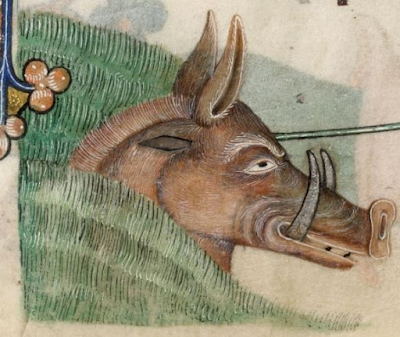
Ὗς ὀρίνει.
The boar provokes (trouble).
This pithy little Greek saying is a bit hard to translate into English without an explicit object for the verb. The idea is that a boar or wild pig is like a violent or argumentative person who stirs things up, causing trouble. The word ὗς can refer either to a wild pig or a domesticated pig.

Γαλῇ στέαρ.
Fat for a weasel.
This is a saying about giving someone exactly what they want; a weasel will gladly eat the fat that you feed her. For an opposite sort of saying, where you are offering something to someone who doesn't appreciate it, see the previous post about wine for frogs: Βατράχοις οἰνοχοεῖς.

Μῦς πίσσης γεύεται.
The mouse is tasting the pitch.
The idea is that the pitch is part of a mousetrap: as soon as the mouse tastes the pitch, he's caught and cannot escape. Compare the English idiom about catching fish: "he's taken the bait." You've seen an Attic version of this saying in a previous blog post, citing Demosthenes. The saying also appears in one of the Idylls of Theocritus, where it is put into the first-person plural: μῦς γεύμεθα πίσσας, "we (like) the mouse have tasted pitch."

Ὄρνιθος γάλα ζητεῖς.
You're trying to get milk from a bird.
This is one of the fool's errands: there are a lot of animals that you can milk, but you are wasting your time trying to get milk from a bird. Compare the English sayings about "hen's teeth" or "blood from a stone."

Ἐχῖνος τὸν τόκον ἀναβάλλει.
The hedgehog postpones giving birth.
Hedgehogs are prickly, so the idea here is that it's hard to give birth to a prickly baby. So, the hedgehog puts off giving birth... but this is not a good strategy because the baby keeps getting more and more prickly. Poor, foolish hedgehog! By trying to avoid something unpleasant, her procrastination just makes it worse.


A wonderful illustration for Ὗς ὀρίνει from the medieval Luttrell Psalter (thanks to Sententiae Antiquae this):


And here's a random proverb and a random LOLCat too:


Click here to subscribe/unsubscribe to the email list.


Saturday, July 5, 2025

Greek Animal Vocabulary: July 6

When I originally started looking for proverbs to use at this blog, I focused on proverbs that had at least one "common" vocabulary term, a word in the 2000 most frequently used words in ancient Greek. Unfortunately, that meant most animal names were not included, as there are only a few animals who are in the top 2000. So, for the next few weeks, I'll be doing proverbs that use Greek animal vocabulary! Admittedly, these animal names are not among the most common words but, as a fan of Aesop's fables, I think they are very useful to know, and there are lots of proverbs about animals.

So, today is the first of those groups with animal vocabulary; this is group 179 overall. Click on the word to learn more at Logeion:

αἴξ ~ αἰγός (noun c.): goat 
βάτραχος ~ βατράχου (noun m.): frog 
κάνθαρος ~ κανθάρου (noun m.): beetle 
ὗς ~ ὑός (noun c.): pig 
γαλέη ~ γαλέης (noun f.): weasel 

These are the proverbs (and there are always more proverbs at the blog):

Αἲξ Σκυρία.

Βατράχοις οἰνοχοεῖς.

Ἀετὸν κάνθαρος μαιεύεται.

Ἀντὶ κακῆς κυνὸς ὓν ἀπαιτεῖς.

Μῦς γαλῆν ἐλέγξει τὴν τέως νύμφην.


And now, some commentary:

Αἲξ Σκυρία.
A Scyrian goat.
The she-goats from the island of Skyros in Greece were proverbial for kicking over the milk bucket after they had been milked. As such, they came to stand for someone who was contrary and troublesome, squandering their own riches and resources for no good reason.

Βατράχοις οἰνοχοεῖς.
You're pouring wine for frogs.
This is one of those proverbial "fool's errands." Because frogs don't drink wine, only water, you are wasting the wine that you pour for them.

Ἀετὸν κάνθαρος μαιεύεται.
The beetle is midwife to the eagle.
This alludes to an Aesop's fable in which the eagle kills a rabbit who had taken refuge with the beetle and, in revenge, the beetle rolls the eagle's eggs out of the nest again and again. So, the beetle is a deadly midwife who prevents the eagle from having children; the proverb warns the eagle to beware. Here is the Aesop's fable: The Eagle and the Beetle.

Ἀντὶ κακῆς κυνὸς ὓν ἀπαιτεῖς.
In exchange for a bad dog, you're demanding a pig.
The Greek proverb-collectors (Diogenianus, Zenobius, Apostolius) all explain that this proverb means asking for a bad thing in exchange for another bad thing. Erasmus, however, concludes that it means to ask for something good in exchange for something bad (because, he says, pigs are good to eat, and dogs are not). In Scaliger's elegant verse experiment editing the Greek proverb corpus into metrical forms, there is an iambic variation: Σύ μ' ὗνἀπαιτεῖς ἀντὶ τῆς κακῆς κuvóς, "You're demanding a pig from me in exchange for a bad dog." Here's the meter marked:
Σύ μ' ὗν | ἀπαι||τεῖς ἀν|τὶ τῆς || κακῆς | κuvóς.

Μῦς γαλῆν ἐλέγξει τὴν τέως νύμφην.
The mouse put the just-married weasel to shame.
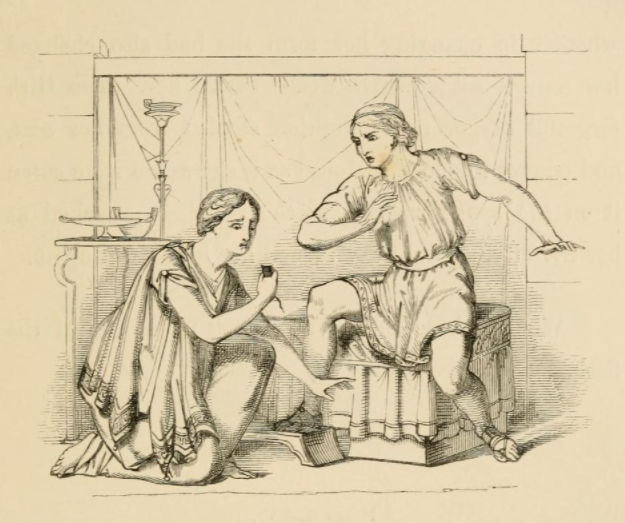
This proverb also alludes to an Aesop's fable: Aphrodite changed a weasel into a woman, and the woman then got married to a man, but when Aphrodite decided to test the newlywed woman by letting loose a mouse, the bride jumped down on all fours and chased the mouse, so Aphrodite changed the woman back into a weasel. In later versions of the fable, the weasel was replaced by a cat: Venus and the Cat. Here's an illustration by Tenniel.


And here's a random proverb and a random LOLCat too:


Click here to subscribe/unsubscribe to the email list.