Showing posts with label Week 057. Show all posts

Friday, May 9, 2025

Greek Vocabulary Challenge: May 10

Here are today's vocabulary words; it's Group 165. Click on the word to learn more at Logeion:

κακόν ~ κακοῦ (adj. neut.): bad, evil (thing) 
φίλος ~ φίλου (adj. masc.): dear, friend 
ἴσον  ~ ἴσου (adj. neut.): equal, fair
μηδέν ~ μηδενός (adj. neut.): none, nothing (μη) 
οἷος ~ οἵου (adj. masc.): such as, kind 

These are the proverbs (and there are always more proverbs at the blog):

Λέρνη κακῶν.

Φίλοις βοήθει.

Μηδὲ θεοῖσιν ἶσ' ἔθελε φρονέειν.

Ὁ μηδὲν ἀδικῶν οὐδενὸς δεῖται νόμου.

Πρὸς δύο οὐδ' ὁ Ἡρακλῆς οἷός τε εἶναι.


And now, some commentary:

Λέρνη κακῶν.
A Lerna of evils.
As one of his Labors, Heracles had to kill the Hydra that lived in the Lake of Lerna, but that monster was not its only evil. It was, among other things, a gateway to the underworld, and many swimmers had drowned in its depths. You can read more about the Lake of Lerna at Wikipedia. 

Φίλοις βοήθει.
Help your friends.
This is one of the so-called Delphic maxims recorded by Stobaeus. Notice that the verb βοηθέω takes a dative complement: φίλοις.

Μηδὲ θεοῖσιν ἶσ' ἔθελε φρονέειν.
Do not think to match yourself with the gods.
Literally: "Don't wish to suppose equal to the gods." The words are from Homer's Iliad: the god Apollo is doing battle with Diomedes, and with these words he warns him to back off: a mortal cannot match a god in battle. 

Ὁ μηδὲν ἀδικῶν οὐδενὸς δεῖται νόμου.
The man who does no wrong has need of no law.
Notice the contrast between the μη and οὐ. The οὐ is for the indicative verb: that person actually has no need of any law, while the μη is about a bigger statement, beyond a specific moment — the person who would do no wrong (not now, not ever) has no need in the here and now of any law.

Πρὸς δύο λέγεται οὐδ᾽ ὁ Ἡρακλῆς οἷός τε εἶναι.
Not even Heracles is said to be able to go against two.
This saying is widely cited in Greek literature, including in Plato's Phaedo. The idiom οἷός τε εἶναι has the sense of "being able" ("being such a person who is able..."), and the τε is part of the idiom, not a conjunction; you can see more in the LSJ entry for οἷος. You've seen a shorter version of this saying already in a previous blog post: Οὐδὲ Ἡρακλῆς πρὸς δύο.


And here's a random proverb and a random LOLCat too:


Click here to subscribe/unsubscribe to the email list.


Thursday, May 8, 2025

Greek Reading: Fables 57

Both the fable and the joke below come from Abbott's Easy Greek Reader which is available at the Internet Archive. 

So, here are the stories in Greek, then segmented, and then interwoven with English. The titles are linked to the Internet Archive page.


Ἀνὴρ γεωργὸς μέλλων τελευτᾶν καὶ βουλόμενος τοὺς αὑτοῦ παῖδας ἐμπείρους ποιῆσαι τῆς γεωργίας, μετακαλεσάμενος αὐτούς, ἔφη· τεκνία μου, ἐν ἑνί μου τῶν ἀμπελώνων θησαυρὸς ἀπόκειται. Οἱ δὲ μετὰ τὴν αὐτοῦ τελευτὴν ὕννας τε καὶ δικέλλας λαβόντες πᾶσαν αὑτῶν τὴν γεωργίαν ὤρυξαν, καὶ τὸν μὲν θησαυρὸν οὐχ εὗρον, ἡ δὲ ἄμπελος πολλαπλασίονα τὴν φορὰν αὐτοῖς ἀντεδίδου.

Ἀνὴρ γεωργὸς 
μέλλων τελευτᾶν 
καὶ βουλόμενος 
τοὺς αὑτοῦ παῖδας 
ἐμπείρους ποιῆσαι 
τῆς γεωργίας, 
μετακαλεσάμενος αὐτούς, 
ἔφη· 
τεκνία μου, 
ἐν ἑνί μου τῶν ἀμπελώνων 
θησαυρὸς ἀπόκειται. 
Οἱ δὲ 
μετὰ τὴν αὐτοῦ τελευτὴν 
ὕννας τε καὶ δικέλλας λαβόντες 
πᾶσαν αὑτῶν τὴν γεωργίαν 
ὤρυξαν, 
καὶ τὸν μὲν θησαυρὸν οὐχ εὗρον, 
ἡ δὲ ἄμπελος 
πολλαπλασίονα τὴν φορὰν 
αὐτοῖς ἀντεδίδου.

Ἀνὴρ γεωργὸς  ...  A farmer 
μέλλων τελευτᾶν  ...  who was about to die 
καὶ βουλόμενος  ...  wanted 
ποιῆσαι τοὺς αὑτοῦ παῖδας  ...  to make his children
ἐμπείρους τῆς γεωργίας  ...  experienced in farming, 
μετακαλεσάμενος αὐτούς  ...  so he summoned them, 
ἔφη  ...  and said, 
τεκνία μου  ...  My children, 
ἐν ἑνί μου τῶν ἀμπελώνων  ...  in one of my vineyards
θησαυρὸς ἀπόκειται  ...  a treasure is buried. 
Οἱ δὲ  ...  And his sons, 
μετὰ τὴν αὐτοῦ τελευτὴν  ...  after his death, 
ὕννας τε καὶ δικέλλας λαβόντες  ...  took plows and hoes 
ὤρυξαν  ...  and dug up
πᾶσαν αὑτῶν τὴν γεωργίαν  ...  the whole farm.
καὶ τὸν μὲν θησαυρὸν οὐχ εὗρον  ...  They found no treasure
ἡ δὲ ἄμπελος  ...  but the vineyard 
αὐτοῖς ἀντεδίδου  ...  repaid them with
πολλαπλασίονα τὴν φορὰν  ...  a multiplied crop.


Ἀλεκτρυόνες συμπεσόντες ἀλλήλοις, ὡς νόμος εἶχεν, ἐμάχοντο. Καὶ ὁ μὲν νικηθείς, κλίνῃ ὑποδύς, ἀπεκρύπτετο· ὁ δὲ νενικηκὼς ἐπί στέγους ἀρθείς, ἀνέκραγε μέγιστον, τὴν νίκην κατάδηλον ἐξ ᾠδῆς  ἐργαζόμενος. Καὶ καταπτὰς ἀετὸς τοῦτον ἁρπάζει λαβών.

Ἀλεκτρυόνες 
συμπεσόντες ἀλλήλοις, 
ὡς νόμος εἶχεν, 
ἐμάχοντο. 
Καὶ ὁ μὲν νικηθείς, 
κλίνῃ ὑποδύς, 
ἀπεκρύπτετο· 
ὁ δὲ νενικηκὼς 
ἐπί στέγους ἀρθείς, 
ἀνέκραγε μέγιστον, 
τὴν νίκην κατάδηλον 
ἐξ ᾠδῆς  ἐργαζόμενος. 
Καὶ καταπτὰς ἀετὸς 
τοῦτον ἁρπάζει λαβών.

Ἀλεκτρυόνες  ...  Roosters
συμπεσόντες ἀλλήλοις  ...  attacked each other, 
ὡς νόμος εἶχεν  ...  as is their custom, 
ἐμάχοντο  ...  and fought. 
Καὶ ὁ μὲν νικηθείς  ...  And the loser, 
κλίνῃ ὑποδύς  ...  went under the bench 
ἀπεκρύπτετο  ...  and hid, 
ὁ δὲ νενικηκὼς  ...  while the winner 
ἐπί στέγους ἀρθείς  ...  rose up to the rooftop, 
ἀνέκραγε μέγιστον  ...  and shouted loudly
ἐργαζόμενος τὴν νίκην κατάδηλον  ...  making his victory clear
ἐξ ᾠδῆς  ...  with his song.
Καὶ καταπτὰς ἀετὸς  ...  So an eagle swooped down,
τοῦτον ἁρπάζει λαβών  ...  grabbed him, and carried him off.


Σχολαστικὸς οἰκίαν πριάμενος, εἶτα διὰ τῆς θυρίδος παρακύψας ἠρώτα τοὺς παρερχομένους εἰ πρέπει αὐτῷ οἰκία. 

Σχολαστικὸς 
οἰκίαν πριάμενος, 
εἶτα διὰ τῆς θυρίδος 
παρακύψας 
ἠρώτα τοὺς παρερχομένους 
εἰ πρέπει αὐτῷ οἰκία. 

Σχολαστικὸς 
οἰκίαν πριάμενος, 
εἶτα παρακύψας  
διὰ τῆς θυρίδος 
ἠρώτα τοὺς παρερχομένους 
εἰ πρέπει αὐτῷ οἰκία. 

Σχολαστικὸς  ...  A dunce
οἰκίαν πριάμενος  ...  bought a house, 
εἶτα παρακύψας  ...  and then leaned   
διὰ τῆς θυρίδος  ...  out the window
ἠρώτα  ...  and kept asking
τοὺς παρερχομένους  ...  people passing by
εἰ πρέπει αὐτῷ οἰκία  ...  if it looked good on him. 

And here's a random proverb and a random LOLCat too:


Click here to subscribe/unsubscribe to the email list.


Wednesday, May 7, 2025

Crossword Puzzle 25-26-27

The proverbs for today come from back in Groups 25, 26, and 27; you can visit those blog posts for the translations and more information. 
Here are the sayings without spaces: see if you can find the word breaks!

ε ι σ κ ο ρ α κ α ς.

κ α κ ο ν ε π ι κ α κ ῳ.

ε ν π υ ρ ι β ε β η κ α ς.

π ε ρ ι ο ν ο υ σ κ ι α ς.

τ η ν π α ρ ε ο υ σ α ν α μ ε λ γ ε.

μ ω ρ ο σ σ ι ω π α ν ο υ δ υ ν α τ α ι.

υ π ο π α ν τ ι λ ι θ ῳ σ κ ο ρ π ι ο ς.

τ ο μ ε λ λ ο ν ο υ δ ε ι σ ε κ φ υ γ ο ι.

ε α ν μ η π α θ ῃ σ ο υ μ η μ α θ ῃ ς.

α ν θ ρ α κ ε σ ο θ η σ α υ ρ ο σ π ε φ η ν ε ν.

ε κ τ ο υ ο ρ α ν γ ι γ ν ε τ α ι τ ο ε ρ α ν.

τ α π α ν τ α ρ ε ι κ α ι ο υ δ ε ν μ ε ν ε ι.


And here's the crossword puzzle based on a missing word from each proverb: printable Crossword PDF. I've pasted in screenshots below so you can see what the crossword looks like:


And here's a random proverb and a random LOLCat too :


Click here to subscribe/unsubscribe to the email list.

Tuesday, May 6, 2025

Greek Reading: Fables 56

Both the fable and the joke below come from Abbott's Easy Greek Reader which is available at the Internet Archive. 

So, here are the stories in Greek, then segmented, and then interwoven with English. The titles are linked to the Internet Archive page.


Μῦς ἀρουραῖος ἀστικῷ γίνεται φίλος μυὶ, καὶ τὴν φιλίαν πιστούμενος πρῶτος εἰς ἀγρὸν τὸν ἀστικὸν παρελάμιβανε, καὶ ξενίαν αὐτῷ παρετίθει καὶ τράπεζαν, ἃ φέρειν οἶδε τοῖς ἐνοικοῦσιν ἀγρόν. Ἀμειβόμενος δὲ τὴν ξενίαν ὁ ἀστικὸς εἰς ἄστυ τὸν ἀρουραῖον ἐκόμιζε, καὶ εἰς ἀνδρὸς εὐπόρου παρελάμβανε οἶκον. Ὡς δὲ τῶν ὄντων ἤδη προσάπτεσθαι ἤθελον, προσιών τις ἀνέκοπτε· καὶ τοσαυτάκις τῆς ἐν τοῖς ὄψοις ἀπηλαύνοντο πείρας, ὁσάκις ἐπειρῶντο μεταλαμβάνειν. Καὶ τελευταῖον ὁ ἀρουραῖος "ἄπειμι" ἔφη, "τὴν ἐν ἀγροῖς προτιμῶν μετριότητα τῆς ἐν ἄστει τρυφῆς."

Μῦς ἀρουραῖος 
ἀστικῷ γίνεται φίλος μυὶ, 
καὶ τὴν φιλίαν πιστούμενος 
πρῶτος εἰς ἀγρὸν 
τὸν ἀστικὸν παρελάμβανε, 
καὶ ξενίαν αὐτῷ παρετίθει 
καὶ τράπεζαν, 
ἃ φέρειν οἶδε τοῖς ἐνοικοῦσιν ἀγρόν. 
Ἀμειβόμενος δὲ τὴν ξενίαν 
ὁ ἀστικὸς 
εἰς ἄστυ τὸν ἀρουραῖον ἐκόμιζε, 
καὶ εἰς ἀνδρὸς εὐπόρου παρελάμβανεν οἶκον. 
Ὡς δὲ τῶν ὄντων ἤδη 
προσάπτεσθαι ἤθελον, 
προσιών τις ἀνέκοπτε· 
καὶ τοσαυτάκις 
τῆς ἐν τοῖς ὄψοις ἀπηλαύνοντο πείρας, 
ὁσάκις ἐπειρῶντο μεταλαμβάνειν. 
Καὶ τελευταῖον ὁ ἀρουραῖος 
"ἄπειμι" ἔφη, "τὴν ἐν ἀγροῖς 
προτιμῶν μετριότητα 
τῆς ἐν ἄστει τρυφῆς."

Μῦς ἀρουραῖος  ...  A country mouse
γίνεται φίλος ἀστικῷ μυὶ  ...  befriended a city mouse, 
καὶ τὴν φιλίαν πιστούμενος  ...  and to affirm the friendship 
πρῶτος παρελάμβανε  ...  he went first in inviting
τὸν ἀστικὸν  ...  the city mouse
εἰς ἀγρὸν  ...  to the countryside.
καὶ ξενίαν αὐτῷ παρετίθει  ...  He offered both hospitality
καὶ τράπεζαν  ...  and a dining board, 
ἃ οἶδε  ...  the things which he knew
φέρειν ἀγρόν  ...  the countryside had to offer
τοῖς ἐνοικοῦσιν  ...  to its inhabitants.
Ἀμειβόμενος δὲ τὴν ξενίαν  ...  Returning the hospitality, 
ὁ ἀστικὸς  ...  the city mouse
τὸν ἀρουραῖον ἐκόμιζε  ...  led the country mouse
εἰς ἄστυ  ...  to the city,
καὶ παρελάμβανεν  ...  and brought him to
εἰς οἶκον ἀνδρὸς εὐπόρου  ...  a wealthy man's home
Ὡς δὲ ἤδη ἤθελον  ...  But just when they wanted 
τῶν ὄντων προσάπτεσθαι  ...  to lay hold of the stuff,
προσιών τις  ...  someone came in 
ἀνέκοπτε  ...  and stopped them, 
καὶ τοσαυτάκις ἀπηλαύνοντο  ...  being driven away
τῆς ἐν τοῖς ὄψοις πείρας  ...  from trying the foodstuffs, 
ὁσάκις  ...  whenever
ἐπειρῶντο μεταλαμβάνειν  ...  they tried to partake. 
Καὶ τελευταῖον  ...  And finally
ὁ ἀρουραῖος ἔφη  ...  the country mouse said:
ἄπειμι  ...  I'm leaving!
προτιμῶν  ...  I prefer
μετριότητα τὴν ἐν ἀγροῖς  ...  modesty in the countryside 
τῆς ἐν ἄστει τρυφῆς  ...  to luxury in the city.


Σχολαστικὸς ἐκκομίσας τὸν υἱόν, ἀπαντήσας τῷ διδασκάλῳ αὐτοῦ, σύγγνωθι, ἔφη, ὅτι οὐκ ἦλθεν ὁ υἱός μου εἰς τὴν σχολήν· ἀπέθανε γάρ.

Σχολαστικὸς 
ἐκκομίσας τὸν υἱόν, 
ἀπαντήσας 
τῷ διδασκάλῳ αὐτοῦ, 
ἔφη, 
σύγγνωθι
ὅτι οὐκ ἦλθεν ὁ υἱός μου 
εἰς τὴν σχολήν,
ἀπέθανε γάρ.

Σχολαστικὸς  ...  The dunce
ἐκκομίσας τὸν υἱόν  ...  had just buried his son, 
ἀπαντήσας  ...  and then ran into 
τῷ διδασκάλῳ αὐτοῦ  ...  his son's schoolteacher.
ἔφη  ...  He said: 
σύγγνωθι  ...  My apologies for
ὅτι οὐκ ἦλθεν ὁ υἱός μου  ...  my son not coming 
εἰς τὴν σχολήν  ...  to school;
ἀπέθανε γάρ  ...  it's because he died.

And here's a random proverb and a random LOLCat too:


Click here to subscribe/unsubscribe to the email list.


Monday, May 5, 2025

Greek Vocabulary Challenge: May 6

Here are today's vocabulary words; it's Group 164. Click on the word to learn more at Logeion:

ἀκρόν ~ ἀκροῦ (adj. neut.): topmost, top 
βέβαιον ~ βεβαίου (adj. neut.): firm, steady 
φανερόν ~ φανεροῦ (adj. neut.): visible 
ἀνόητος ~ ἀνοήτου (adj. masc.): foolish, senseless 
ταὐτόν ~ ταὐτοῦ (adj. neut.): the same, selfsame 

These are the proverbs (and there are always more proverbs at the blog):

Ἀκρὸν λάβε, καὶ μέσον ἕξεις. 

Βέβαιον οὐδέν ἐστιν ἐν θνητῷ βίῳ.

Τὰ ἀφανῆ τοῖς φανεροῖς τεκμαίρου.

Ἀνόητος νεοττὸς ἑκὼν δείκνυσι τὴν ἑαυτοῦ νοσσιάν.

Ὄφιν τρέφειν καὶ πονηρὸν εὐεργετεῖν ταὐτόν ἐστιν.


And now, some commentary:

Ἀκρὸν λάβε, καὶ μέσον ἕξεις. 
Grab the top, and you'll get the middle.
In other words: it's a good thing to plan big because, even if your plan falls short, you'll still end up with something! Some sources attribute this to the Delphic oracle; find out more at Wikipedia: Delphic maxims. This saying is a good way to remember the future stem of ἔχω: ἕξω (note the rough breathing). You can see the ἀκρό- root in English "acrophobia."

Βέβαιον οὐδέν ἐστιν ἐν θνητῷ βίῳ.
Nothing is lasting in this mortal life.
The contrast between dying and living is much stronger in the Greek:  θνητῷ βίῳ, the life subject to death. This is another of the iambic monostichs of Menander. Here is the meter marked:
Βέβαι|ον οὐ||δέν ἐσ|τιν ἐν || θνητῷ | βίῳ.

Τὰ ἀφανῆ τοῖς φανεροῖς τεκμαίρου.
Infer unseen things by means of visible things.
The word τεκμαίρου is a middle imperative, and it takes a direct object: ἀφανῆ, the neuter plural of ἀφανές, an alpha-privative adjective (ἀ-φανές). This is one of the sayings attributed to Solon; you can read more about Solon at Wikipedia.

Ἀνόητος νεοττὸς ἑκὼν δείκνυσι τὴν ἑαυτοῦ νοσσιάν.
The foolish chick willingly points out its own nest. 
The adjective ἀνόητος is another alpha-privative: ἀ-νόητος. This proverb seems to belong to a fable, but the fable has not survived; at least I do not know of a story that connects to this elegant little proverb. Just who did the chick lead to the nest...? A fox? A weasel? We can be sure that nothing good happened as a result, and the message for humans is clear: don't be like the foolish chick and give away information that might do you harm! 

Ὄφιν τρέφειν καὶ πονηρὸν εὐεργετεῖν ταὐτόν ἐστιν.
To nourish a snake and to assist an evildoer is the same thing.
Compare another saying you've seen before about nursing a snake: Ὄφιν ἐν τῷ κόλπῳ τρέφεις, "You're nursing a snake in your bosom." That snake is going to bite you sooner or later, just as the evildoer is going to do evil. There's an Aesop's fable on the danger of doing favors for snakes.


And here's a random proverb and a random LOLCat too:


Click here to subscribe/unsubscribe to the email list.


Sunday, May 4, 2025

Greek Reading: Fables 55

Both the fable and the joke below come from Abbott's Easy Greek Reader which is available at the Internet Archive. 

So, here are the stories in Greek, then segmented, and then interwoven with English. The titles are linked to the Internet Archive page.


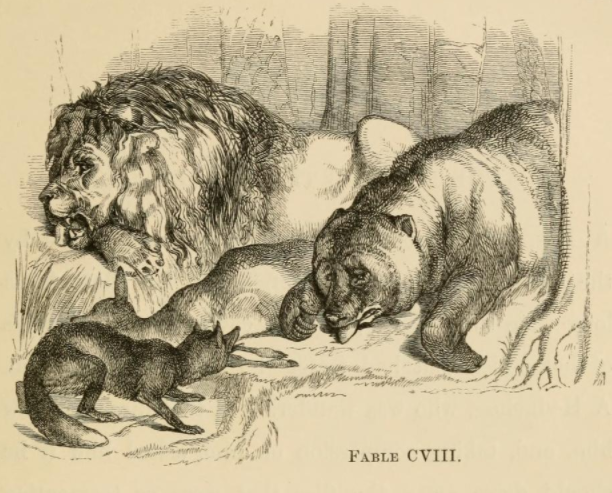
Λέων καὶ ἄρκτος, ὁμοῦ νεβρῷ περιτυχόντες, περὶ τούτου ἐμάχοντο. Δεινῶς οὖν ὑπ’ ἀλλήλων διατεθέντες, ὡς ἐκ τῆς πολλῆς μάχης καὶ σκοτοδινιᾶσαι, ἀπαυδήσαντες ἔκειντο. Ἀλώπηξ δὲ κύκλῳ περιιοῦσα, πεπτωκότας αὐτοὺς ἰδοῦσα καὶ τὸν νεβρὸν ἐν τῷ μέσῳ κείμενον, τοῦτον διὰ μέσου ἀμφοῖν διαδραμοῦσα καὶ ἁρπάσασα, φεύγουσα ᾤχετο. Οἱ δὲ βλέποντες μὲν αὐτήν, μὴ δυνάμενοι δὲ ἀναστῆναι· δείλαιοι ἡμεῖς, εἶπον, ὅτι δι’ ἀλώπεκα ἐμοχθοῦμεν.

Λέων καὶ ἄρκτος, 
ὁμοῦ νεβρῷ περιτυχόντες,
περὶ τούτου ἐμάχοντο. 
Δεινῶς οὖν ὑπ’ ἀλλήλων διατεθέντες, 
ὡς ἐκ τῆς πολλῆς μάχης 
καὶ σκοτοδινιᾶσαι, 
ἀπαυδήσαντες ἔκειντο. 
Ἀλώπηξ δὲ 
κύκλῳ περιιοῦσα, 
πεπτωκότας αὐτοὺς ἰδοῦσα 
καὶ τὸν νεβρὸν ἐν τῷ μέσῳ κείμενον, 
τοῦτον διὰ μέσου ἀμφοῖν 
διαδραμοῦσα καὶ ἁρπάσασα, 
φεύγουσα ᾤχετο. 
Οἱ δὲ βλέποντες μὲν αὐτήν, 
μὴ δυνάμενοι δὲ ἀναστῆναι· 
δείλαιοι ἡμεῖς, εἶπον, 
ὅτι δι’ ἀλώπεκα ἐμοχθοῦμεν.

Λέων καὶ ἄρκτος  ...  A lion and a bear,
νεβρῷ περιτυχόντες  ...  coming upon a fawn,
ὁμοῦ  ...  at the same time,
περὶ τούτου ἐμάχοντο  ...  struggled over it. 
διατεθέντες οὖν ὑπ’ ἀλλήλων  ...  Falling on each other
δεινῶς  ...  so fiercely
ὡς καὶ σκοτοδινιᾶσαι  ...  that they also grew faint
ἐκ τῆς πολλῆς μάχης  ...  from their long struggle, 
ἀπαυδήσαντες ἔκειντο  ...  they lay down, exhausted. 
Ἀλώπηξ δὲ κύκλῳ περιιοῦσα   ...  A fox circling around 
ἰδοῦσα  ... saw 
αὐτοὺς πεπτωκότας  ...  that they had collapsed, 
καὶ τὸν νεβρὸν  ...  and she also saw the fawn
ἐν τῷ μέσῳ κείμενον  ...  lying between them, 
διαδραμοῦσα καὶ ἁρπάσασα  ...  she ran thru and grabbed
τοῦτον διὰ μέσου ἀμφοῖν  ...  the fawn from their midst, 
φεύγουσα ᾤχετο  ...  and then fled, running away. 
Οἱ δὲ βλέποντες μὲν αὐτήν  ...  They saw her
μὴ δυνάμενοι δὲ ἀναστῆναι  ...  but couldn't stand up, 
εἶπον  ...  and said
δείλαιοι ἡμεῖς,  ...  What wretches we are, 
ὅτι ἐμοχθοῦμεν  ...  because we wore ourselves out
δι’ ἀλώπεκα  ...  on behalf of a fox.


Σχολαστικὸς νοσῶν συνετάξατο τῷ ἰατρῷ, εἰ θεραπευθείη, μισθὸν δώσειν· ὡς οὖν οἶνον ἐν τῷ πυρέσσειν πίνοντι αὐτῷ ἐπετίμα ἡ γυνὴ, σὺ δὲ ὑγιάναντα βούλει με, ἔφη, ἀναγκασθῆναι τῷ ἰατρῷ τὸν μισθὸν δώσειν;

Σχολαστικὸς νοσῶν 
συνετάξατο τῷ ἰατρῷ, 
εἰ θεραπευθείη, 
μισθὸν δώσειν· 
ὡς οὖν οἶνον 
ἐν τῷ πυρέσσειν πίνοντι 
αὐτῷ ἐπετίμα ἡ γυνὴ, 
σὺ δὲ ὑγιάναντα βούλει με, 
ἔφη, 
ἀναγκασθῆναι 
τῷ ἰατρῷ τὸν μισθὸν δώσειν;

Σχολαστικὸς νοσῶν  ...  A dunce who was sick
συνετάξατο τῷ ἰατρῷ  ...  made an agreement with his doctor: 
εἰ θεραπευθείη  ...  if he was cured,
μισθὸν δώσειν  ...  he would pay the doctor's fee.
ὡς οὖν οἶνον πίνοντι  ...  So when he was drinking wine
ἐν τῷ πυρέσσειν  ...  while he had a fever,
αὐτῷ ἐπετίμα ἡ γυνὴ  ...  his wife scolded him, 
ἔφη  ...  he said, 
σὺ δὲ ὑγιάναντα βούλει με  ...  Do you want me to get well, 
ἀναγκασθῆναι  ...  so that I"ll be compelled
τῷ ἰατρῷ τὸν μισθὸν δώσειν  ...  to pay the doctor's fee?

And here's a random proverb and a random LOLCat too :


Click here to subscribe/unsubscribe to the email list.