Friday, January 24, 2025

Greek Vocabulary Challenge: Jan. 25

Here are today's vocabulary words; it's Group 138. Click on the word to learn more at Logeion:

φυλάσσω ~ φυλάξω ~ ἐφύλαξα: guard, preserve 
ἁμαρτάνω ~ ἁμαρτήσομαι ~ ἥμαρτον: fail, go wrong, err 
δεῖ ~ δεήσει ~ ἐδέησε: must, it is necessary 
φιλέω ~ φιλήσω ~ ἐφίλησα: love, feel affection 
ἐσθίω ~ φάγομαι ~ ἔφαγον: eat, devour 

These are the proverbs (and there are always more proverbs at the blog):

Ἴδια φύλαττε.

Ἁμαρτάνων μετανόει.

Δεῖ φέρειν τὰ τῶν θεῶν.

Οὐδεὶς γὰρ ὃν φοβεῖται φιλεῖ.

Αὐτοὶ χελώνας ἔσθεθ᾿ οἵπερ εἵλετε.


And now, some commentary:

Ἴδια φύλαττε.
Protect what is yours.
This is one of the Delphic maxims recorded by Stobaeus. The form φύλαττε is Attic; the dictionary form of the verb is φυλάσσω. And yes, English "idiot" is from Greek ἴδιος; details at the Wiktionary.

Ἁμαρτάνων μετανόει.
When you make a mistake, change your mind.
In other words: when you make a mistake, learn from your mistake! This is another one of the Delphic maxims, although both of these words went on to have somewhat different meanings in Christianity, where ἁμαρτάνω became a "sin" rather than just a mistake or error, and μετανόει became "repentance," rather than just changing your mind.

Δεῖ φέρειν τὰ τῶν θεῶν.
It is necessary to endure the things of the gods.
In other words: you must endure the things that are sent by the gods; that is your fate, your destiny. The saying is found in Euripides' Phoenician Women.

Οὐδεὶς γὰρ ὃν φοβεῖται φιλεῖ.
No one likes the man whom he fears.
This comes from Aristotle's Rhetoric. Remember that φοβέω is to incite fear, to frighten, while φοβέομαι is to be frightened, to be afraid, to fear, as here.

Αὐτοὶ χελώνας ἔσθεθ᾿ οἵπερ εἵλετε.
Eat the turtles yourselves, you who caught them.
The words were spoken by Hermes to some fishermen who had caught more turtles than they could eat and offered the excess turtles to Hermes as if they were being generous; Hermes was not impressed and rebuked them for their hypocrisy. The Greek proverb was reported by Erasmus and eventually ended up in the Aesopic fable corpus as it was (re)assembled during the Renaissance. Here's a depiction of Hermes from classical Athens:


And here's a random proverb and a random LOLCat too :


Click here to subscribe/unsubscribe to the email list.


Thursday, January 23, 2025

Greek Reading: Fables 12

Today's stories are from Smith's Initia Graeca, available at the Internet Archive. You can use the linked titles to access the book, and it has a dictionary in the back.

Here are the stories, presented in Greek, segmented, and then interwoven with English.


Μύρμηξ διψήσας, κατελθὼν εἰς πηγήν, παρασυρεὶς ὑπὸ τοῦ ῥεύματος ἀπεπνίγετο. Περιστερὰ δὲ τοῦτο θεασαμένη κλῶνα δένδρου περιελοῦσα εἰς τὴν πηγὴν ἔρριψεν, ἐφ’ οὗ καὶ καθίσας ὁ μύρμηξ διεσώθη. Ἰξευτὴς δέ τις μετὰ τοῦτο τοὺς καλάμους συνθεὶς ἐπὶ τὸ τὴν περιστερὰν συλλαβεῖν ᾔει. Τοῦτο δ’ ὁ μύρμηξ ἑωρακὼς τὸν τοῦ ἰξευτοῦ πόδα ἔδακεν. Ὁ δὲ ἀλγήσας τούς τε καλάμους ἔρριψε καὶ τὴν περιστερὰν αὐτίκα φυγεῖν ἐποίησεν.

Μύρμηξ διψήσας, 
κατελθὼν εἰς πηγὴν, 
παρασυρεὶς ὑπὸ τοῦ ῥεύματος 
ἀπεπνίγετο. 
Περιστερὰ δὲ 
τοῦτο θεασαμένη, 
κλῶνα δένδρου περιελοῦσα 
εἰς τὴν πηγὴν ἔρριψεν, 
ἐφ' οὗ καὶ καθίσας 
ὁ μύρμηξ διεσώθη. 
Ἰξευτὴς δέ τις 
μετὰ τοῦτο 
τοὺς καλάμους συνθεὶς 
ἐπὶ τὸ τὴν περιστερὰν συλλαβεῖν ᾔει. 
Τοῦτο δὲ ὁ μύρμηξ ἑωρακὼς 
τὸν τοῦ ἰξευτοῦ πόδα ἔδακεν. 
Ὁ δὲ ἀλγήσας 
τούς τε καλάμους ἔρριψε 
καὶ τὴν περιστερὰν αὐτίκα φυγεῖν ἐποίησεν.

Μύρμηξ διψήσας  ... An ant, thirsty, 
κατελθὼν εἰς πηγὴν  ... went down to a spring; 
παρασυρεὶς ὑπὸ τοῦ ῥεύματος  ... swept away by the current, 
ἀπεπνίγετο  ... he was drowning. 
Περιστερὰ δὲ τοῦτο θεασαμένη  ... A dove saw this, 
κλῶνα δένδρου περιελοῦσα  ... grabbed a twig from a tree
εἰς τὴν πηγὴν ἔρριψεν  ... threw it into the spring, 
ἐφ' οὗ καὶ καθίσας  ...  and having sat on it,
ὁ μύρμηξ διεσώθη  ... the ant was saved. 
Ἰξευτὴς δέ τις μετὰ τοῦτο ᾔει  ...  after this a birdcatcher came,
τοὺς καλάμους συνθεὶς  ... arranged his (limed) reeds 
ἐπὶ τὸ τὴν περιστερὰν συλλαβεῖν  ...  to trap the dove.
Τοῦτο δὲ ὁ μύρμηξ ἑωρακὼς  ... The ant, seeing this, 
τὸν τοῦ ἰξευτοῦ πόδα ἔδακεν  ... bit the birdcatcher on the foot. 
Ὁ δὲ ἀλγήσας  ... In pain, 
τούς τε καλάμους ἔρριψε  ... he cast aside his reeds 
καὶ ἐποίησεν  ... and thus made
τὴν περιστερὰν αὐτίκα φυγεῖν  ... the dove fly off immediately.


Ἀηδὼν ἐπί τινος ὑψηλῆς δρυὸς καθημένη κατὰ τὸ σύνηθες ᾖδεν· ἱέραξ δὲ αὐτὴν θεασάμενος, ὡς ἠπόρει τροφῆς, ἐπιπτὰς συνέλαβεν· ἡ δὲ μέλλουσα ἀναιρεῖσθαι ἐδέετο μεθεῖναι αὐτήν, λέγουσα, ὡς οὐχ ἱκανή ἐστιν ἱέρακος γαστέρα αὐτὴ πληρῶσαι· δεῖν δὲ αὐτόν, εἰ τροφῆς ἀπορεῖ, ἐπὶ τὰ μείζονα τῶν ὀρνέων τρέπεσθαι. Καὶ ὅς ὑποτυχὼν εἶπεν· ἀλλ' ἔγωγε ἀπόπληκτος ἂν εἴην, εἰ τὴν ἐν χερσὶν ἑτοίμην βορὰν ἀφεὶς τὰ μηδέπω φαινόμενα διώκοιμι.

Ἀηδὼν 
ἐπί τινος ὑψηλῆς δρυὸς καθημένη 
κατὰ τὸ σύνηθες ᾖδεν· 
ἱέραξ δὲ αὐτὴν θεασάμενος, 
ὡς ἠπόρει τροφῆς, 
ἐπιπτὰς συνέλαβεν· 
ἡ δὲ μέλλουσα ἀναιρεῖσθαι 
ἐδέετο μεθεῖναι αὐτήν, λέγουσα, 
ὡς οὐχ ἱκανή ἐστιν 
ἱέρακος γαστέρα αὐτὴ πληρῶσαι· 
δεῖν δὲ αὐτόν, 
εἰ τροφῆς ἀπορεῖ, 
ἐπὶ τὰ μείζονα τῶν ὀρνέων τρέπεσθαι. 
Καὶ ὅς ὑποτυχὼν εἶπεν· 
ἀλλ' ἔγωγε ἀπόπληκτος ἂν εἴην, 
εἰ τὴν ἐν χερσὶν ἑτοίμην βορὰν ἀφεὶς 
τὰ μηδέπω φαινόμενα διώκοιμι.

Ἀηδὼν  ...  A nightingale
ἐπί τινος ὑψηλῆς δρυὸς καθημένη  ...  settled on a high tree
κατὰ τὸ σύνηθες ᾖδεν  ...  was singing as usual· 
ἱέραξ δὲ αὐτὴν θεασάμενος  ...  but a hawk saw her, 
ὡς ἠπόρει τροφῆς  ...  as he was in need of food, 
ἐπιπτὰς συνέλαβεν  ...  flew up and grabbed her· 
ἡ δὲ μέλλουσα ἀναιρεῖσθαι  ...  she, about to be killed,
ἐδέετο μεθεῖναι αὐτήν, λέγουσα  ...  begged him to let her go, 
ὡς οὐχ ἱκανή ἐστιν αὐτὴ  ...  as she was not sufficient
ἱέρακος γαστέρα πληρῶσαι  ...  to fill a hawk's stomach;
εἰ τροφῆς ἀπορεῖ  ...  if he needed food, 
δεῖν δὲ αὐτόν τρέπεσθαι  ...  he should turn to
ἐπὶ τὰ μείζονα τῶν ὀρνέων  ...  the bigger birds. 
Καὶ ὅς ὑποτυχὼν εἶπεν  ...  And, interrupting, he said· 
ἀλλ' ἔγωγε ἀπόπληκτος ἂν εἴην  ...  but I would be struck dumb, 
εἰ ἀφεὶς  ...  If I let go
τὴν ἐν χερσὶν ἑτοίμην βορὰν   ...  ready meat in my hand
τὰ μηδέπω φαινόμενα διώκοιμι  ...  pursuing as yet invisible things.

And here's a random proverb and a random LOLCat too :


Click here to subscribe/unsubscribe to the email list.


Wednesday, January 22, 2025

Greek Vocabulary Challenge: Jan. 23

Here are today's vocabulary words; it's Group 137, featuring proverbs you may have seen before (if you've been following along here from the start), but with a focus on different words. Click on the word to learn more at Logeion:

τρὶς (adverb): three times 
οὐδέ (adverb.): not even 
σύν (prep.+dat.): with, together with 
καθώς (adverb): as, just as 
εἶτα (adverb): then, next 

These are the proverbs (and there are always more proverbs at the blog):


Δὶς καὶ τρὶς τὸ καλόν.

Οὐδὲ Ἡρακλῆς πρὸς δύο.

Σὺν Ἀθηνᾷ καὶ χεῖρας κίνει.

Καθὼς ἡ μήτηρ καὶ ἡ θυγάτηρ.

Ὤδινεν ὄρος, εἶτα μῦν ἀπέτεκεν.


And now, some commentary:

Οὐδὲ Ἡρακλῆς πρὸς δύο.
Not even Heracles (fights) against two.
In other words: don't pick a fight where your enemies outnumber you. The saying appears in a fragment of the archaic poet Archilochus. Meanwhile, you can read about the exploits of the hero Hercules at Wikipedia: Heracles.

Δὶς καὶ τρὶς τὸ καλόν.
Two times and three times (repeat what is) good.
The idea is that if something is good, once is not enough: repeat it again, and then again — two times and three. You can find this proverbial saying in Plato. Here's a rhyming version in English: "That which seemeth well, 'tis well twice and also thrice to tell." The saying is often applied to things that are well said, but I like to think of having second and third helpings of food that is good to eat!

Σὺν Ἀθηνᾷ καὶ χεῖρας κίνει.
With Athena, move your arms too!
This is from an Aesop's fable (Perry 30) about an Athenian whose ship went down in a storm; as he was praying to Athena to save him, a sailor from the ship swam by him and spoke these words. Compare the English saying, "God helps them that help themselves."

Καθὼς ἡ μήτηρ καὶ ἡ θυγάτηρ.
As the mother, so also the daughter.
Compare the English saying, "Like mother, like daughter." The Greek kinship terms are related to the English terms; you can see a handy table of Indo-European kinship terms at Wikipedia.

Ὤδινεν ὄρος, εἶτα μῦν ἀπέτεκεν.
The mountain groaned in labor; then it gave birth to a mouse.
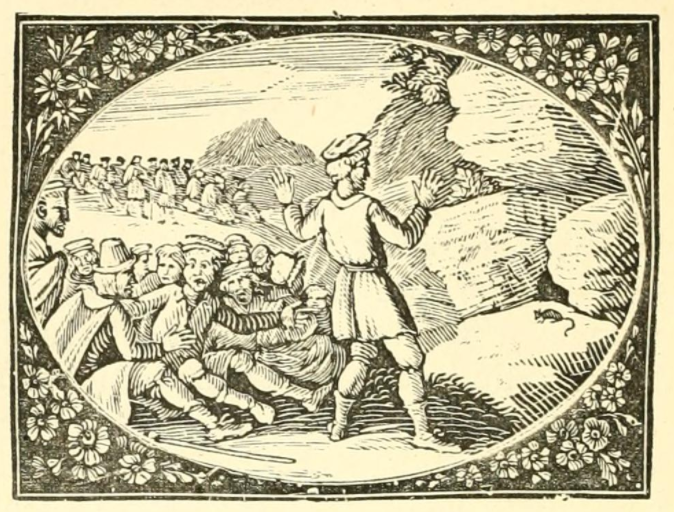
This saying became part of the Aesopic tradition: The Mountain in Labor. Erasmus provides Greek citations, along with the famous instance in Horace: Parturient montes, nascetur ridiculus mus. From Greek ὄρος we get orography in English, the scientific description of mountains.

Here is Bewick's illustration of the Aesopic fable about the mountain giving birth to a mouse:


And here's a random proverb and a random LOLCat too :


Click here to subscribe/unsubscribe to the email list.


Tuesday, January 21, 2025

Greek Reading: Fables 11

Today's stories are from Smith's Initia Graeca, available at the Internet Archive. You can use the linked titles to access the book, and it has a dictionary in the back.

Here are the stories, presented in Greek, segmented, and then interwoven with English.


Νεβρός ποτε πρὸς τὸν ἔλαφον εἶπε· Πάτερ, σὺ καὶ μείζων καὶ θάσσων κυνῶν εἶ καὶ κέρατα πρὸς τούτοις μεγάλα φέρεις πρὸς ἄμυναν. τί δή ποτ' οὖν οὕτω τούτους φοβῇ; κἀκεῖνος γελῶν εἶπεν· ἀληθῆ μὲν ταῦτα φῂς, τέκνον, ἕν δ' οἶδα, ὡς, ἐπειδὰν κυνὸς ὑλακὴν ἀκούω, αὐτίκα πρὸς φυγὴν, οὐκ οἶδ' ὅπως ἐκφέρομαι.

Νεβρός ποτε 
πρὸς τὸν ἔλαφον εἶπε· 
Πάτερ, σὺ 
καὶ μείζων καὶ θάσσων κυνῶν εἶ 
καὶ κέρατα πρὸς τούτοις μεγάλα φέρεις 
πρὸς ἄμυναν. 
τί δή ποτ' οὖν οὕτω τούτους φοβῇ; 
κἀκεῖνος γελῶν εἶπεν· 
ἀληθῆ μὲν ταῦτα φῂς, τέκνον, 
ἕν δ' οἶδα, ὡς, 
ἐπειδὰν κυνὸς ὑλακὴν ἀκούω, 
αὐτίκα πρὸς φυγὴν, 
οὐκ οἶδ' ὅπως ἐκφέρομαι.

Νεβρός ποτε εἶπε  ...  A fawn once said
πρὸς τὸν ἔλαφον  ...  to a stag,
Πάτερ, σὺ εἶ  ...  Father, you are both
καὶ μείζων καὶ θάσσων  ...  both bigger and faster 
κυνῶν   ...  than the dogs
καὶ κέρατα μεγάλα φέρεις  ...  and you bear great horns 
πρὸς ἄμυναν πρὸς τούτοις  ...  for warding them off.
τί δή ποτ' οὖν   ...  So then why
οὕτω τούτους φοβῇ;   ...  are you so afraid of them?
κἀκεῖνος γελῶν εἶπεν·   ...  And he, laughing, said,
τέκνον, ἀληθῆ μὲν ταῦτα φῂς  ...  Son, you speak truly, 
ἕν δ' οἶδα,  ...  but I know one thing:  
ὡς ἐπειδὰν κυνὸς ὑλακὴν ἀκούω  ...  whenever I hear a dog's bark,
οὐκ οἶδ' ὅπως  ... — I don't know how (it happens) —
αὐτίκα ἐκφέρομαι πρὸς φυγὴν  ...  I rush away at once to escape.


Γεωργός τις, μέλλων καταλύειν τὸν βίον καὶ βουλόμενος τοὺς ἑαυτοῦ παῖδας πεῖραν λαβεῖν τῆς γεωργίας, προσκαλεσάμενος αὐτοὺς ἔφη· παῖδες ἐμοί, ἐγὼ μὲν ἤδη τοῦ βίου ὑπέξειμι, ὑμεῖς δ', ἅπερ ἐν τῇ ἀμπέλῳ μοι κέκρυπται, ζητήσαντες εὑρήσετε πάντα. Οἱ μὲν οὖν οἰηθέντες θησαυρὸν ἐκεῖ που κατορωρύχθαι πᾶσαν τὴν τῆς ἀμπέλου γῆν μετὰ τὴν ἀποβίωσιν τοῦ πατρὸς κατέσκαψαν· καὶ θησαυρῷ μὲν οὐ περιέτυχον, ἡ δὲ ἄμπελος καλῶς σκαφεῖσα πολλαπλασίονα τὸν καρπὸν ἀνέδωκεν.

Γεωργός τις, 
μέλλων καταλύειν τὸν βίον 
καὶ βουλόμενος 
τοὺς ἑαυτοῦ παῖδας 
πεῖραν λαβεῖν τῆς γεωργίας, 
προσκαλεσάμενος αὐτοὺς 
ἔφη· παῖδες ἐμοί, 
ἐγὼ μὲν 
ἤδη τοῦ βίου ὑπέξειμι, 
ὑμεῖς δ', 
ἅπερ 
ἐν τῇ ἀμπέλῳ μοι κέκρυπται, 
ζητήσαντες εὑρήσετε πάντα. 
Οἱ μὲν οὖν οἰηθέντες 
θησαυρὸν ἐκεῖ που κατορωρύχθαι 
πᾶσαν τὴν τῆς ἀμπέλου γῆν
μετὰ τὴν ἀποβίωσιν τοῦ πατρὸς 
κατέσκαψαν· 
καὶ θησαυρῷ μὲν οὐ περιέτυχον, 
ἡ δὲ ἄμπελος 
καλῶς σκαφεῖσα 
πολλαπλασίονα τὸν καρπὸν ἀνέδωκεν.

Γεωργός τις  ...  A certain farmer, 
μέλλων καταλύειν τὸν βίον  ...  about to leave this life
καὶ βουλόμενος  ...  and wanting
τοὺς ἑαυτοῦ παῖδας  ...  that his children
πεῖραν λαβεῖν τῆς γεωργίας  ...  would get farming experience, 
προσκαλεσάμενος αὐτοὺς  ...  summoned them;
ἔφη· παῖδες ἐμοί  ...  he said: My boys, 
ἐγὼ μὲν ἤδη τοῦ βίου ὑπέξειμι  ...  I'm now leaving this life, 
ὑμεῖς δ' ζητήσαντες εὑρήσετε  ...  but you, by seeking, will find
πάντα ἅπερ κέκρυπται  ... everything that is buried.
ἐν τῇ ἀμπέλῳ μοι  ...  in my vineyard.
Οἱ μὲν οὖν οἰηθέντες  ...  And so they, thinking that
θησαυρὸν ἐκεῖ που κατορωρύχθαι ...  treasure was buried there
κατέσκαψαν  ...  they dug up 
πᾶσαν τὴν τῆς ἀμπέλου γῆν ...  all the earth in the vineyard
μετὰ τὴν ἀποβίωσιν τοῦ πατρὸς  ...  after their father's demise,
καὶ θησαυρῷ μὲν οὐ περιέτυχον  ...  and they did not find a treasure, 
ἡ δὲ ἄμπελος  ...  but the vineyard, 
καλῶς σκαφεῖσα  ...  beautifully dug up,
τὸν καρπὸν ἀνέδωκεν πολλαπλασίονα  ...  gave fruit abundantly.

And here's a random proverb and a random LOLCat too :


Click here to subscribe/unsubscribe to the email list.


Monday, January 20, 2025

Greek Proverb Review: Jan. 21

For today, it's a new review slideshow for Groups 125, 126, and 127. Here's the post with the details about how the slideshows work, and there's a random cat at the bottom of the post! Plus more cats.

The slideshow is embedded in the blog post, and you can also access today's slideshow directly, full-sized view. And remember: each time you see the English translation on a slide, you can click to access the original blog post with the notes for each proverb.


These are the proverbs, linked back to their blog posts:

And here's a random proverb and a random LOLCat too :


Click here to subscribe/unsubscribe to the email list.


Sunday, January 19, 2025

Greek Reading: Fables 10

Today's stories are from Smith's Initia Graeca, available at the Internet Archive. (There are just two stories today; I'm going to aim for around 100 words per post.) You can use the linked titles to access the book, and it has a dictionary in the back.

Here are the stories, presented in Greek, segmented, and then interwoven with English.


Ἄνθρωπός τις φόνον ποιήσας ἐδιώκετο ὑπὸ τῶν συγγενῶν τοῦ φονευθέντος. Γενόμενος δὲ κατὰ τὸν ποταμὸν τὸν Νεῖλον, λέοντα ἰδὼν καὶ φοβηθεὶς ἀνέβη εἰς δένδρον. Εὗρε δὲ δράκοντα ἐπάνω τοῦ δένδρου, καὶ πάλιν τοῦτον φοβηθεὶς ἔρριψεν ἑαυτὸν εἰς τὸν ποταμόν. Ἐν δὲ τῷ ποταμῷ κροκόδειλος αὐτὸν κατεθοινήσατο.

Ἄνθρωπός τις 
φόνον ποιήσας 
ἐδιώκετο 
ὑπὸ τῶν συγγενῶν τοῦ φονευθέντος. 
Γενόμενος δὲ 
κατὰ τὸν ποταμὸν τὸν Νεῖλον, 
λέοντα ἰδὼν καὶ φοβηθεὶς 
ἀνέβη εἰς δένδρον. 
Εὗρε δὲ δράκοντα 
ἐπάνω τοῦ δένδρου, 
καὶ πάλιν τοῦτον φοβηθεὶς 
ἔρριψεν ἑαυτὸν 
εἰς τὸν ποταμόν. 
Ἐν δὲ τῷ ποταμῷ 
κροκόδειλος αὐτὸν κατεθοινήσατο.

Φόνον ποιήσας  ...  Having committed a murder
ἄνθρωπός τις ἐδιώκετο  ...  a man was being pursued
ὑπὸ τῶν συγγενῶν  ...  by the relatives
τοῦ φονευθέντος  ...  of the man he had murdered. 
Γενόμενος δὲ  ...  Having arrived
κατὰ τὸν ποταμὸν τὸν Νεῖλον  ...  at the river Nile, 
λέοντα ἰδὼν καὶ φοβηθεὶς  ...  he saw a lion and was afraid; 
ἀνέβη εἰς δένδρον  ...  he climbed up a tree. 
Εὗρε δὲ δράκοντα  ...  But he found a dragon 
ἐπάνω τοῦ δένδρου  ...  up in the tree, 
καὶ πάλιν τοῦτον φοβηθεὶς  ...  and he was afraid of that; 
ἔρριψεν ἑαυτὸν εἰς τὸν ποταμόν  ...  he jumped into the river 
Ἐν δὲ τῷ ποταμῷ  ...  And in the river 
κροκόδειλος αὐτὸν κατεθοινήσατο  ...  a crocodile feasted on him.


Γυνὴ χήρα φιλεργὸς θεραπαινίδας ἔχουσα, ταύτας εἰώθει νυκτὸς ἐγείρειν ἐπὶ τὰ ἔργα πρὸς τὰς τῶν ἀλεκτρυόνων ᾠδάς. Αἱ δὲ συνεχῶς τῷ πόνῳ ταλαιπωρούμεναι, ἔγνωσαν δεῖν τὸν ἐπὶ τῆς οἰκίας ἀποκτεῖναι ἀλεκτρυόνα, ὡς ἐκείνου νύκτωρ ἐξανιστάντος τὴν δέσποιναν. Συνέβη δ' αὐταῖς τοῦτο διαπραξαμέναις χαλεπωτέροις περιπεσεῖν τοῖς δεινοῖς. Ἡ γὰρ δεσπότις ἀγνοοῦσα τὴν τῶν ἀλεκτρυόνων ὥραν, ἐννυχώτερον ταύτας ἀνίστη.

Γυνὴ χήρα φιλεργὸς
θεραπαινίδας ἔχουσα, 
ταύτας εἰώθει νυκτὸς ἐγείρειν 
ἐπὶ τὰ ἔργα 
πρὸς τὰς τῶν ἀλεκτρυόνων ᾠδάς. 
Αἱ δὲ συνεχῶς 
τῷ πόνῳ ταλαιπωρούμεναι, 
ἔγνωσαν δεῖν 
τὸν ἐπὶ τῆς οἰκίας ἀποκτεῖναι ἀλεκτρυόνα, 
ὡς ἐκείνου νύκτωρ ἐξανιστάντος τὴν δέσποιναν. 
Συνέβη δ' αὐταῖς 
τοῦτο διαπραξαμέναις 
χαλεπωτέροις περιπεσεῖν τοῖς δεινοῖς. 
Ἡ γὰρ δεσπότις 
ἀγνοοῦσα τὴν τῶν ἀλεκτρυόνων ὥραν, 
ἐννυχώτερον ταύτας ἀνίστη.

Γυνὴ χήρα φιλεργὸς  ...  A hardworking widow woman
θεραπαινίδας ἔχουσα  ...  had some maids; 
ταύτας εἰώθει νυκτὸς ἐγείρειν  ...  she usually woke them at night 
ἐπὶ τὰ ἔργα  ...  for their duties
πρὸς τὰς τῶν ἀλεκτρυόνων ᾠδάς  ...  before cock-crow. 
Αἱ δὲ συνεχῶς ταλαιπωρούμεναι  ...  Suffering continuously
τῷ πόνῳ  ...  from the hard work, 
ἔγνωσαν δεῖν  ...  they decided that they had to 
ἀποκτεῖναι τὸν ἀλεκτρυόνα  ...  kill the rooster
ἐπὶ τῆς οἰκίας  ...  on the rooftop 
ὡς ἐκείνου ἐξανιστάντος  ...  since he was the one who roused
τὴν δέσποιναν  ...  the mistress
νύκτωρ  ...  at night. 
αὐταῖς διαπραξαμέναις τοῦτο  ...  after they had done this thing,
συνέβη δ'  ...  it happened that
περιπεσεῖν τοῖς δεινοῖς  ...  they met with troubles
χαλεπωτέροις  ...  that were even more burdensome,
ἡ γὰρ δεσπότις  ...  for the mistress, 
ἀγνοοῦσα ὥραν  ...  not knowing the hour
τὴν τῶν ἀλεκτρυόνων  ...  of the cockcrow, 
ἐννυχώτερον ταύτας ἀνίστη  ...  woke them deeper in the night.

And here's a random proverb and a random LOLCat too :


Click here to subscribe/unsubscribe to the email list.


Friday, January 17, 2025

Greek Vocabulary Challenge: Jan. 18

Here are today's vocabulary words; it's Group 136. Click on the word to learn more at Logeion:

φιλόσοφος ~ φιλοσόφου (adj. m/f.): lover of wisdom 
πλούσιος ~ πλουσίου (adj. masc.): wealthy, rich 
μόνος ~ μόνου (adj. masc.): alone, only 
ἰσχυρόν ~ ἰσχυροῦ (adj. neut.): strong, violent 
κρείσσων ~ κρείσσονος (adj. fem.): stronger, better 

These are the proverbs (and there are always more proverbs at the blog):

Φιλόσοφος γίνου.

Ἀεὶ γεωργὸς εἰς νέωτα πλούσιος.

Τοῦτ' ἐστὶ τὸ ζῆν μὴ σεαυτῷ ζῆν μόνῳ.

Ἰσχυρὸν ὄχλος ἐστίν, οὐκ ἔχει δὲ νοῦν.

Γνώμη δὲ κρείσσων ἐστίν ἢ ῥώμη χερῶν.


And now, some commentary:

Φιλόσοφος γίνου.
Be a lover of wisdom.
This is another of the maxims of the Seven Sages recorded by Stobaeus; for more, see Wikipedia: Delphic maxims. Like many compound adjectives, there is not a distinctive feminine form; φιλόσοφος is both masculine and feminine, depending on context. It is often used substantively as a noun, which is the origin of our "philosopher" in English.

Ἀεὶ γεωργὸς εἰς νέωτα πλούσιος.
The farmer is always rich next year.
As Erasmus explains, this saying can refer literally to farmers, but it can also apply to all kinds of speculators who put their hopes in a future harvest, literal or metaphorical.  The adjective πλούσιος is from the noun πλοῦτος, "wealth," and Πλοῦτος was also a god. You can find out more at Wikipedia: Plutus.

Τοῦτ' ἐστὶ τὸ ζῆν μὴ σεαυτῷ ζῆν μόνῳ.
This is what living is: not living for oneself alone.
This is one of the monostichs of Menander, and so it is in iambic verse:
Τοῦτ' ἐσ-τὶ τὸ || ζῆν μὴ σεαυ||τῷ ζῆν μόνῳ.

Ἰσχυρὸν ὄχλος ἐστίν, οὐκ ἔχει δὲ νοῦν.
The crowd is powerful, but it doesn't have a mind.
And this is another one of Menander's monostichs in iambic verse:
Ἰσχυ-ρὸν ὄχ||λος ἐσ-τίν, οὐκ || ἔχει δὲ νοῦν.

Γνώμη δὲ κρείσσων ἐστίν ἢ ῥώμη χερῶν.
Thought is stronger than the power of hands.
This is a fragment of the tragic poet Agathon; his plays are lost, only a few titles and fragments having survived, but Agathon appears as a character in the writings of both Plato and Aristophanes. You can find out more at Wikipedia: Agathon. Here he appears in a painting that depicts Plato's Symposium, greeting Alcibiades:


And here's a random proverb and a random LOLCat too :


Click here to subscribe/unsubscribe to the email list.