Tuesday, June 17, 2025

Greek Reading: 73

The fable below comes from Bryce's First Greek Reader, which is available at the Internet Archive. I'm surprised not to have seen this fable in the other readers; this is the first time we've had this famous fable.

You'll find the story below, first in Greek, then segmented, and then interwoven with English; the title is linked to the Internet Archive page.


Κόραξ, κρέας ἁπρασας, ἐπί τινος δένδρου ἐκάθισεν· ἀλώπηξ δὲ τοῦτον ἰδοῦσα, καὶ βουληθεῖσα περιγενέσθαι τοῦ κρέατος, στᾶσα κάτωθεν ἐπῄνει αὐτόν, ὡς εὐμεγεθὲς καὶ καλὸν ὄρνεον καὶ θηρευτικὸν καὶ εὔμορφον· καὶ λέγουσα, Ὅτι ἥρμοζέ σοι βασιλέα εἶναι ὀρνέων, εἰ καὶ φωνητiκὸς ὑπῆρχες· ἀλλ' ὦ τοῖον ὄρνεον, καὶ ἄλαλον ὑπάρχεις· Ὁ δὲ κόραξ, ἀκούσας ταῦτα, καὶ χαυνωθεὶς τοῖς ἐπαίνοις, ῥίψας τὸ κρέας, μεγάλως ἐεκεκράγει· ἡ δ' ἀλώπηξ, δραμοῦσα καὶ λαβοῦσα τὸ κρέας, ἔφη πρὸς αὐτόν· Ἔχεις, κόραξ, ἅπαντα, νοῦς δέ τοι λείπει.

Κόραξ, κρέας ἁπρασας, 
ἐπί τινος δένδρου ἐκάθισεν· 
ἀλώπηξ δὲ τοῦτον ἰδοῦσα, 
καὶ βουληθεῖσα 
περιγενέσθαι τοῦ κρέατος, 
στᾶσα κάτωθεν 
ἐπῄνει αὐτόν, 
ὡς εὐμεγεθὲς καὶ καλὸν ὄρνεον 
καὶ θηρευτικὸν καὶ εὔμορφον· 
καὶ λέγουσα, 
Ὅτι ἥρμοζέ σοι 
βασιλέα εἶναι ὀρνέων, 
εἰ καὶ φωνητiκὸς ὑπῆρχες· 
ἀλλ' ὦ τοῖον ὄρνεον, 
καὶ ἄλαλον ὑπάρχεις· 
Ὁ δὲ κόραξ, 
ἀκούσας ταῦτα, 
καὶ χαυνωθεὶς τοῖς ἐπαίνοις, 
ῥίψας τὸ κρέας, 
μεγάλως ἐεκεκράγει· 
ἡ δ' ἀλώπηξ, 
δραμοῦσα 
καὶ λαβοῦσα τὸ κρέας, 
ἔφη πρὸς αὐτόν· 
Ἔχεις, κόραξ, ἅπαντα, 
νοῦς δέ τοι λείπει.

Κόραξ  ...  A crow 
κρέας ἁπρασας  ...  snatched some meat
ἐκάθισεν  ...  and settled down 
ἐπί τινος δένδρου  ...  on a tree. 
ἀλώπηξ δὲ  ...  A fox 
τοῦτον ἰδοῦσα  ...  saw the crow, 
καὶ βουληθεῖσα  ...  and wanted 
περιγενέσθαι τοῦ κρέατος  ...  obtain that meat, 
στᾶσα κάτωθεν  ...  so she stood below the crow 
ἐπῄνει αὐτόν  ...  and praised the crow
ὡς εὐμεγεθὲς καὶ καλὸν ὄρνεον  ...  as a great, beautiful bird 
καὶ θηρευτικὸν καὶ εὔμορφον  ...  and a hunter, and handsome,
καὶ λέγουσα ὅτι  ...  and she said that
ἥρμοζέ σοι  ...  "It suited you
βασιλέα εἶναι ὀρνέων  ...  to be king of the birds, 
εἰ καὶ φωνητiκὸς ὑπῆρχες  ...  if you were also able to speak.
ἀλλ' ὦ τοῖον ὄρνεον  ...  but oh, such a fine bird you are,
καὶ ἄλαλον ὑπάρχεις  ...  but you are unable to speak."
Ὁ δὲ κόραξ  ...  And the crow,
ἀκούσας ταῦτα  ...  when he heard these things 
καὶ χαυνωθεὶς  ...  and opened his mouth
τοῖς ἐπαίνοις  ...  at these flatteries,
ῥίψας τὸ κρέας  ...  he dropped the meat
μεγάλως ἐεκεκράγει  ...  squawking loudly.
ἡ δ' ἀλώπηξ  ...  And the fox
δραμοῦσα  ...  ran up
καὶ λαβοῦσα τὸ κρέας  ...  and grabbed the meat,
ἔφη πρὸς αὐτόν  ...  and she said to the crow
Ἔχεις, κόραξ, ἅπαντα  ...  Crow, you have everything
νοῦς δέ τοι λείπει  ...  but your mind has forsaken you."

In another Greek prose version (recorded by Chambry), this is what the fox says to the crow in the end: it's about φρένες instead of νοῦς.

Ὦ κόραξ  ...  O crow,
καὶ φρένας εἰ εἶχες  ...  if you had wits, 
οὐδὲν ἂν ἐδέησας  ...  you'd have everything you need
εἰς τὸ πάντων σε βασιλεῦσαι  ...  to rule over everybody.


And here's a random proverb and a random LOLCat too:


Click here to subscribe/unsubscribe to the email list.


Greek Vocabulary Challenge: June 17

Here are today's vocabulary words; it's Group 174. Click on the word to learn more at Logeion:

χείρ ~ χειρὸς (noun f.): hand 
γράμμα ~ γράμματος (noun n.): letter, writing 
νεκρός ~ νεκροῦ (noun m.): corpse, dead man 
πῦρ ~ πυρός (noun n.): fire 
βασιλεύς ~ βασιλέως (noun m.): king, chief 

These are the proverbs (and there are always more proverbs at the blog):

Λημνίᾳ χειρί

Ἐφέσια γράμματα.

Μὴ νεκρῶν θήκας κίνει.

Μαχαίρᾳ μὴ πῦρ σκαλεύειν.

Εἷς κοίρανος ἔστω, εἷς βασιλεύς.

And now, some commentary:

Λημνίᾳ χειρί
By the hand of Lemnos.
This is a mythological proverb, alluding to the outrageous crime committed by the women of Lemnos when they murdered all the men on the island of Lemnos (the one exception was Hypsipyle, who saved her father Thoas). Supposedly this was because the men were refusing to have sex with them (at least, that's what the male sources say!). So, by extension, the saying applies to any kind of extreme criminality. You can read more about the women of Lemnos at Wikipedia: The Lemnian Crime.

Ἐφέσια γράμματα.
Ephesian letters.
This refers to meaningless words with magical power that were inscribed on the famous statue of Artemis at Ephesus. The words in and of themselves were "senseless" (ἄσημα ὀνόματα), but they supposedly offered supernatural protection to the person who could pronounce them correctly. You can find out more at Wikipedia: Ephesia Grammata. Compare the English phrase "mumbo jumbo" and other "gibberish."

Μὴ νεκρῶν θήκας κίνει.
Do not disturb the graves of the dead.
This is a saying found in Theophrastus, and it can be applied metaphorically to anything that is "dead and buried" and is best left undisturbed. Don't go digging it up again! Note the accentuation on κίνει, which alerts you that it is the imperative, along with μὴ as a clue that you are not dealing with an indicative verb (κινεῖ would be the 3rd-person indicative).

Μαχαίρᾳ μὴ πῦρ σκαλεύειν.
Don't poke the fire with a knife.
This is one of the so-called Pythagorean sayings recorded by Diogenes Laertius, and it means you should not provoke (poke with a sword) a person who is already angry (fire). This time you see μὴ used with the infinitive to express a general prohibition. 

Εἷς κοίρανος ἔστω, εἷς βασιλεύς.
Let there be one leader, one king. 
The words are from Homer's Iliad. The words are spoken by Odysseus as he rebukes a common soldier's protest who is unhappy with Agamemnon: οὐκ ἀγαθὸν πολυκοιρανίη: εἷς κοίρανος ἔστω, εἷς βασιλεύς: "Rule-by-many is not a good thing: let there be one leader, one king."


And here's a random proverb and a random LOLCat too:


Click here to subscribe/unsubscribe to the email list.


Monday, June 16, 2025

Greek Reading: 72

The fables below come from Bryce's First Greek Reader, while the joke comes from Abbott's Easy Greek Reader, both of which are available at the Internet Archive. (This is the last of the jokes from Abbott; I hope I can find another reader that has more of these jokes!)

You'll find the fables and joke below, first in Greek, then segmented, and then interwoven with English. The titles are linked to the Internet Archive page.


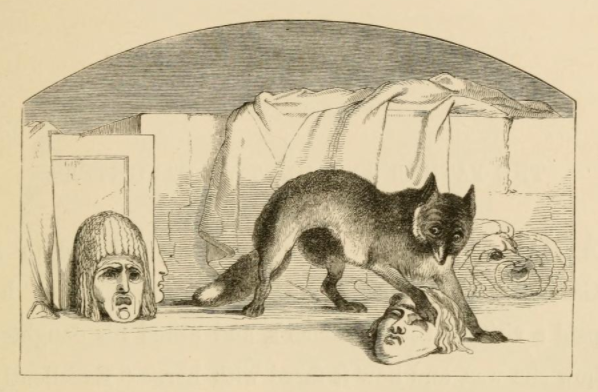
Ἀλώπηξ εἰς οἰκίαν ἐλθοῦσα ὑποκριτοῦ καὶ ἕκαστα τῶν αὐτοῦ σκευῶν διερευνωμένη, εὗρε καὶ κεφαλὴν μορμολυκείου εὐφυῶς κατεσκευασμένην, ἣν καὶ ἀναλαβοῦσα ταῖς χερσὶν ἔφη· Ὢ οἵα κεφαλή, καὶ ἔγκεφαλον οὐκ ἔχει.

Ἀλώπηξ εἰς οἰκίαν ἐλθοῦσα ὑποκριτοῦ 
καὶ ἕκαστα τῶν αὐτοῦ σκευῶν διερευνωμένη, 
εὗρε καὶ κεφαλὴν μορμολυκείου 
εὐφυῶς κατεσκευασμένην, 
ἣν καὶ ἀναλαβοῦσα ταῖς χερσὶν ἔφη· 
Ὢ οἵα κεφαλή, 
καὶ ἔγκεφαλον οὐκ ἔχει.

Ἀλώπηξ ἐλθοῦσα  ...  A fox went into
εἰς οἰκίαν ὑποκριτοῦ  ...  the house of an actor 
καὶ διερευνωμένη  ...  and examined
ἕκαστα τῶν αὐτοῦ σκευῶν  ...  all of his goods; 
εὗρε καὶ  ...  the fox also found
κεφαλὴν μορμολυκείου  ...  a comic mask, 
εὐφυῶς κατεσκευασμένην  ...  beautifully crafted,
ἣν καὶ ἀναλαβοῦσα  ...  which she picked up 
ταῖς χερσὶν  ...  in her paws 
ἔφη  ...  and said, 
Ὢ οἵα κεφαλή  ...  Oh, such a head! 
καὶ ἔγκεφαλον οὐκ ἔχει  ...  Yet it has no brains.


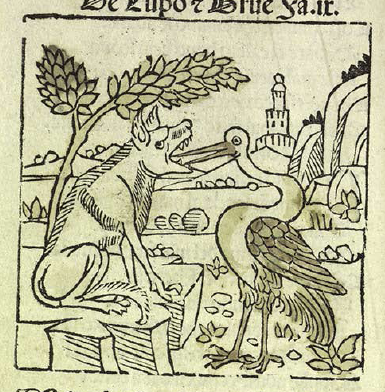
Λύκου λαιμῷ ὀστέον ἐπεπήγει· ὁ δὲ γεράνῳ μισθὸν παρέξειν εἶπεν, εἰ τὴν κεφαλὴν αὑτῆς ἐπιβαλοῦσα τὸ ὀστοῦν ἐκ τοῦ λαιμοῦ αὐτοῦ ἐκβάλοι· ἡ δ’ τοῦτ' ἐκβαλοῦσα, δολιχόδειρος οὖσα, τὸν μισθὸν ἐπεζήτει ὅστις γελάσας, καὶ τοὺς ὀδόντας θήξας, Ἀρκεῖ σοι μισθός, ἔφη, τοῦτο καὶ μόνον ὅτι ἐκ λύκου στόματος καὶ ὀδόντων ἐξεῖλες κάρα σῶον μηδὲν παθοῦσα.

Λύκου λαιμῷ 
ὀστέον ἐπεπήγει· 
ὁ δὲ 
γεράνῳ μισθὸν παρέξειν εἶπεν, 
εἰ τὴν κεφαλὴν αὑτῆς ἐπιβαλοῦσα 
τὸ ὀστοῦν ἐκ τοῦ λαιμοῦ αὐτοῦ ἐκβάλοι· 
ἡ δ’ τοῦτ' ἐκβαλοῦσα, 
δολιχόδειρος οὖσα, 
τὸν μισθὸν ἐπεζήτει 
ὅστις γελάσας, 
καὶ τοὺς ὀδόντας θήξας, 
Ἀρκεῖ σοι μισθός, ἔφη, 
τοῦτο καὶ μόνον 
ὅτι ἐκ λύκου στόματος καὶ ὀδόντων 
ἐξεῖλες κάρα σῶον 
μηδὲν παθοῦσα.

ὀστέον ἐπεπήγει  ...  A bone had gotten stuck
λύκου λαιμῷ  ...  in the throat of a wolf,
ὁ δὲ γεράνῳ εἶπεν  ...  and he told a crane
μισθὸν παρέξειν  ...  that he would pay a reward, 
εἰ ἐπιβαλοῦσα  ...  if she would insert
τὴν κεφαλὴν αὑτῆς  ...  her head 
τὸ ὀστοῦν ἐκβάλοι  ...  and dislodge the bone
ἐκ τοῦ λαιμοῦ αὐτοῦ  ...  from his throat.
ἡ δ’ τοῦτ' ἐκβαλοῦσα  ...  She dislodged it,
δολιχόδειρος οὖσα  ...  being long-necked,
τὸν μισθὸν ἐπεζήτει  ...  and requested her reward
ὅστις γελάσας  ...  but the wolf laughed,
καὶ τοὺς ὀδόντας θήξας  ...  grinding his teeth,
ἔφη  ... and said,
μισθός τοῦτο  ... This reward
καὶ μόνον   ...  and this alone
ἀρκεῖ σοι  ....  is enough for you:
ὅτι ἐκ λύκου στόματος  ...  that from the wolf's mouth 
καὶ ὀδόντων  ...  and teeth
ἐξεῖλες κάρα  ...  you pulled out your head 
σῶον  ...  safe and sound, 
μηδὲν παθοῦσα  ...  not having suffered harm.
Ὀκνηρῷ υἱῷ ἐκέλευσεν ὃ πατὴρ εἰς τὸν γείτονα ἀπελθεῖν καὶ χρήσασθαι ἀξίνην. ὁ δὲ ἔφη, οὐ δίδωσι. τοῦ δὲ πατρὸς ἐπιμένοντος, ἀπεκρίνατο, ἐγώ εἰμι ὁ γείτων, καὶ ἀξίνην οὐκ ἔχω.

Ὀκνηρῷ υἱῷ 
ἐκέλευσεν ὃ πατὴρ 
εἰς τὸν γείτονα ἀπελθεῖν 
καὶ χρήσασθαι ἀξίνην. 
ὁ δὲ ἔφη, 
οὐ δίδωσι. 
τοῦ δὲ πατρὸς ἐπιμένοντος, 
ἀπεκρίνατο, 
ἐγώ εἰμι ὁ γείτων, 
καὶ ἀξίνην οὐκ ἔχω.

ἐκέλευσεν ὃ πατὴρ  ...  A father ordered 
ὀκνηρῷ υἱῷ  ...  his lazy son
εἰς τὸν γείτονα ἀπελθεῖν  ...  to go to the neighbor 
καὶ χρήσασθαι ἀξίνην  ...  and borrow an axe.
ὁ δὲ ἔφη  ...  The son said,
οὐ δίδωσι  ...  "No axe to give."
τοῦ δὲ πατρὸς ἐπιμένοντος  ...  The father persisted, 
ἀπεκρίνατο  ...  and the son replied,
ἐγώ εἰμι ὁ γείτων  ...  I am your neighbor,
καὶ ἀξίνην οὐκ ἔχω  ...  And I've got not axe.

And here's a random proverb and a random LOLCat too:


Click here to subscribe/unsubscribe to the email list.


Friday, June 13, 2025

Greek Crossword 134-135-136

I had a mix-up today: I was supposed to do groups 34-35-36, and I accidentally did groups 134-135-136 instead. No worries, though: any and all review is a good review! I hope you will enjoy. You can click on those group links to review those posts and/or click on the linked sayings below for the post with that specific saying:
Here are the sayings without spaces: see if you can find the word breaks! (I'm just doing the shorter ones because the long ones just keep running over longer than the line.)

Π λ ο υ τ ῳ α π ι σ τ ε ι.

Φ ι λ ο σ ο φ ο σ γ ι ν ο υ.

Τ α Τ α ν τ α l ο υ τ a λ α ν τ α.

Τ α ν τ α λ ε ι ο ι τ ι μ ω ρ ι α ι.

Ω σ π ρ ο β α τ ο ν ε π ι σ φ α γ η ν.

Α ι ε τ ι o ν χ α ρ ι ν ε κ τ ι ν ε ι ν.

Μ ι α χ ε λ ι δ ω ν ε α ρ ο υ π ο ι ε ι.

Μ ε τ α π ο λ ε μ ο ν η σ υ μ μ α χ ι α.

Π ο λ ι τ ι κ ο ν ζ ῳ ο ν ο α ν θ ρ ω π ο ς.

Ξ υ λ ο ν α γ κ υ λ ο ν ο υ δ ε π ο τ ο ρ θ ο ν.

Α ε ι γ ε ω ρ γ ο σ ε ι σ ν ε ω τ α π λ ο υ σ i ο ς.


And here's the crossword puzzle based on a missing word from each proverb: printable Crossword PDF. I've pasted in screenshots below so you can see what the crossword looks like:

And here's a random proverb and a random LOLCat too :


Click here to subscribe/unsubscribe to the email list.