Showing posts with label Week 007. Show all posts

Friday, May 17, 2024

Week 7: Proverb and Vocabulary Review

Before sharing all the Quia links, etc., I have a new addition to the project this week: an index of all the proverbs alphabetically, linked back to their blog posts with the commentary. I decided to do this since this week crossed over into more than 200 proverbs so far; 210 to be precise. :-)

I've now added audio to all the posts for the past week; see playlist below, and the audio is also embedded in each post.

Last week I posted some Quia activities for reviewing the sixth week of proverbs and vocabulary, plus noun and verb forms review; see the first week's review post for an explanation of how to use Quia activities, and you can find all my Quia materials here.

This week, I created the same activities for the Week 7 proverbs: Proverbs, Vocabulary, Vocabulary with Parts, plus Verb Practice and Noun Practice.

Here's the updated widget showing a random proverb:


If you want to review this week's posts, here they are: Group 37 - Group 38 - Group 39 - Group 40 - Group 41 - Group 42. You can also listen to the audio for each group at SoundCloud (I'm still working on filling in the audio for the earlier weeks):


Finally, here is the list of all of this week's proverbs, alphabetized and linked back to the blog post so that you can access the English translation and commentary as needed. Enjoy!


Thursday, May 16, 2024

42: himself, bravery, skill, slave, reproach

Here are today's vocabulary words; they are nouns with the nominative and genitive plus gender, along with a brief definition. Click on the word to learn more at Logeion, and there's also a study tips post.

1. αὐτός ~ αὐτοῦ (m.): he, himself 
2. ἀνδρεία ~ ἀνδρείας (f.): bravery, manly spirit 
3. τέχνη ~ τέχνης (f.): art, skill, craft 
4. δοῦλος ~ δούλου (m.): slave 
5. ὄνειδος ~ ὀνείδεος (n.): reproach, disgrace 

Here are the proverbs and sayings:

Αὐτὸς αὑτὸν αὐλεῖ.

Ἀλκήστιδος ἀνδρεία.

Τύχη τέχνην ὀρθοῖ, οὐ τέχνη τύχην.

Ἀνὴρ ἀτεχνὴς τοῖς πᾶσίν ἐστι δοῦλος.

Θεοῦ δ᾿ ὄνειδος τοὺς κακοὺς εὐδαιμονεῖν. 


Plus some commentary:

Αὐτὸς αὑτὸν αὐλεῖ.
He plays himself upon the flute.
Compare the English saying "to sing his own praises." From the same root as Greek αὐτο- we get all the auto- words in English. For another saying about the flute, see this post: Αὐλητοῦ βίον ζῇς, "You are living the life of a flute player."

Ἀλκήστιδος ἀνδρεία.
The bravery of Alcestis.
Literally, the "manliness" of the woman Alcestis, who was willing to die in her husband's place when no one else was brave enough to do so. You can read more about this heroic woman at Wikipedia: Alcestis. The root of Greek ἀνδρεία is ἀνήρ, and it is the origin of the English name Andrew. 

Τύχη τέχνην ὀρθοῖ, οὐ τέχνη τύχην.
Luck guides skill; skill does not guide luck.
Note the elegant chiasmus of the words, Τύχη τέχνην X τέχνη τύχην, but not of the grammar: nom acc = nom acc. You can find out more about the Greek goddess of Luck at Wikipedia: Tyche. From Greek τέχνη, we get all the "tech" words in English, including technology. From the root in Greek ὀρθο- we get all the ortho- words in English.

Ἀνὴρ ἀτεχνὴς τοῖς πᾶσίν ἐστι δοῦλος.
The man without skill is a slave to everyone.
Here the Greek word τέχνη has been made into an alpha-private adjective meaning un-skilled:  ἀ-τεχνὴς. The etymology of Greek δοῦλος remains in dispute, possibly being Semitic in origin and not Indo-European. The English use of the word "doula" was inspired by the Greek word for a female slave; see Wikipedia: Doula.

Θεοῦ δ᾿ ὄνειδος τοὺς κακοὺς εὐδαιμονεῖν.
It is a reproach to the god when wicked men prosper.
Erasmus pairs this line of iambic verse with a saying that you saw in an earlier post: Νῦν θεοὶ μάκαρες, "The gods are now happy" (when justice is done).  The accusative κακοὺς is the subject of the infinitive εὐδαιμονεῖν, which means "to have a divine power that does well," and the adjective εὐδαίμων means "fortunate, wealthy," literally "having a good divine power." And yes, that Greek δαίμων is the origin of English "demon" via medieval Latin.


Here is a Roman fresco from Pompey showing Alcestis as she ponders her husband's fate and her own sacrifice:


Wednesday, May 15, 2024

41: chosen, biggest, empty, shameful, dead

Here are today's vocabulary words; they are adjectives with the nominative and genitive singular plus gender, along with a brief definition. Click on the word to learn more at Logeion, and there's also a study tips post.

1. αἱρετή ~ αἱρετῆς (fem.): chosen, selected 
2. μέγιστον ~ μεγίστου (neut.): biggest, greatest 
3. κενός ~ κενοῦ (masc.): empty, ineffectual 
4. αἰσχρόν ~ αἰσχροῦ (neut.): shameful, ugly 
5. νεκρόν ~ νεκροῦ (neut.): dead 

Here are the proverbs and sayings:

Σιγή ποτ' ἐστὶν αἱρετωτέρα λόγου.

Ἀγαθὸν μέγιστον ἡ φρόνησίς ἐστ' ἀεί.

Τῶν γὰρ πενήτων εἰσὶν οἱ λόγοι κενοί.

Δὶς πρὸς τὸν αυτὸν αἰσχρὸν προσκρούειν λίθον.

Ὁ κύων ὁ ζῶν αὐτὸς ἀγαθὸς ὑπὲρ τὸν λέοντα τὸν νεκρόν. 


Plus some commentary:

Σιγή ποτ' ἐστὶν αἱρετωτέρα λόγου.
Sometimes silence is preferable to speech.
The word ποτε loses its epsilon before the following vowel: ποτ' ἐστὶν. The adjective αἱρετωτέρα is a comparative — "more to-be-chosen," i.e. preferable — and so it takes a genitive complement: λόγου, "than speech." Note the rough breathing for αἱρετωτέρα; the adjective comes from the verb αἱρέω, "grasp" or "choose" (in the middle voice).

Ἀγαθὸν μέγιστον ἡ φρόνησίς ἐστ' ἀεί.
Discernment is always the greatest good.
The verb ἐστι loses its final iota before the following vowel. The word φρόνησις comes from φρήν, which is the physical seat of human emotions and also thought, located in the chest, something like both "heart" and "brain" in English. I have translated it as "discernment," but this is one of those Greek words that is impossible to render simply in English. For more about Greek φρήν, see this remarkable book by R. B. Onians: The Origins of European Thought about the Body, the Mind, the Soul, the World, Time and Fate; available to borrow at the Internet Archive. (I cannot say enough good things about this big book!)

Τῶν γὰρ πενήτων εἰσὶν οἱ λόγοι κενοί.
The words of poor people are disregarded.
Literally, the words are "empty," i.e. empty of weight, empty of importance. Compare the English saying, "Money talks," i.e. the words of rich people have weight, unlike the words of poor people. From Greek κενός we get the word kenosis, an important word in Christian theology; see Wikipedia: Kenosis.

Δὶς πρὸς τὸν αυτὸν αἰσχρὸν προσκρούειν λίθον.
It is a shameful thing to stumble twice against the same stone.
Notice how the words of the proverb are all interwoven in a way that is impossible in English; literally in English it would be: "twice against the same — shameful (it is) to stumble — stone." 

Ὁ κύων ὁ ζῶν αὐτὸς ἀγαθὸς ὑπὲρ τὸν λέοντα τὸν νεκρόν.
The living dog is better than the dead lion.
This is from the Book of Ecclesiastes in the Septuagint Bible; you can read more about this Greek translation of the Hebrew Bible at Wikipedia: Septuagint. Note the unusual way of expressing the comparison: instead of saying "better than," it says "is good over," ἀγαθὸς ὑπὲρ. For those of you who know Latin, the Vulgate translator uses a comparative adjective: melior est canis vivus leone mortuo.


Here is one of the most famous dead lions of the ancient world: the lion of Nemea, who was brought down by Heracles. (Photo of Greek vase painting by Egisto Sani at Flickr.)


Tuesday, May 14, 2024

40: rough, old, mortal, steady, bad

Here are today's vocabulary words; they are adjectives with the nominative and genitive singular plus gender, along with a brief definition. Click on the word to learn more at Logeion, and there's also a study tips post.

1. τραχύς ~ τραχέος (adj. masc.): prickly, rough 
2. πρέσβυς ~ πρέσβεος (adj. masc.): old 
3. θνητός ~ θνητοῦ (adj. masc.): mortal 
4. βέβαιος ~ βεβαίου (adj. masc.): steady, lasting 
5. κακή ~ κακῆς (adj. fem.): bad, evil 

Here are the proverbs and sayings:

Ἅπας ἐχῖνος τραχύς.

Πρεσβύτερος Κόδρου.

Βέβαιον οὐδέν ἐστιν ἐν θνητῷ βίῳ.

Ὁ δ' ὄλβος οὐ βέβαιος, ἀλλ' ἐφήμερος.

Ἡ δὲ κακὴ βουλὴ τῷ βουλεύσαντι κακίστη. 


Listen at SoundCloud.


Plus some commentary:

Ἅπας ἐχῖνος τραχύς.
The whole hedgehog is prickly.
As Erasmus explains, this saying refers to a person who is "prickly" by analogy to the prickly hedgehog. In the same way that there is no un-prickly part of a hedgehog that allows you to safely pick it up, so too there are some people who are impossible to deal with no matter what you try to do: they are completely prickly. From the same root in Greek τραχύς we get English trachea, so-called because of the windpipe's bumpy cartilage.

Πρεσβύτερος Κόδρου.
Older than Codrus.
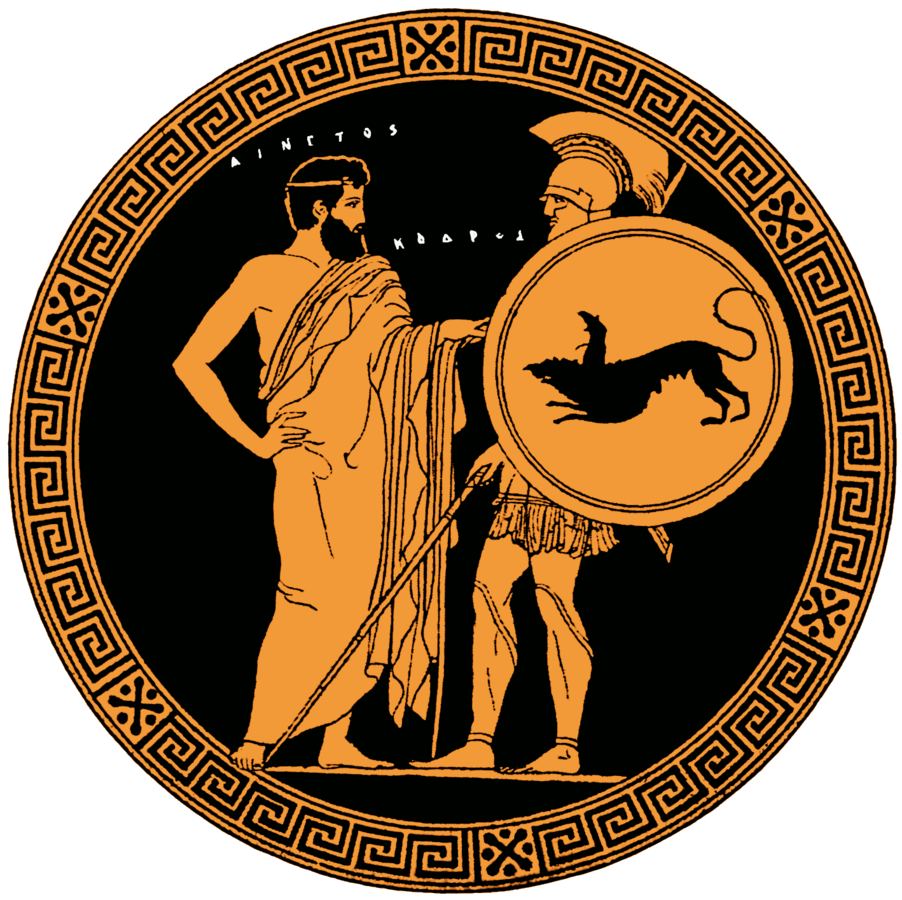
Codrus was a legendary king in very ancient times, so even by the standards of the ancient Greeks, he belonged to "olden times." You can read about his reign at Wikipedia: Codrus. The word πρεσβύτερος is a comparative form of πρέσβυς, and thus takes a genitive complement: Πρεσβύτερος (than) Κόδρου. From this same root, we get the English word Presbyterian.

Βέβαιον οὐδέν ἐστιν ἐν θνητῷ βίῳ.
Nothing is lasting in this mortal life.
The contrast between dying and living is much stronged in the Greek:  θνητῷ βίῳ, the life subject to death. For the etymology of Greek Βέβαιον, see the next item. This is another of the iambic monostichs of Menander.

Ὁ δ' ὄλβος οὐ βέβαιος, ἀλλ' ἐφήμερος.
Wealth does not last but is gone in a day.
The adjective βέβαιος is built on the perfect stem βέβηκ- of the verb βαίνω; the present stem means "step, walk," but the perfect stem means "stand," i.e. to have walked and come to a halt. The Greek ἐφήμερος is a compound, ἐπι-ήμερος, in-a-day. The words are from Euripides's The Phoenician Women.

Ἡ δὲ κακὴ βουλὴ τῷ βουλεύσαντι κακίστη. 
The harmful plan is most harmful of all for the one who planned it.
The words are from Hesiod's Works and Days. Hesiod adds this related thought: οἷ γ᾽ αὐτῷ κακὰ τεύχει ἀνὴρ ἄλλῳ κακὰ τεύχων, "the man who does bad things to another is doing bad things to himself."


You can see King Codrus depicted on this vase painting:


Monday, May 13, 2024

39: arouse, guard, be, wish, kill

More verb vocabulary today; they are verbs with the present, future, and aorist stems, plus a brief definition. (If you are just beginning Greek and have not studied the future or aorist stems yet, you can just focus on the present stem.) Click on the word to learn more at Logeion, and there's also a study tips post.

1. ἐγείρω ~ ἐγερέω ~ ἤγειρα: wake up, arouse 
2. φρουρέω ~ φρουρήσω ~ ἐφρούρησα: guard, keep watch 
3. εἰμί ~ ἔσομαι (no aorist): be, exist 
4. ἐθέλω ~ ἐθελήσω ~ ἠθέλησα: be willing, wish 
5. ἀπόλλυμι ~ ἀπολέω ~ ἀπώλεσα: kill, destroy 

Here are the proverbs and sayings:

Σκορπίον ὀκτώπουν ἐγείρεις.

Ἐν παντὶ σκορπίος φρουρεῖ λίθῳ.

Ἐὰν ᾖς φιλομαθής, ἔσει πολυμαθής.

Ἡ γὰρ σιωπὴ μαρτυρεῖ τὸ μὴ θέλειν.

Πολλῶν ἰατρῶν εἰσοδός μ' ἀπώλεσεν.
 

Listen at SoundCloud.

Plus some commentary:

Σκορπίον ὀκτώπουν ἐγείρεις.
You are waking the eight-footed scorpion.
Of course, waking the scorpion is NOT a good idea. Compare the English saying, "Let sleeping dogs lie." From Greek σκορπίος comes Scorpio, the astrological sign. And, yes, from ὀκτώπους we get English octopus.

Ἐν παντὶ σκορπίος φρουρεῖ λίθῳ.
At every stone, a scorpion stands guard.
Compare a saying you saw in an earlier post: Ὑπὸ παντὶ λίθῳ σκορπίος, "Under every rock (hides) a scorpion." This time the scorpion is not hiding under the rock; instead, he is standing guard at the rock, ready to defend his home. From Greek λίθ- we get English words like monolith and neolithic.

Ἐὰν ᾖς φιλομαθής, ἔσει πολυμαθής.
If you are a lover of learning, you will be a learner of many things.
The words come from Isocrates, the Athenian rhetorician and educator; you can read more at Wikipedia: Isocrates. The saying plays on two adjectives, φιλο-μαθής and πολυ-μαθής, formed from the verbal root μαθ-, i.e. μανθάνω, "learn." For the forms of the verb εἰμί, "be" — here present subjunctive and future — see the Wiktionary conjugation charts.

Ἡ γὰρ σιωπὴ μαρτυρεῖ τὸ μὴ θέλειν.
Silence is evidence of refusal.
In other words: silence is not consent; just the opposite. Silence indicates that someone is unwilling, τὸ μὴ θέλειν. Contrast the remark in Plato's Cratylus that silence is consent: τὴν γὰρ σιγήν σου συγχώρησιν θήσω, "I consider your silence to be consent." The verb ἐθέλω can also appear as θέλω, as it does in this saying. The root of the Greek verb μαρτυρέω, meaning "testify, bear witness, provide evidence," gives us the English word martyr.

Πολλῶν ἰατρῶν εἰσοδός μ' ἀπώλεσεν.
Many doctors' visiting killed me.
These were the mocking words of an epitaph, allowing the dead person to rebuke their doctor from beyond the grave, and to do so in a line of comic iambic verse. Compare also the saying you saw in a previous blog post: Πολλοὶ ἰατροὶ βασιλέα ἀπώλεσαν, supposedly the words of the dying emperor Hadrian.


Here is a Greek scorpion mosaic:

Sunday, May 12, 2024

38: write, come, see, raise, despise

Here are today's vocabulary words; they are verbs again today, with the present, future, and aorist stems, plus a brief definition. (If you are just beginning Greek and have not studied the future or aorist stems yet, you can just focus on the present stem.) Click on the word to learn more at Logeion, and there's also a study tips post.

1. γράφω ~ γράψω ~ ἔγραψα: write, draw 
2. ἔρχομαι ~ ἐλεύσομαι ~ ἧλθον: come, go 
3. ὁράω ~ ὄψομαι ~ εἶδον: see, look at 
4. τρέφω ~ θρέψω ~ ἔθρεψα: bring up, raise 
5. καταφρονέω ~ καταφρονήσω ~ κατεφρόνησα: despise 

Here are the proverbs and sayings:

Εἰς τέφραν γράφειν.

Εἰς θεῶν ὦτα ἦλθεν.

Ἀετὸς θρίπας ὁρῶν.

Μία λόχμη δύο ἐριθακοὺς οὐ τρέφει.

Μὴ καταφρόνει θανάτου, ἀλλὰ εὐαρέστει αὐτῷ. 


Listen at SoundCloud.

Plus some commentary:

Εἰς τέφραν γράφειν.
To write in the ashes.
This means to do something that will not last. You need to write in stone if you want something to last, not in ashes which will soon blow away. Compare a similar saying: εἰς ὕδωρ γράφειν, "to write in the water." From the same Greek verb γράφειν comes the Greek noun γράμμα, plus all the English "graph" words.

Εἰς θεῶν ὦτα ἦλθεν.
It came to the ears of the gods.
As Erasmus explains, this phrase means that what is done rightly or wrongly, once it finally reaches the ears of the gods, will be rewarded or punished accordingly. The verb ἧλθον is used as the aorist of the verb ἔρχομαι; it's another example of an irregular verb paradigm, or suppletion.

Ἀετὸς θρίπας ὁρῶν.
An eagle seeing a woodworm.
The mighty eagle sees the puny woodworm, and then ignores it; something so small is not worth the eagle's attention. Compare a similar saying about another mighty animal that you saw in a previous blog post: Ἐλέφας μῦν οὐχ ἁλίσκει.

Μία λόχμη δύο ἐριθακοὺς οὐ τρέφει.
One thicket does not nourish two robins.
The Byzantine historian John Skylitzes expanded on this saying (source online), adding a human application of the saying: οὔτε μία χώρα εὐοδωθήσεται ὑπὸ δύο κυβερνωμένη ἀρχηγῶν, "nor will one country prosper governed by two rulers."

Μὴ καταφρόνει θανάτου, ἀλλὰ εὐαρέστει αὐτῷ.
Do not despise death, but welcome it.
The words are from Marcus Aurelius (source online), the Roman emperor who was also a Stoic philosopher. He goes on to explain: ὡς καὶ τούτου ἑνὸς ὄντος ὧν ἡ φύσις ἐθέλει, "as death is also one of the things which nature wills." You can find out more at Wikipedia: Marcus Aurelius.


Coin with the head of Marcus Aurelius and his equestrian statue on the obverse:


Saturday, May 11, 2024

37: come, live, be sick, invade, say

Here are today's vocabulary words; they are verbs with the present, future, and aorist stems, plus a brief definition. (If you are just beginning Greek and have not studied the future or aorist stems yet, you can just focus on the present stem.) Click on the word to learn more at Logeion, and there's also a study tips post.

1. ἥκω ~ ἥξω ~ ἧξα: come, arrive
2. ζήω ~ ζήσω ~ ἔζησα: be alive, live  
3. νοσέω ~ νοσήσω ~ ἐνόσησα: be sick 
4. ἐπέρχομαι ~ ἐπελεύσομαι ~ ἐπῆλθον: come upon, invade 
5. λέγω ~ λέξω ~ εἶπον: say, speak 

Here are the proverbs and sayings:

Κατὰ θεὸν ἥκεις.

Αὐλητοῦ βίον ζῇς.

Βέλτιόν ἐστι σῶμά γ' ἢ ψυχὴν νοσεῖν.

Πεινῶσαν ἀλώπεκα ὕπνος ἐπέρχεται.

Εἰπὼν ἃ θέλεις, ἀντάκουε ἃ μὴ θέλεις. 


Listen at SoundCloud.

Plus some commentary:

Κατὰ θεὸν ἥκεις.
You come by god.
This is a polite greeting to a guest, especially to an unexpected guest. In other words: it is by the will of a god that you have come here, like a divine version of  the English phrase "welcome" (i.e. well-come). The phrase "κατὰ θεὸν" appears in the LSJ dictionary entry for κατά with the meaning of "by the favour of a god, etc." 

Αὐλητοῦ βίον ζῇς.
You are living the life of a flute player.
This referred to living a life of luxury, but at someone else's expense — because of the fact that these flute-players provided entertainment at banquets, where they were able to feast at someone else's table (see Erasmus). You can read more about this Greek instrument at Wikipedia: Aulos. From the Greek root of ζήω, we get English zoology.

Βέλτιόν ἐστι σῶμά γ' ἢ ψυχὴν νοσεῖν.
It is better for the body rather than the soul to be sick.
The word βέλτιόν is used as the comparative form of ἀγαθός, much like the way we use the word "better" as the comparative of "good" in English (instead of "gooder"). This irregular formation is called suppletion; you can find out more at Wikipedia: Suppletion. The saying comes from Menander.

Πεινῶσαν ἀλώπεκα ὕπνος ἐπέρχεται.
Sleep overtakes the hungry fox.
As Erasmus explains, this saying can refer to the way that someone who does not have food to eat might sleep instead. But why in particular a fox? The use of the trickster fox suggests another way to use the saying: the hungry fox is only pretending to sleep, hoping to catch its prey unawares, so the words might also refer to someone who is laying a trap, pretending to be harmless when they are not.

Εἰπὼν ἃ θέλεις, ἀντάκουε ἃ μὴ θέλεις.
Saying what you want, hear in return what you don't want to hear.
In other words, if you speak your mind, you better be prepared for others to speak their mind right back at you. The verb εἶπον is used as the aorist of the verb λέγω. This is another example of suppletion (see above), and we have irregular verbs like this in English also (for example: go-went).


Here is a vase painting of an aulos-player at a banquet: