Showing posts with label Week 003. Show all posts

Thursday, April 18, 2024

Week 3: Proverb and Vocabulary Review

Last week I posted some Quia activities for reviewing the second week of proverbs and vocabulary, plus some noun review; see the first week's review post for an explanation of how to use Quia activities, and you can find all my Quia materials here.

This week, I created the same activities for the Week 3 proverbs — Proverbs, Vocabulary, Vocabulary with Parts, Noun Practice — and I was also able to create something new: Verb Practice. There were enough verbs from Weeks 1-3 combined so that I could create a set of cards to encourage you to practice both the English definitions and the two most important principal parts: present and aorist.

IMO those are the verbs to learn: present and aorist. If you can learn those, that will cover 90% of the verbs you are doing to see (the future and the perfect are just not that common).

So, for the Verb Review activities, you will see the present tense form of the verb on one side of the card, which should prompt you to supply both the aorist form  and the English definition. I hope you will find that useful! 


So, going forward, those will be the Quia activities I'll make every week: proverb and vocabulary practice, plus noun forms and verb forms.

If you want to review this week's posts, here they are: Group 13 - Group 14 - Group 15 - Group 16 - Group 17 - Group 18.

Below is the list of all of this week's proverbs, alphabetized and linked back to the blog post so that you can access the English translation and commentary as needed. Enjoy!


Wednesday, April 17, 2024

18: sow, hurry, receive, fall, join

Here are today's vocabulary words; they are verbs with the present, future, and aorist stems, plus a brief definition. (If you are just beginning Greek and have not studied the future or aorist stems yet, you can just focus on the present stem.) Click on the word to learn more at Logeion, and there's also a study tips post.

1. σπείρω ~ σπερῶ ~ ἔσπειρα (verb): sow, scatter
2. σπεύδω ~ σπεύσω ~ ἔσπευσα (verb): hurry, hasten
3. δέχομαι ~ δέξομαι ~ ἐδεξάμην (verb): receive, take
4. πίπτω ~ πεσοῦμαι ~ ἔπεσον (verb): fall, fall down
5. μίγνυμι ~ μίξω ~ ἔμιξα (verb): mix, join

Here are the proverbs and sayings:

Πέτρας σπείρεις.

Σπεῦδε βραδέως.

Χελιδόνα οἰκίαι μὴ δέχου.

Τέφραν φεύγων, εἰς ἀνθρακιὰν ἔπεσεν.

Ὄρος ὄρει οὐ μίγνυται, ἄνθρωπος δ᾽ ἀνθρώπῳ.

Listen at SoundCloud:

Plus some commentary:

Πέτρας σπείρεις.
You're sowing rocks.
Of course, you are supposed to sow seeds, not rocks: you are not going to get any harvest if you sow rocks! Compare a similar saying about a futile endeavor from a previous post: Πέτρας ἕψεις.

Σπεῦδε βραδέως.
Hurry up slowly.
In other words: don't be slow, but don't be too fast either! This phrase became popular as a Latin saying, which has its own Wikipedia article: Festina lente. Compare a similarly paradoxical English saying: "More haste, less speed."

Χελιδόνα οἰκίαι μὴ δέχου.
Do not receive a swallow in your house.
The saying is attributed to Pythagoras, who was not alone in regarding the swallow as a bird of ill omen, but the swallow could also be a good omen. For an overview of the swallow as a bird who could be regarded as both an ill omen and a good omen, see J. G. Frazer: Swallows in the House.

Τέφραν φεύγων, εἰς ἀνθρακιὰν ἔπεσεν.
Fleeing the ashes, he fell into the coals.
Compare the English saying, "Out of the frying pan, into the fire." The Greek word ἀνθρακιά is formed from ἄνθραξ, which means charcoal and also carbuncle, and thus an abcess or boil that looks like a carbuncle. Hence the English word anthrax.

Ὄρος ὄρει οὐ μίγνυται, ἄνθρωπος δ᾽ ἀνθρώπῳ.
A mountain cannot get acquainted with (another) mountain, but a person can (get acquainted with another) person. 
You can find the saying in English: "A mountain never meets a mountain but a man meets a man." The verb μίγνυμι has a range of meanings, from mix to mingle to join. From Greek ἄνθρωπος we get English anthropology, and from ὄρος, orography.


Tuesday, April 16, 2024

17: believe, hate, drive, mix, lead

Here are today's vocabulary words; they are verbs with the present, future, and aorist stems, plus a brief definition. (If you are just beginning Greek and have not studied the future or aorist stems yet, you can just focus on the present stem.) Click on the word to learn more at Logeion, and there's also a study tips post.

1. πιστεύω ~ πιστεύσω ~ ἐπίστευσα (verb): believe, trust
2. μισέω ~ μίσομαι ~ ἐμισήθην (verb): hate
3. ἐλαύνω ~ ἐλάω ~ ἤλασα (verb): drive, set in motion
4. συμμείγνυμι ~ συμμείξω ~ συνέμειξα (verb): mix
5. ἄγω ~ ἄξω ~ ἤγαγον (verb): lead, bring

Here are the proverbs and sayings:

Ὁ ψεύστης οὐ πιστεύεται.

Μισῶ μνήμονα συμπότην.

Ἀλώπηξ τὸν βοῦν ἐλαύνει.  

Οὔποθ' ὕδωρ καὶ πῦρ συμμείξεται.

Ἄγει δὲ πρὸς φῶς τὴν ἀλήθειαν χρόνος. 


Plus some commentary:

Ὁ ψεύστης οὐ πιστεύεται.
The liar is not believed.
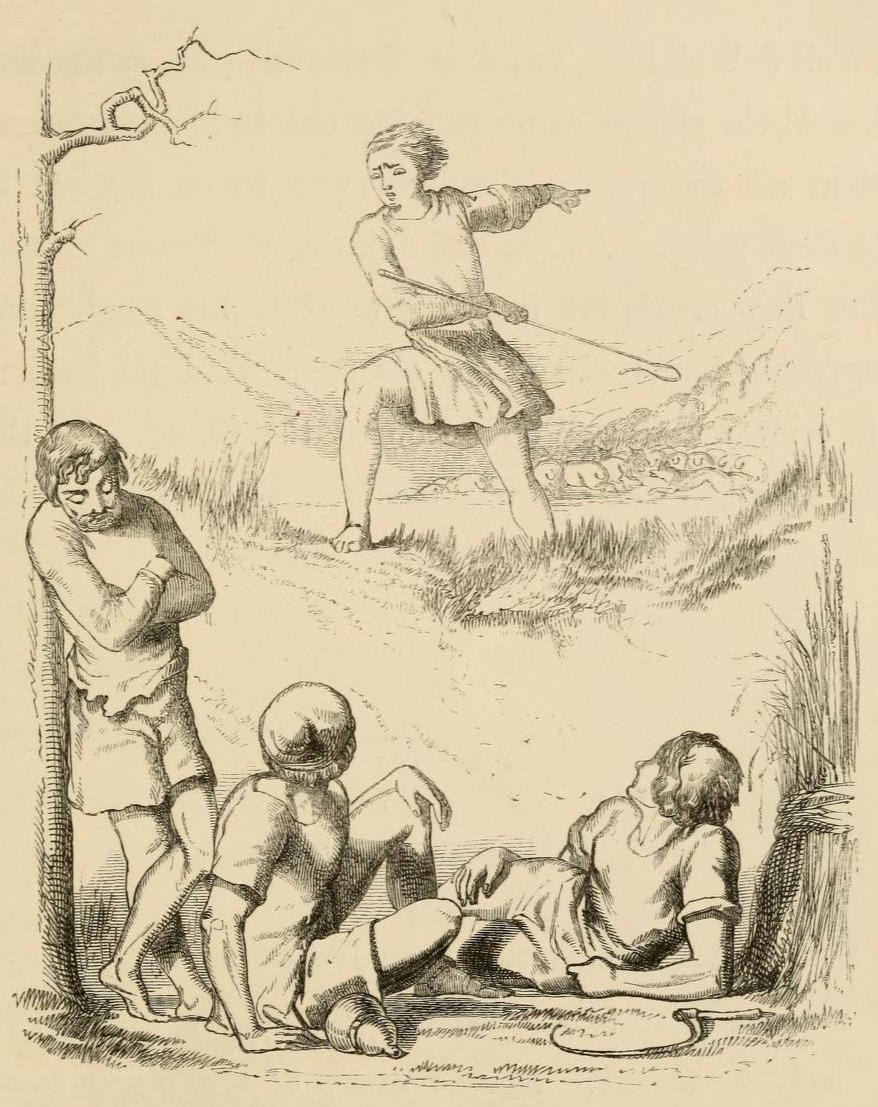
This saying is nicely illustrated by the famous Aesop's fable of The Boy Who Cried Wolf; the liar is not believed even when he is telling the truth. The noun ψεύστης is related to the verb ψεύδω which you saw in a previous blog post: Πολλὰ ψεύδονται ἀοιδοί.

Μισῶ μνήμονα συμπότην.
I hate a drinking companion with a memory.
The word συμπότης is a compound, συμ-πότης, a co-drinker — and yes, from this same root we get the English word symposium. The Greek συμπόσιον was a drinking party! A drinking-companion who remembers what is done and said at a symposium is dangerous because, as you learned in a previous post: Ἐν οἴνῳ ἀλήθεια. Meanwhile, from the Greek verb μισέω we get English words like misogyny and misanthrope.

Ἀλώπηξ τὸν βοῦν ἐλαύνει.
The fox is driving the ox.
This proverb is used for a situation where someone who is small but smart, like a fox, is able to control someone who is bigger and stronger, like an ox, but not as smart. Compare the English rhyming proverb, "Sleight masters might." According to another interpretation, however, the fox driving the ox refers to an absurd situation because the fox is not a farmer, and he has no business plowing a field with an ox. That's the thing about proverbs: they can mean quite different things based on the context in which they are actually used.

Οὔποθ' ὕδωρ καὶ πῦρ συμμείξεται.
Water and fire will never mix. 
The word οὔποτε loses its final epsilon before the following vowel, and the final consonant aspirates before the rough breathing: οὔποθ' ὕδωρ. It is also a compound: οὔ-ποτε, not-ever, i.e. never. You can see the Greek word ὕδωρ in English hydrate and πῦρ in pyromaniac.

Ἄγει δὲ πρὸς φῶς τὴν ἀλήθειαν χρόνος. 
Time brings the truth into the light.
You can see the Greek χρόνος in English words like chronometer and chronicle, and Greek φῶς appears in phosphorus. The stem of the φῶς is φωτ- which you see in English photograph, photon, etc. This is also one of the monostichs of Menander.


You can read the Aesop's fable about the lying shepherd here; this is an illustration by Tenniel; the shepherd is telling the truth now, but his fellow shepherds do not believe him. 


Sunday, April 14, 2024

16: twice, always, instead of, again, well

Here are today's vocabulary words! Click on the word to learn more at Logeion, and there's also a study tips post.

δίς (adverb): twice
ἀεί (adverb): always
ἀντί (prep.+gen.): instead of
αὖθις (adverb): again, in the future
εὖ (adverb): well

Here are the proverbs and sayings:

Δὶς καὶ τρὶς τὸ καλόν.

Ἀεὶ ὁ θεὸς γεωμετρεῖ.

Μὴ λόγους ἀντ᾽ ἀλφίτων.

Οὐκ αὖθις ἀλώπηξ πάγαις.

Μὴ κίνει κακὸν εὖ κείμενον.  

Listen at SoundCloud:

Plus some commentary:

Δὶς καὶ τρὶς τὸ καλόν.
Two times and three times (repeat what is) good.
The idea is that if something is good, once is not enough: repeat it again, and then again — two times and three. You can find this proverbial saying in Plato. Here's a rhyming version in English: That which seemeth well, 'tis well twice and also thrice to tell. The saying is often applied to things that are well said, but I like to think of having second and third helpings of food that is good to eat!

Ἀεὶ ὁ θεὸς γεωμετρεῖ.
God is always doing geometry.
Plutarch attributes the words to Plato, who was a great believer in geometry, as you can learn at Wikipedia: Plato - The Forms. Even more fascinating is the fact that the words have been elaborated into an expanded statement, Ἀεὶ ὁ θεὸς ὁ μέγας γεωμετρεῖ τὸ σύμπαν, "Always the great god is doing geometry on the universe," which is an encoding of the digits of pi, based on the number of letters in each word: 3.1415926. (I found this nifty mnemonic widely shared online but without attribution; if anyone knows more about its source, let me know!) And, of course, we get English geometry from Greek γεωμετρία, literally "earth-measuring."

Μὴ λόγους ἀντ᾽ ἀλφίτων.
Don't (offer) words in place of barley.
The idea is that when someone is hungry, words will not satisfy that hunger; instead of offering kind words and generous promises, you need to provide actual help by providing actual food. The negative μή manages to convey the force of a negative imperative, even though the saying does have an explicit verb.

Οὐκ αὖθις ἀλώπηξ πάγαις.
The fox (is not caught) again by the snare.
The key to this proverb is αὖθις, which means "again." The fox might get stuck in a trap once, but if she manages to get away, she is not going to make that mistake a second time; the smart fox learns from her mistakes. In this version of the saying, the verb is implied but not stated, although you can also find the saying with a verb included: οὐκ αὖθις ἀλώπηξ πάγαις ἁλώσεται, "The fox is not caught again by the snare." In addition, you can find an even shorter version of the saying: Οὐκ αὖθις ἀλώπηξ.

Μὴ κίνει κακὸν εὖ κείμενον.
Do not disturb an evil thing that is well situated.
Compare the more vivid English saying: "Let sleeping dogs lie." The Greek saying relies for its power on the kappa sound-play: κίνει ... κακὸν ... κείμενον. For another saying about things-in-motion, see this earlier post: Δός μοι ποῦ στῶ, καὶ κινῶ τὴν γῆν. You can find the Greek εὖ in many English words derived from Greek: euphemism, euphoria, etc. etc.


The saying about geometry shows up on T-shirts, combined with the Masonic symbol of the square and compasses plus the all-seeing eye:


Saturday, April 13, 2024

15: sky, man, old man, fish, nobody

Here are today's vocabulary words; they are masculine nouns with the nominative and genitive, along with a brief definition. Click on the word to learn more at Logeion, and there's also a study tips post.

1. οὐρανός ~ οὐρανοῦ (m.): sky, heaven
2. ἀνήρ ~ ἀνδρός (m.): man 
3. γέρων ~ γέροντος (m.): old man 
4. ἰχθύς ~ ἰχθύος (m.): fish 
5. οὐδείς ~ οὐδενός (m.): nobody, no one 

Here are the proverbs and sayings:

Εἰς οὐρανὸν πτύεις.

Εἶς ἀνὴρ οὐδεὶς ἀνήρ.

Δὶς παῖδες οἱ γέροντες.

Ἰχθὺς ἐκ τῆς κεφαλῆς ὄζειν ἄρχεται.

Οὐδεὶς ἐπλούτησε ταχέως δίκαιος ὤν.  

Listen at SoundCloud:

Plus some commentary:

Εἰς οὐρανὸν πτύεις.
You're spitting into the sky.
This is not a good idea: the spit is going to fall right back down on you! Compare the English saying: "Spit in the wind, you'll get it back in your face." The Greek word οὐρανός meant the sky, and also the sky-god himself; you can read about the sky-god at Wikipedia: Uranus.

Εἶς ἀνὴρ οὐδεὶς ἀνήρ.
One man (is) no man.
The idea is that you cannot do anything alone, so one man is really no better than nobody at all. This saying is a good way to remember how the words εἶς, "one" and οὐδεὶς "not-one" — οὐ-εὶς — are related. In this proverb, οὐδείς is being used adjectivally, modifying ἀνήρ; see today's final proverb for the same word being used substantively as a noun, meaning "nobody." The Greek saying is the motto of the Phi Delta Theta fraternity (see below for their crest).

Δὶς παῖδες οἱ γέροντες.
Old men are twice children.
The idea is that as people become old, they become like children again, not understanding the things happening around them, no longer in control, etc. The saying appears in Aristophanes's The Clouds. You can see the Greek γέρων in English gerontology, and it is related to the noun γῆρας, "old age," which you have seen in other proverbs previously: Γῆρας διδάσκει πάντα and Τιθωνοῦ γῆρας.

Ἰχθὺς ἐκ τῆς κεφαλῆς ὄζειν ἄρχεται.
The fish begins to stink from the head.
The proverb applies metaphorically to how corruption begins at the top of an organization, like fish rotting from the head on down. The Greek word ΙΧΘΥΣ was used as a secret sign by the early Christians, with the five letters being interpreted as:
Ἰησοῦς
Χρῑστός
Θεοῦ
Yἱός
Σωτήρ, 
i.e. Jesus-Christ-God's-Son-Savior. You can find out more at Wikipedia: Ichthys.

Οὐδεὶς ἐπλούτησε ταχέως δίκαιος ὤν.
No one got rich quickly by doing what's right.
The verb πλουτέω is related to the noun πλοῦτος, meaning wealth. Πλοῦτος is also the name of the god of wealth; find out more at Wikipedia: Plutus. You can see the root of the word ταχέως in the English tachometer and also a quite new English word: tachyon (science fiction fans will recognize that one). 


This is the crest of the Phi Delta Theta fraternity; you can see the Greek proverb there:


Friday, April 12, 2024

14: tear, nature, meat, deed, harm

Here are today's vocabulary words. Click on the word to learn more at Logeion, and there's also a study tips post.

1. δάκρυον ~ δακρύου (n.): tear, teardrop
2. φύσις ~ φύσεως (f.): nature
3. κρέας ~ κρέως (n.): meat, flesh
4. πρᾶγμα ~ πράγματος (n.): deed, act
5. φιλέω ~ φιλήσω ~ ἐφίλησα (verb): love, feel affection

Here are the proverbs and sayings:

Κροκοδείλου δάκρυα.

Ἄριστος ἰατρὸς ἡ φύσις.

Δασύπους κρεῶν ἐπιθυμεῖ.

Προμηθεὺς μετὰ τὰ πράγματα.

Φιλεῖν μὲν προδοσίαν, προδότην δὲ μισεῖν.  

Listen at SoundCloud:

Plus some commentary:

Κροκοδείλου δάκρυα.
Crocodile tears.
This famous saying has its own article at Wikipedia: Crocodile Tears. The idea is that the crocodile is a hypocrite, weeping (or seeming to weep) while he devours his victims. From the Greek κροκόδειλος we get the English word "crocodile," but it's not clear where the Greek word itself comes from: etymology of  κροκόδειλος.
   Compare a similar phrase: Μεγαρέων δάκρυα, "The tears of the Megarians." There are various explanations for why the people of Megara were associated with tears that were not tears of sadness; my favorite is that Megara was famous for its garlic, and the pungency of the garlic made the Megarians shed tears.


Ἄριστος ἰατρὸς ἡ φύσις.
Nature is the best physician.
Compare the English saying: "Nature is the best medicine." You can see the Greek φύσις in the English word physician, expressing the same idea as this saying (the archaic English word physic meant "medicine"). In ancient Greek, the word φύσις has a wide range of meaning; it's worth taking a look at the dictionary definitions. Although this specific saying does not appear in the extant Hippocratic corpus, the idea of "natural" medicine was part of the Hippocratic approach to medicine; more at Wikipedia: Hippocrates.

Δασύπους κρεῶν ἐπιθυμεῖ.
The rabbit craves meat.
On one level, the saying refers to something absurd and inappropriate: rabbits are herbivores, not carnivores. In a more subtle way, however, the saying refers a different absurdity: asking someone else for something that you already possess in abundance. Rabbits are hunted for meat; rabbits are meat, so a rabbit does not need to seek meat elsewhere! The word δασύπους is a nickname for the rabbit or hare: δασυ-πους, hairy-foot.

Προμηθεύς μετὰ τὰ πράγματα.
A Prometheus after the events.
Compare the English saying, "to have 20/20 hindsight." A real Prometheus is able to think wisely about the future, but a would-be Prometheus who is mocked in the proverb is wise only after the fact. The words come from the writer Lucian, quoting from an unknown Greek comedy that has not survived. You can read more about Prometheus at Wikipedia; his name means "forethought," as opposed to the name of his brother Epimetheus, "afterthought."  The Greek word πράγμα gives us English pragmatic, and it is related to the word πρᾶξις which you saw in a post from last week.

Φιλεῖν μὲν προδοσίαν, προδότην δὲ μισεῖν.
To love the treachery and hate the traitor.
You can find the saying in Plutarch's Life of Romulus, and it is also associated in the Byzantine Greek historian Zonaras with the story of the treacherous Tarpeia of Roman legend; you can read more about that famous story at Wikipedia: Tarpeia. Note the AB·BA chiastic arrangement: verb-object and then object-verb, organized with the Greek μὲν...δὲ. From the verb μισεῖν, "to hate," we get English words like misogynist and misanthrope.


This Roman coin shows the Sabine king's soldiers crushing Tarpeia with their shields:


Thursday, April 11, 2024

13: goat, horn, lesson, mother, tree

Here are today's vocabulary words; they are nouns with the nominative and genitive plus gender, along with a brief definition. Click on the word to learn more at Logeion, and there's also a study tips post.

1. αἴξ ~ αἰγός (c.): goat 
2. κέρας ~ κέρατος (n.): horn 
3. μάθημα ~ μαθήματος (n.): lesson, knowledge 
4. μήτηρ ~ μητρός (f.): mother 
5. δένδρον ~ δένδρου (n.): tree 

Here are the proverbs and sayings:

Αἴξ τὴν μάχαιραν.

Τὸ τῆς Ἀμαλθείας κέρας.

Τα παθήματα μαθήματα.

Μήτηρ τῆς ἐνδείας ἡ ἀεργία.

Ἐκ τοῦ καρποῦ τὸ δένδρον γινώσκω.  


Plus some commentary:

Αἴξ τὴν μάχαιραν.
The goat (supplies) the knife.
The saying alludes to a story about a goat sacrifice: the temple priest was going to sacrifice a goat, but he couldn't find the knife... until the goat, scratching with its hoof, uncovered the knife in the dirt — the very knife that was used to sacrifice the goat! There is also a version with a sheep: Οἷς τὴν μάχαιραν. Compare the Spanish saying, "Escarbó el gallo, y descubrió el cuchillo para matallo," "The rooster scratched, and uncovered the knife to kill him."

Τὸ τῆς Ἀμαλθείας κέρας.
The horn of Amaltheia.
This saying refers to a mythological "horn of plenty." Amaltheia was the foster-mother of the baby Zeus, whom his mother had to conceal from his father, and in some traditions, she was imagined to be a goat. When baby Zeus accidentally broke off one of her horns, the horn became a magical "horn of plenty" pouring forth food and drink in abundance. You can find out more at Wikipedia: Amalthea and Wikipedia: Cornucopia. The Greek κέρας gives us the scientific term keratin, the protein found in horns, nails, claws, hooves, etc.

Τα παθήματα μαθήματα.
Sufferings (are) lessons.
The play on words in the Greek is lost in the English, alas, but it can be replicated in Latin: "Nocumentum, documentum." Both the words πάθημα and μάθημα are nouns formed from verbs: πάσχω, experience or suffer, and μανθάνω, learn, the idea being that to undergo some experience, especially a negative experience, teaches you a lesson. From the Greek root in πάθημα we get the English word empathy and from μάθημα, mathematics.

Μήτηρ τῆς ἐνδείας ἡ ἀεργία.
The mother of neediness is idleness.
The reason "lack" has a mother instead of a father is because ἀεργία is a feminine noun: ἀ-εργία, un-work, i.e. idleness. The message of the proverb is that idleness gives birth to neediness; if you don't work, you are going to lack the things you need. The word μήτηρ is related to the English word mother; you can learn more at Wikipedia: Indo-European kinship terms.

Ἐκ τοῦ καρποῦ τὸ δένδρον γινώσκω.
From the fruit, I know the tree.
Compare a similar saying in the Gospel of Matthew: Ἀπὸ τῶν καρπῶν αὐτῶν ἐπιγνώσεσθε αὐτούς, "Ye shall know them by their fruits." You can find out more at Wikipedia: The Tree and its Fruits. From Greek δένδρον we get the English term dendrochronology.